


April 10, 2026, 10:39 am | Read time: 4 minutes
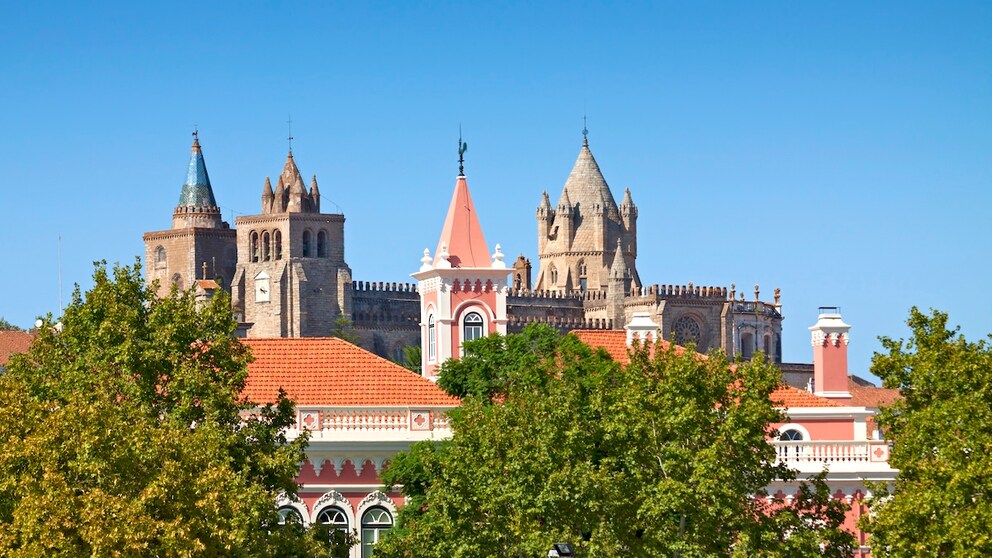
The small town of Évora, about 140 kilometers east of Portugal’s capital Lisbon, has been a UNESCO World Heritage site since 1986. In 2027, it will also be one of the two European Capitals of Culture. There are numerous attractions to explore there. TRAVELBOOK provides an overview.
The city of Évora in the Portuguese region of Alentejo will hold the title “European Capital of Culture” in 2027, as reported by sources such as “Euronews.” Together with the Latvian Baltic city of Liepāja, it will host this project. According to the European Commission in Portugal, it is “one of Europe’s most ambitious cultural initiatives.” With this designation, Évora becomes the fourth Portuguese city to receive this title—following Lisbon in 1994, Porto in 2001, and Guimarães in 2012.
Tips for Visiting Évora
In Évora, the Romans left behind a well-preserved Temple of Diana, a fortress, and an aqueduct. Even today, water is transported using the nearly 2,000-year-old aqueduct. Fourteen columns remain from the Temple of Diana, dating back to the 1st century AD. In the old town, you can also find foundations of Roman residential houses. Parts of the fortress and the Roman city wall can also be visited.
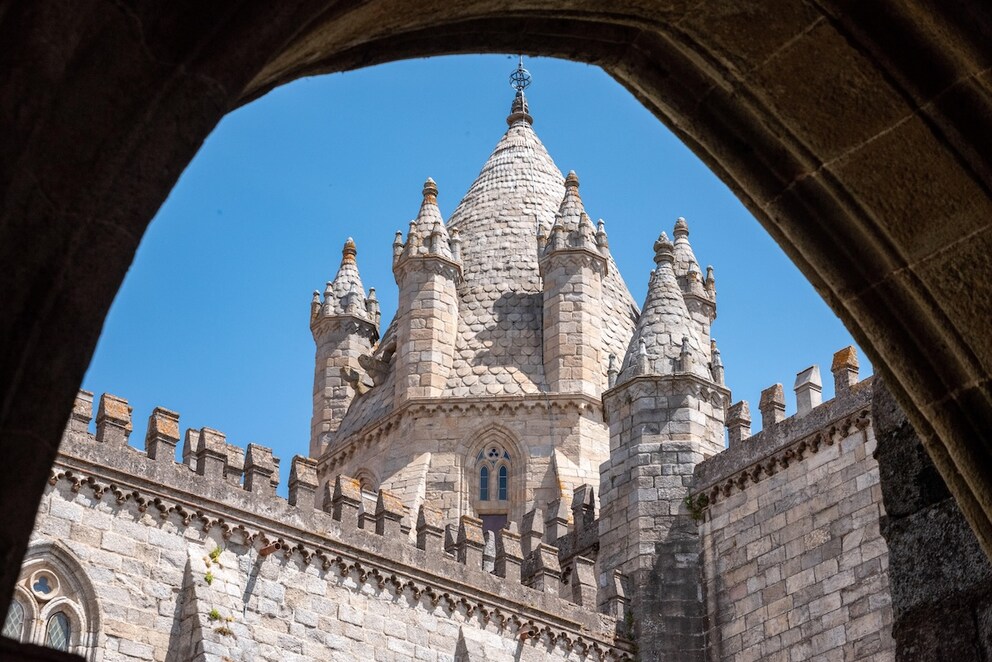
Évora was occupied by the Arab Moors for about 450 years. In the 12th century, a Christian knightly order recaptured the city. The followers of Geraldo Geraldes built a city wall that has remained almost intact to this day.
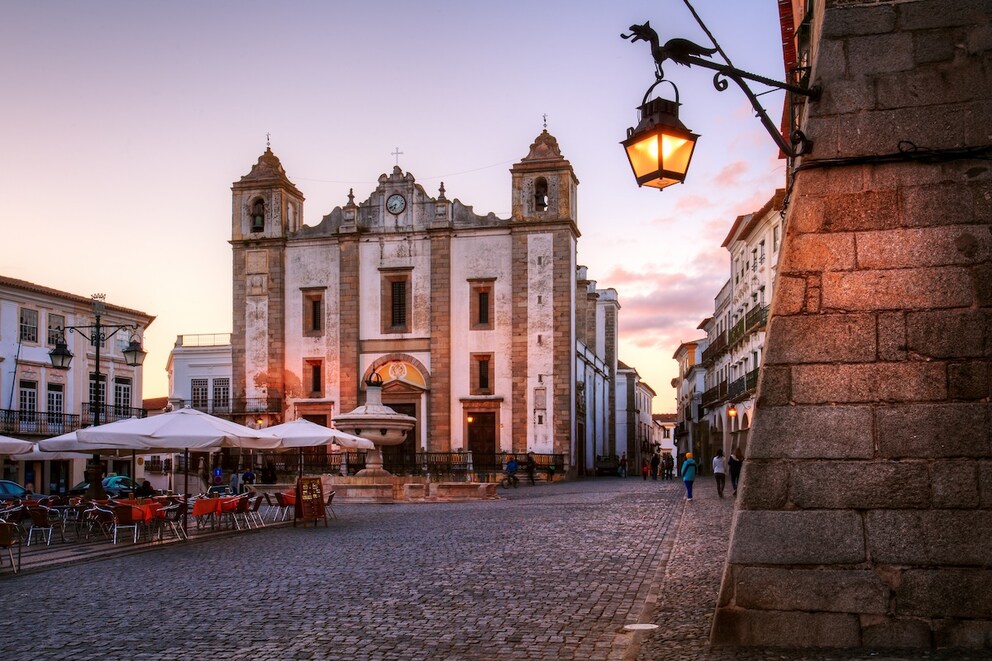
The city’s most beautiful square, the Praca do Giraldo, named after the liberator, features a noteworthy marble fountain and artistic arcades. Also built in the 12th century was the city’s cathedral, Sé Catedral de Évora, which stands on the foundations of a destroyed Moorish mosque.
17 Facts About Portugal That Hardly Anyone Knows
Why You Should Definitely See These Two Cities in Italy
Ancient Atmosphere
An attraction—not just for students—is the buildings of the Jesuit University. After the Spanish occupation of Portugal, the university, built in the 16th century, was closed in 1759. It wasn’t until 1973 that a new university was founded on the medieval campus in Évora.
Even today, the center of Évora exudes an ancient atmosphere. For instance, when you enter the Chapel of Bones, where human bones are stacked on the walls. Or when you sit in a street café on one of the medieval squares. It’s no wonder the city in the Alentejo province is among Portugal’s most significant attractions.
Traveling to Évora

From Lisbon, you can reach Évora by car in about 1.5 hours. The Portuguese bus company Rede Espressos also operates regularly between the two cities.