

February 1, 2023, 4:28 pm | Read time: 6 minutes
Portugal is known for beautiful beaches, port wine, and a great passion for soccer. However, there are also some lesser-known facts. TRAVELBOOK reveals them.
1. Portugal and England have the oldest diplomatic alliance in Europe
As early as 1373, the two countries formed an alliance that culminated in the Treaty of Windsor in 1386 and remains valid to this day. The Portuguese and English secured not only an “eternal” friendship but also mutual support in many other areas, such as military and economic matters.
2. The Portuguese invented port wine–even if the English say otherwise
And speaking of the English: They are not only among the main consumers of port wine, but they also claim to have invented it in the 17th century by adding brandy to wine from the Douro region to prevent it from turning sour during export to England. The Portuguese counter that there was already a process during the height of seafaring that stopped fermentation and preserved the grape’s sweetness.
Also interesting: 9 things to do in Portugal’s Alentejo region
3. Until 1928, Portugal had left-hand traffic
This also has something to do with the influence of the English and the fact that right-hand traffic in Europe was introduced by the French only under Napoleon in many occupied countries. In Portugal, the switch to right-hand traffic was made on June 1, 1928.
Also interesting: Why do some countries have left-hand traffic?
4. France is the second home of the Portuguese
More than a million Portuguese and people of Portuguese descent currently live in France. This also explains why there were so many Portuguese fans in the stadiums during Portugal’s matches at the 2016 European Championship in France.
5. Portugal has nearly 3,000 kilometers of coastline
It may sound surprising, but although the country is quite small, it has thousands of kilometers of coastline. This is because, in addition to the mainland (about 950 kilometers of coastline), the island groups of Madeira (about 250 km) and the Azores (about 670 km) also belong to Portugal.
Also interesting: The best tips for 3 days in Lisbon
6. The richest Portuguese is…
… not Cristiano Ronaldo, but a Portuguese woman: Maria Fernanda Amorim, widow of entrepreneur Américo Amorim. The U.S. magazine Forbes estimates her fortune at 4.7 billion euros. The family became wealthy through the cork business.
7. Portugal has the longest bridge in Europe
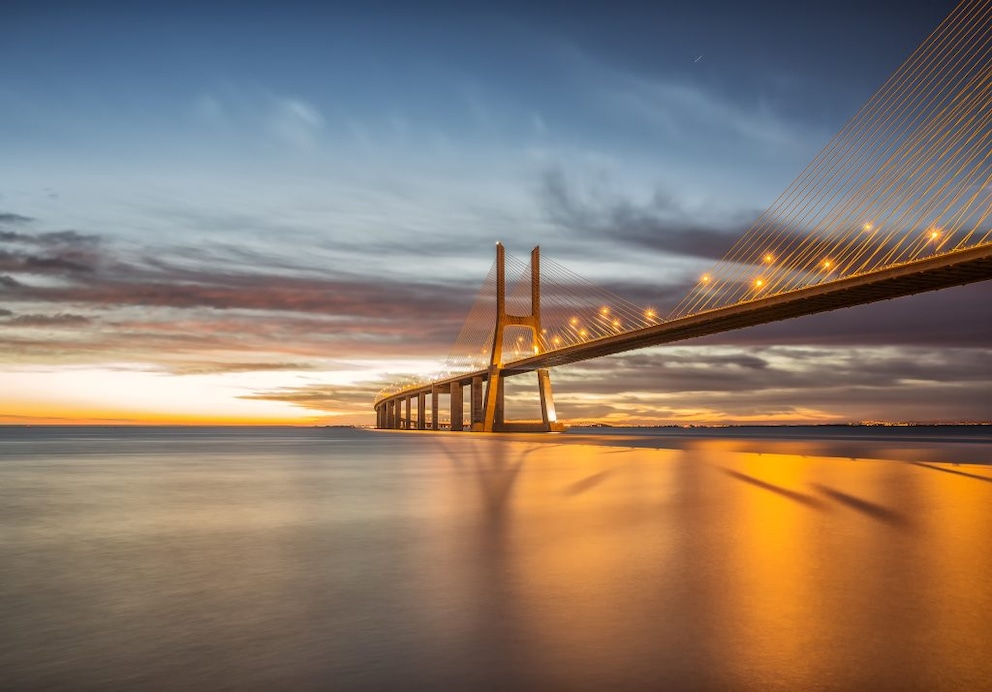
The Ponte Vasco da Gama is nearly 17.2 kilometers long and was built between 1995 and 1998 for the Expo ’98 over the Tagus River. The project, which cost nearly a billion euros, connects Lisbon with the cities south of the Tagus and has made the route further south faster for drivers.
8. Rio de Janeiro was once Portugal’s capital
In 1807, the Portuguese court under King John VI fled Napoleon’s troops to the then-colony of Brazil, specifically to Rio de Janeiro. From 1808 to 1821, the city by the Sugarloaf Mountain was the capital of Portugal.
Also interesting: The deadliest island in the world is off the coast of Brazil
9. The Japanese specialty tempura was invented by the Portuguese
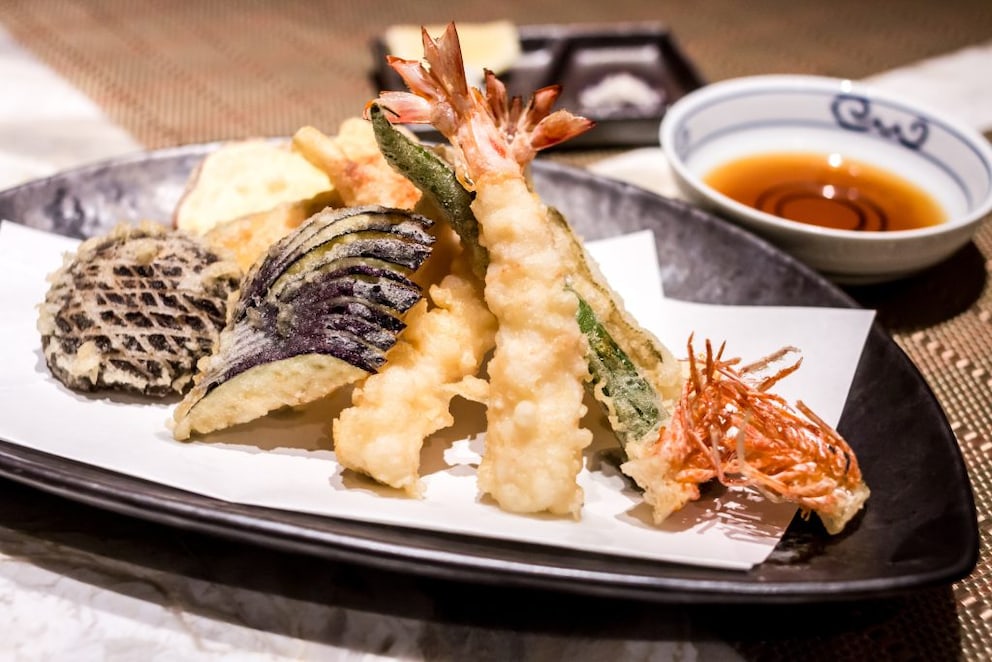
What is now on the menu in every Japanese restaurant traces back to Portuguese Jesuits. Their primary mission of converting the population was only partially successful, but the population adopted the preparation method of “tempura.” In this method, fish and other foods are fried in a batter. Tempura is derived from Portuguese. However, the exact word is uncertain. Possible origins include tempero (meaning seasoning) or têmporas, a form of fasting once practiced by Christians.
Also interesting: Aljezur – a love letter to the expat hotspot
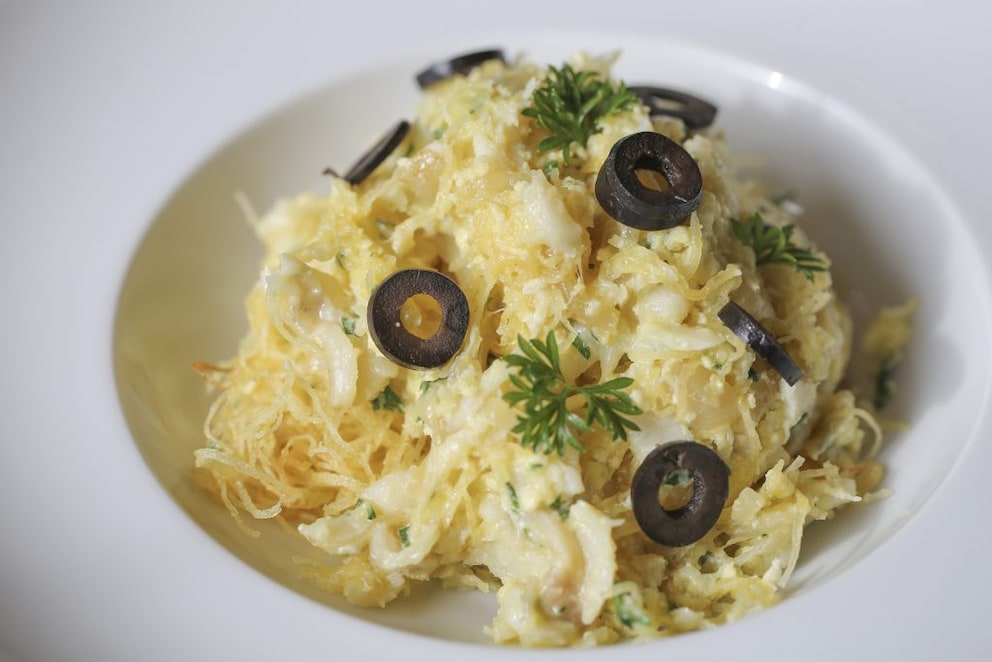
10. Portugal doesn’t have its own bacalhau
If there’s one thing associated with Portuguese cuisine, it’s the famous bacalhau, the dried codfish. However, the cod usually used for this is practically nonexistent in Portuguese waters, so the fish must be imported. And in such abundant quantities that it suffices for feasts at Christmas, New Year, Epiphany, Easter, and other holidays.
11. The first Portugal flag resembled Finland’s
A blue cross on a white background–that’s what the first Portuguese flag looked like. Today, only the five shields in the center are blue. The green in the flag was added in 1910, giving it its current appearance.
Also interesting: The best travel tips for the city of Braga in Portugal
12. A Portuguese woman brought tea to England
Without Catherine of Braganza, there might not be the typical British “tea time.” It was the Portuguese Infanta who, due to her marriage to English King Charles II, brought the tea she loved so much to the island in the 17th century.
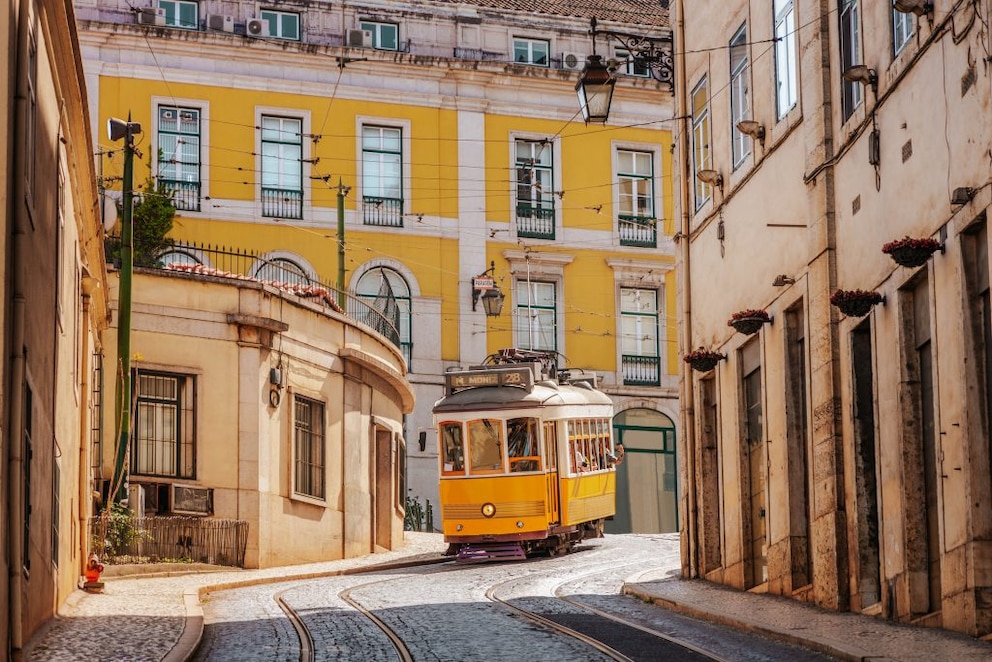
13. Lisbon has “7 hills” like Rome
According to legend, the metropolis on the Tagus was founded among seven hills, which are said to be the hills of Sant’Ana, São Roque, Santo André, São Jorge, Santa Catarina, Chagas, and São Vicente. However, it is no longer entirely clear what the legend is based on, as Lisbon actually has many more elevations.
Also interesting: The 20 most beautiful beaches in Portugal
14. Fado literally stands for fate
What can already be heard in the sometimes sadly longing sounds of the music style is also reflected in the name. The word “Fado” goes back to the Latin fatum, meaning fate.
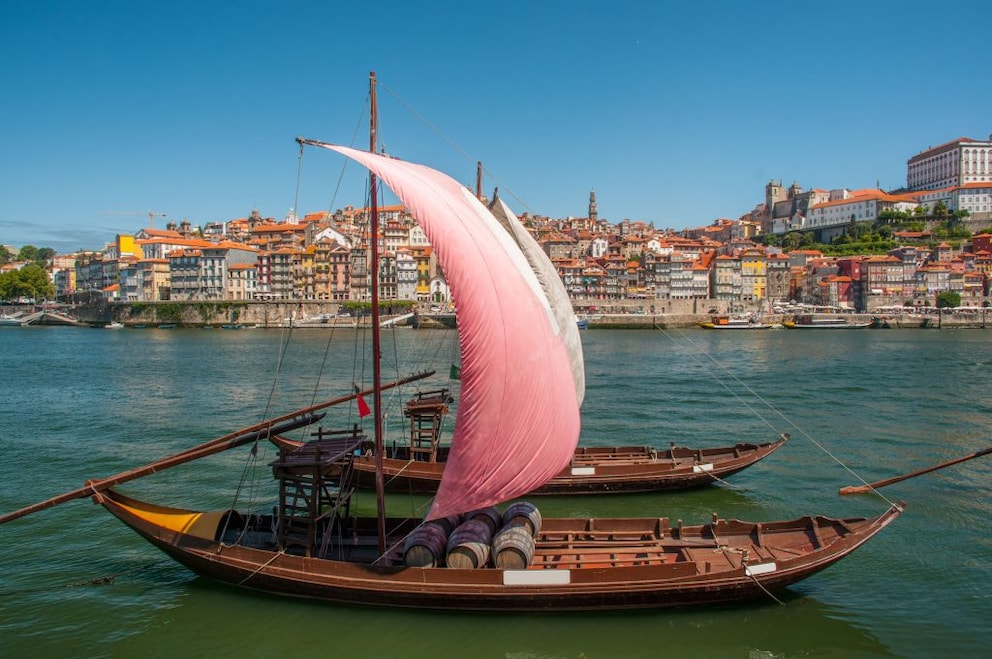
15. Port wine has its own type of boat
Rabelo boats are the ships, about 20 meters long, that were used from the 18th century to transport port wine from wine regions in the Douro Valley to Porto or Vila Nova de Gaia. About six crew members were needed to operate the ship and load the barrels. Today, the Rabelo boats are used only for tourist purposes or celebrations.
Also interesting: Capela dos Ossos – Portugal’s eerie bone chapel
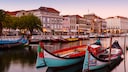
This city is known as the Venice of Portugal.
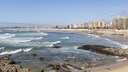
Portugal’s Praia De Matosinhos Is One of the Most Extraordinary Urban Beaches in the World
16. Lisbon is home to the world’s oldest bookstore
In 1732, the Livraria Bertrand in Lisbon opened and has been in continuous operation ever since. This earned the bookstore in the Chiado district a Guinness World Record entry.
Address: Rua Garrett, 73-75 – Chiado – Lisboa
17. Benfica Lisbon is the second-largest soccer club in the world
For a long time, the Portuguese capital’s team was even ranked first among the world’s largest soccer clubs by membership–until another club with red and white colors overtook Benfica: FC Bayern Munich. It now has 293,000 members, while the Portuguese club has “only” about 244,000.