

December 2, 2025, 4:15 pm | Read time: 7 minutes
Avignon is a city that proudly bears its scars. TRAVELBOOK author Frank Lehmann visited and reveals why the rugged sister of Aix-en-Provence tells the better stories.
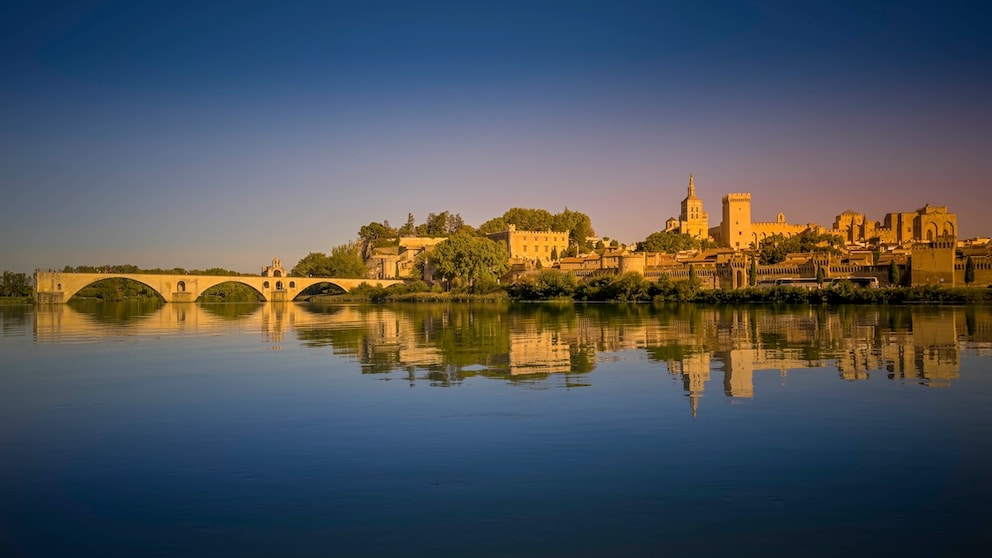
Southern France is a wonderful destination any time of year. Two places shine as stars of Provence: Avignon and Aix-en-Provence. Aix dazzles with elegant Belle Époque architecture, chic boutiques, and a reputation as the cultural center of the region. Avignon, on the other hand, feels like the wild, unpolished sister: less smooth, but all the more authentic. Avignon proudly displays its historical scars–the old stones of the city wall, the half-destroyed bridge, the narrow alleys where the Middle Ages come alive.
So let’s leave the beautiful Aix behind; the city is already crowded with art lovers. Off we go to Avignon, the rugged city on the banks of the Rhône.
View Over the River from Fort Saint-André
It’s advisable not to start in the old town, but on the other side of the Rhône, in the forgotten suburb of Villeneuve-lès-Avignon: Here stands Fort Saint-André, a mighty 14th-century structure that looks like a silent guardian over the city and the river.
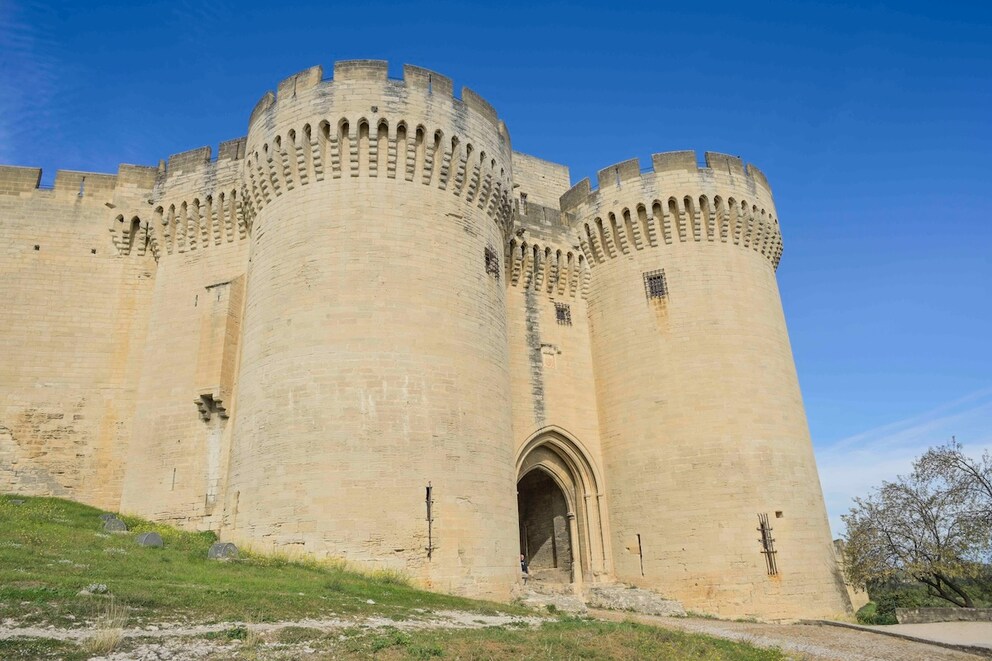
From its walls, a panorama unfolds that immediately captivates: The old town of Avignon with its medieval towers, winding alleys, and the mighty Papal Palace lies at your feet. The wind carries the scent of lavender and wild thyme, while the sun bathes the stone facades of the fortress in warm gold. Yes, in Villeneuve, you can feel the soul of the region away from the tourist crowds.
The Famous Bridge from the Children’s Song
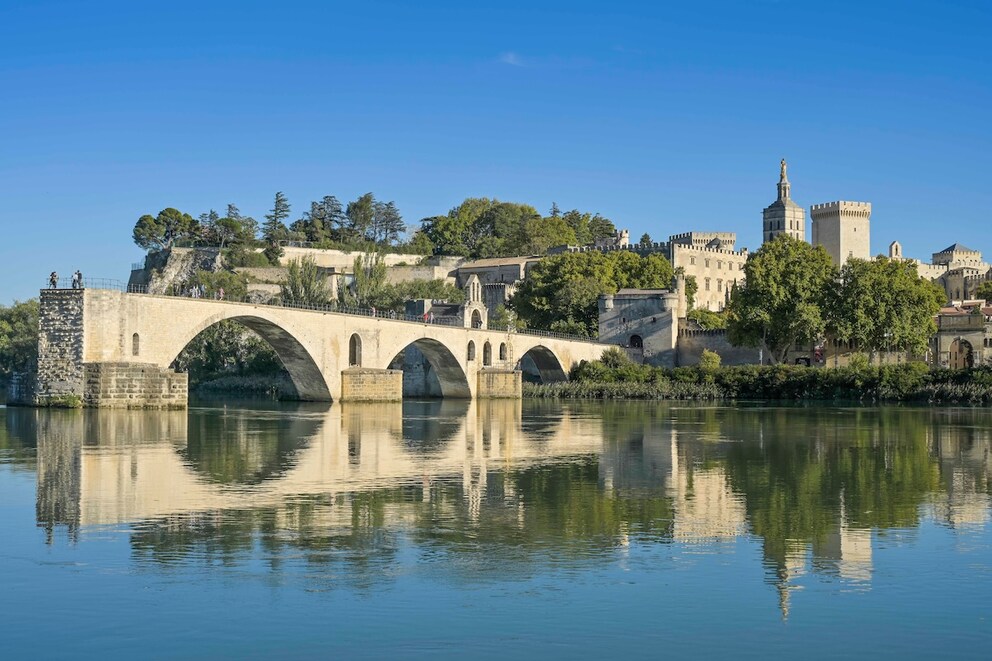
We switch to the other bank of the Rhône. Here stands the Pont Saint-Bénézet. It’s more than just a song. It’s famous, better known as the “Bridge of Avignon.” Thanks to the children’s song, everyone knows it, and indeed it is a symbol of the city. But the reality is a bit less romantic: Only four of the original 22 arches remain, the rest washed away by the Rhône’s floods. Still, it’s worth a visit–not just because of the song, but for the magical view of the river and the city.
If you like, you can also visit the small museum on the bridge that tells its turbulent history. In the evening, when the lights of the old town reflect in the water, it becomes clear: History was made here, and it has been since 1177.
Transported Back in Time
Back in Avignon, you enter the Papal Palace, the largest Gothic structure in Europe, through a massive gate. The visit becomes exciting with the tablet you receive at the entrance. Through augmented reality, the empty chambers suddenly come to life. You see the popes walking through the halls, hear the whispers of diplomats, and feel the power that was once concentrated here. You dive deep into the Middle Ages and quickly become part of a time travel. It’s best to book a three-ticket for the bridge, the Papal Palace, and the Papal Gardens. Money saved!
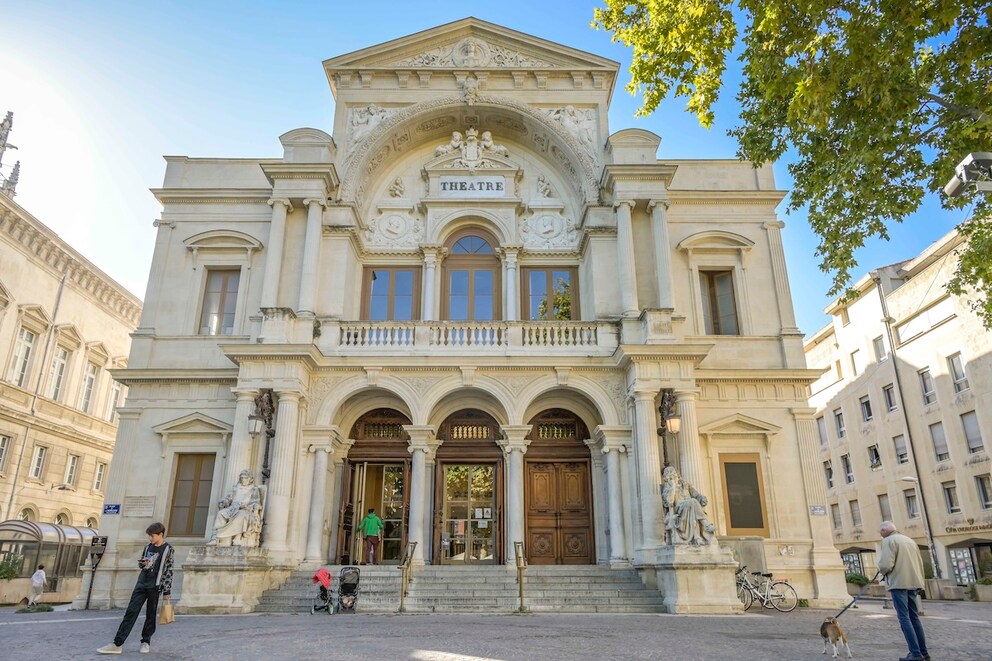
Those who then stroll through the Rue de la République in the old town will pass the Hôtel de Ville, a magnificent 19th-century building that impresses with its neoclassical facade. Right next door is the Opéra Grand, a jewel of the Belle Époque. If you’re lucky, you can attend a performance here and admire the opulent interior. Even if no performance is taking place, it’s worth a look from the outside–especially in the evening when the facade is illuminated, as elegance and culture meet here.
Bustling Activity and Places for Those Seeking Peace
If you need a break after so much architecture and history, you’ll find it at Place de l’Horloge, the bustling center of Avignon. Under the shady plane trees, you can sit in one of the many cafes and watch the lively activity: street performers, market stalls with regional delicacies, and the lively conversation of the locals. We enjoyed the crepes at Le Cid Café here. Delicious, affordable, and with quick, friendly service.
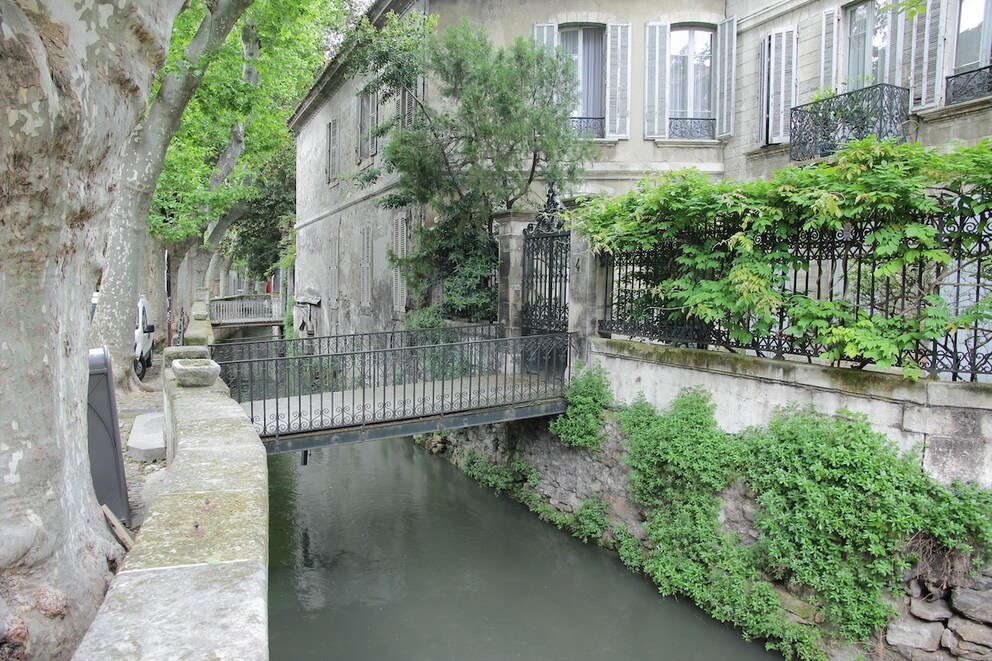
Are there still undiscovered corners? Yes, because even beyond the tourist paths, Avignon has more to offer than the major sights. If you wander into Rue des Teinturiers, you’ll find one of the most picturesque streets in the city: A small stream babbles between the old houses where cloth dyers once dried their goods. Today, small galleries, antique shops, and cozy wine bars line up here–perfect for a relaxed afternoon.
Another gem is the Île de la Barthelasse, a green island in the Rhône, which you can reach by a small ferry or over the Pont Édouard Daladier. There are no tourists here, just bike paths, picnic spots, and the view of Avignon’s skyline. Ideal for enjoying the city panorama with a glass of regional rosé.
Impressive City Wall
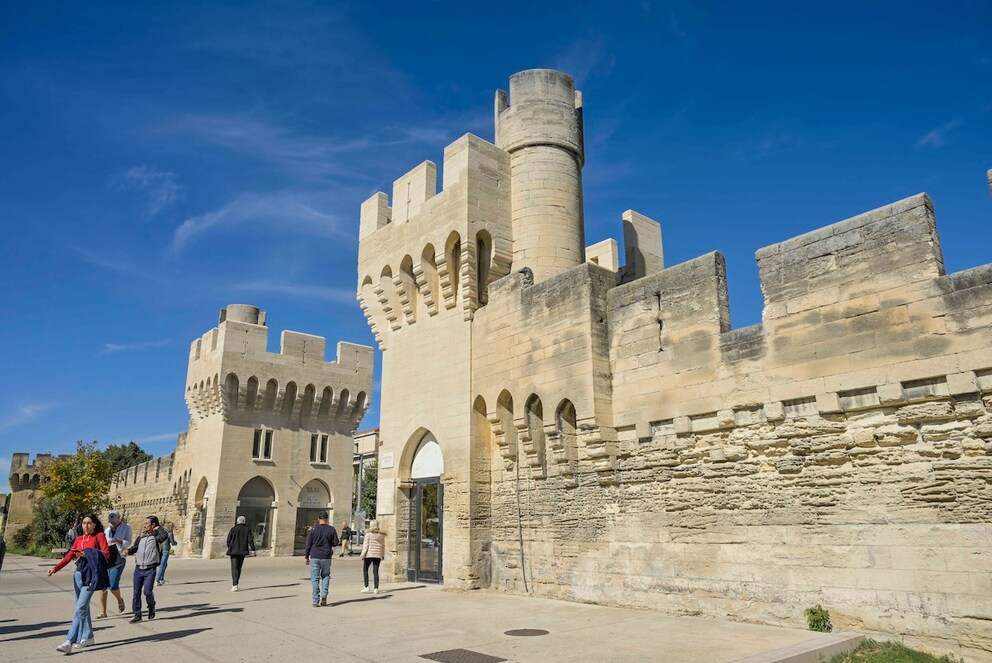
As you stroll through the old town, you repeatedly encounter the mighty city wall. It is a stone witness of time that was never destroyed. Avignon’s medieval city wall is one of the best-preserved fortification systems in France. Built in the 14th century under Pope Innocent VI, it envelops the old town like a protective cloak. The massive defense towers are particularly impressive.
The ring walls around the old town are part of the UNESCO World Heritage, and today you can find the most beautiful walking paths in the city here. From the high walls, you not only have a fantastic view of the Rhône and the surrounding landscape but also feel the authenticity of a city that has preserved its medieval character. While other cities sacrificed their walls to grow, Avignon’s fortification remained almost intact–a real stroke of luck for history lovers!
The old town is a paradise for pedestrians. In recent years, Avignon has implemented traffic-calming measures to make the city center more car-free and livable. Around the Palais des Papes, everything is largely closed to car traffic, preserving the historic charm of the city. The city focuses on sustainable mobility, such as expanding bike paths and promoting public transport, to further reduce individual traffic and increase the quality of life.

Crowned! This Is Arguably the Most Beautiful Village in France

My 7 Favorite Places in Bordeaux
Art and Cuisine
But if you don’t just want to walk in history, the Lambert Collection is recommended, the museum for contemporary art. Yvon Lambert gifted the city an extraordinary ensemble of significant works from the second half of the 20th and early 21st centuries. The Collection Lambert presents ambitious exhibitions of national importance there.
After many explorations, we stop at the Grand Cafe Barretta on Place Saint Didier. Modern cuisine meets affordable down-to-earthness. It gets crowded in the evening–it’s advisable to make a reservation.
Looking Forward to the Festival d’Avignon
When Avignon falls into a charming winter sleep, you know it won’t last long, and in the summer, the famous Festival d’Avignon returns. It is one of the world’s largest theater festivals, not only playing the large courtyard of the Papal Palace and the city’s theaters but also bringing dance, circus, music, and live performances to the entire old town. The festival has a powerful official part but shines especially with the “Festival Off,” which brings over 1,500 small shows to the city for three weeks in July.
So Avignon is a city that surprises! The city on the Rhône is more than just a stop on the journey through Provence. It is a city that slowly reveals its secrets: in the quiet corners of Villeneuve, on the famous bridge, in the splendid Papal Palace, in the lively squares, and in the alleys that smell of lavender and history. There is no polished facade here, but real Provençal life between markets, theater festivals, and hidden wine bars. Those who are ready to look behind the facades will be rewarded–with a city that is not only beautiful but also unforgettable.
Is Avignon the forgotten little sister of Aix en Provence? No! She is the one who tells colorful stories, while Aix is often only admired.