

June 26, 2026, 2:51 pm | Read time: 5 minutes
The Toraja on the Indonesian island of Sulawesi have a very special relationship with death. When a loved one passes away, they often remain with their family for years, treated as if they were still alive. The final burial is a ceremony for which the Toraja sometimes save their entire lives. Even after that, the deceased remain an integral part of local life.
In the south of the Indonesian island of Sulawesi lives one of the most remarkable ethnic groups in the world. An estimated one million people still belong to the Toraja, who have a perhaps unique approach to death. When a loved one dies here, they often remain part of the family for years. And that is meant literally, as the time between passing and the actual burial can be unimaginable for our culture. Even after that, the deceased remain important members of their community.
As reported by the site “Southeast Asia Globe,” the unique death cult of the Toraja is known as “aluk todolo.” This can be translated as “The Way of the Ancestors.” It is considered completely normal here for a deceased person to remain with the family after death—literally. The dead are given food, drinks, and sometimes even cigarettes every day. In a separate room of the house, they sometimes remain laid out for years, and according to the “BBC,” they even have their own toilet bowls. Additionally, their appearance is regularly maintained, and they wear clothes like the living.
A Funeral Costs a Fortune
Even for the youngest, this approach to the special situation is completely normal. The Toraja believe that their dead are really just sleeping. Therefore, they try to involve them in daily life as living family members. They talk to them, tell them the latest gossip, and sometimes even take them for a walk. “Aluk todolo” has always been a part of their rituals and beliefs. This has not changed, even though about 80 percent of the Toraja have converted to Christianity or Islam today.
Of course, there is a reason why years can sometimes pass between death and the actual burial in the Toraja cult. According to their belief, the soul of the deceased can only find eternal rest if it is ceremoniously bid farewell in a grand ceremony. It is not uncommon for such procedures to last several days and cost $50,000. This amounts to more than ten times the average annual income in Indonesia. Many Toraja actually save more for their death than for their life throughout their worldly existence.
The Unusual Funeral Ritual of the Parsis in Mumbai’s “Tower of Silence”
Is it okay to look at mummies on display?
Grand Funeral Ceremony
The burial ritual, called “Rambu Solo,” is the most important festival in the existence of the Toraja. This includes sacrificing as many buffalo and pigs as one can afford. According to their belief, the animals help the deceased on their journey to the afterlife. Guests from all over the world are invited to such an event. The more guests, the more important or wealthy the deceased was. The meat of the animals is then distributed among the attendees after the celebration. Music and dance are also integral elements of the ritual.
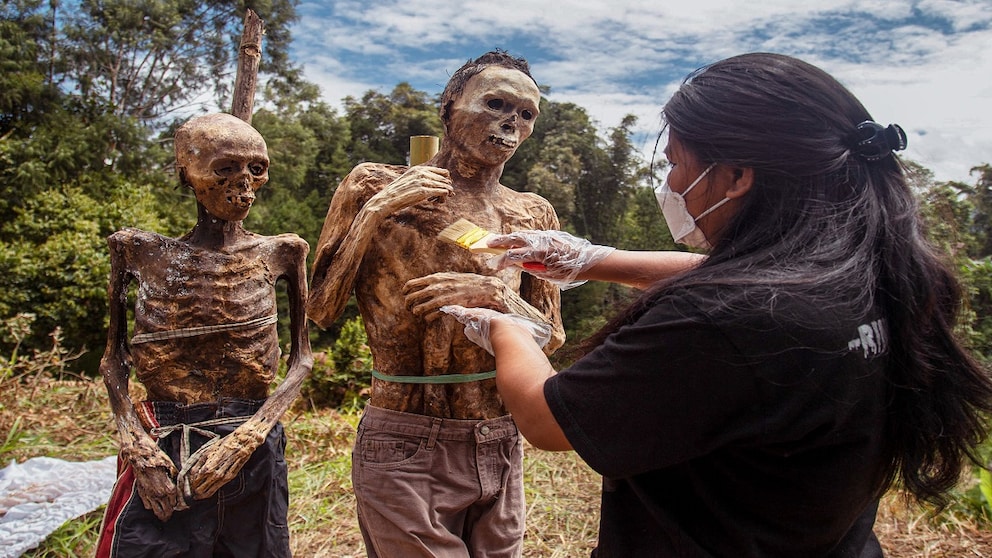
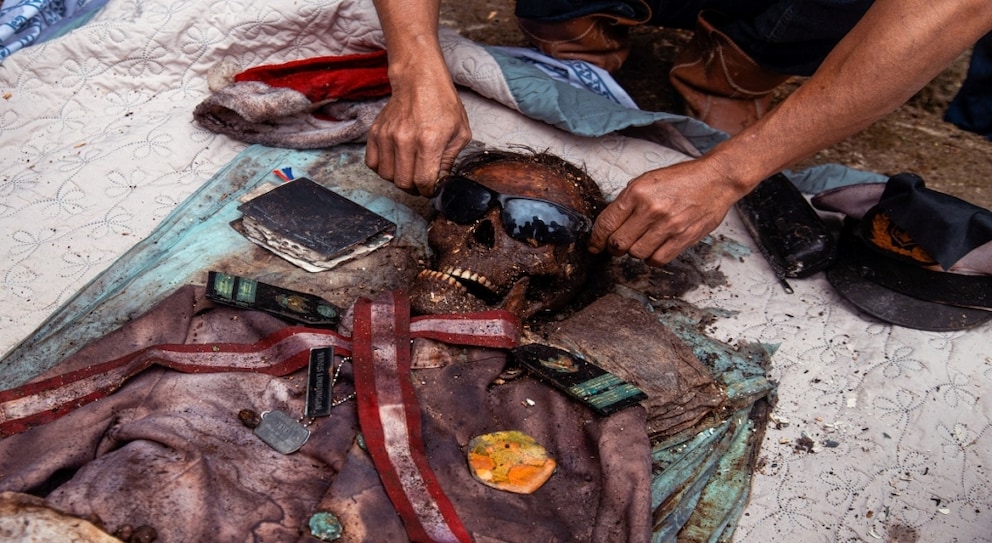
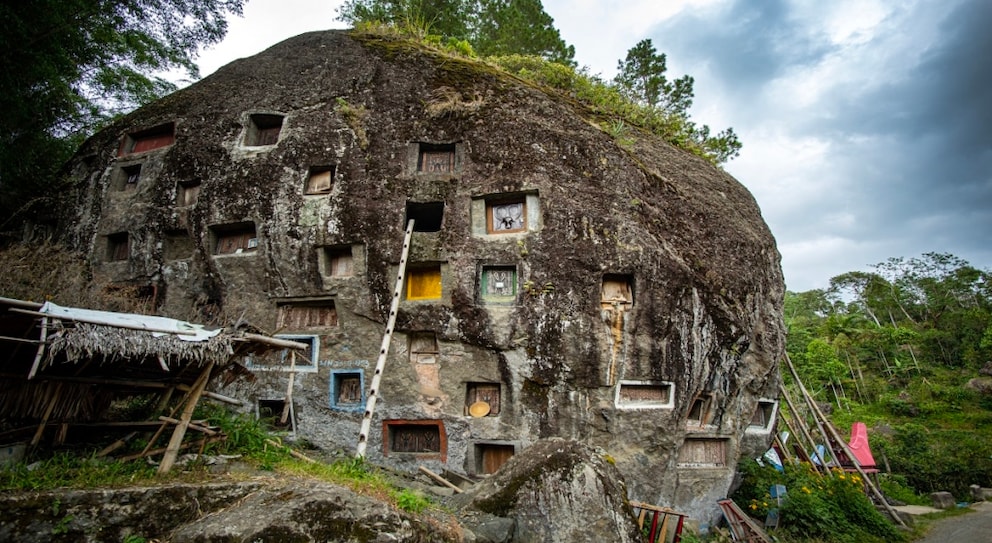
But even after “Rambu Solo,” the dead of the Toraja remain an important part of the families and life. Every few years, another ritual takes place, known as “Ma’nene.” This means “The Care of the Ancestors” and is meant literally. The Toraja do not bury their dead underground but lay them to rest in coffins, which are then placed in caves, for example. To slow down the decomposition process, they are injected with formaldehyde after death. This chemical significantly reduces oxidation, or decomposition. During “Ma’nene,” the dead are “awakened” to life again.
A Tradition Loses Significance

For this, they are taken out of their coffins and ceremoniously prepared. They are sometimes given new clothes and cleaned. In many Toraja villages, it is still a tradition to carry the deceased through their old homeland, as if on a walk. Even people who have been dead and buried for decades receive this special honor. The dead are again given food, drinks, and cigarettes. Quite naturally, they also pose for a new family portrait taken on such an occasion.
But like so many old traditions, this one is also losing importance under the influence of modern times. The turn to Christianity and Islam is just as responsible as the advent of modern, faster-paced life in the daily lives of the Toraja. And even though it might be hard for people here to imagine living like this unusual ethnic group, their approach to death deserves deep respect.