


March 30, 2026, 3:57 pm | Read time: 4 minutes
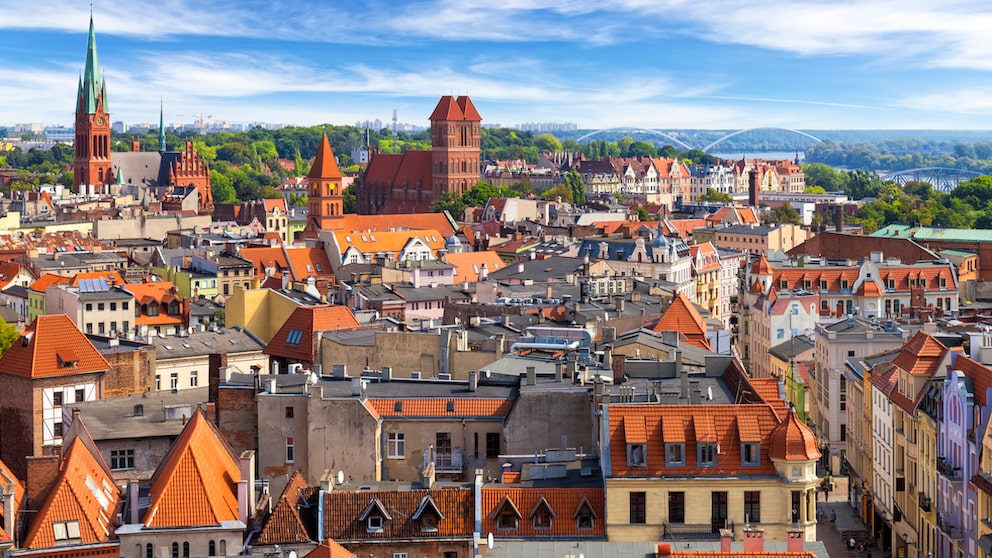
Here, it is known to only a few, yet Toruń ranks among the most beautiful cities in Poland alongside Kraków, Chelmno, and Gdańsk. Due to its completely preserved and meticulously restored old town, Toruń, located about 170 kilometers from Gdańsk, is rightly referred to as a medieval gem. TRAVELBOOK has the best tips.
Because of the city ensemble that has remained unchanged for centuries, UNESCO added Toruń’s old town to the World Heritage list. The city on the Vistula owes its founding to the Teutonic Order, which built a massive castle complex here in the 13th century. Remnants of this can still be visited today.
Overview
Sights in Toruń
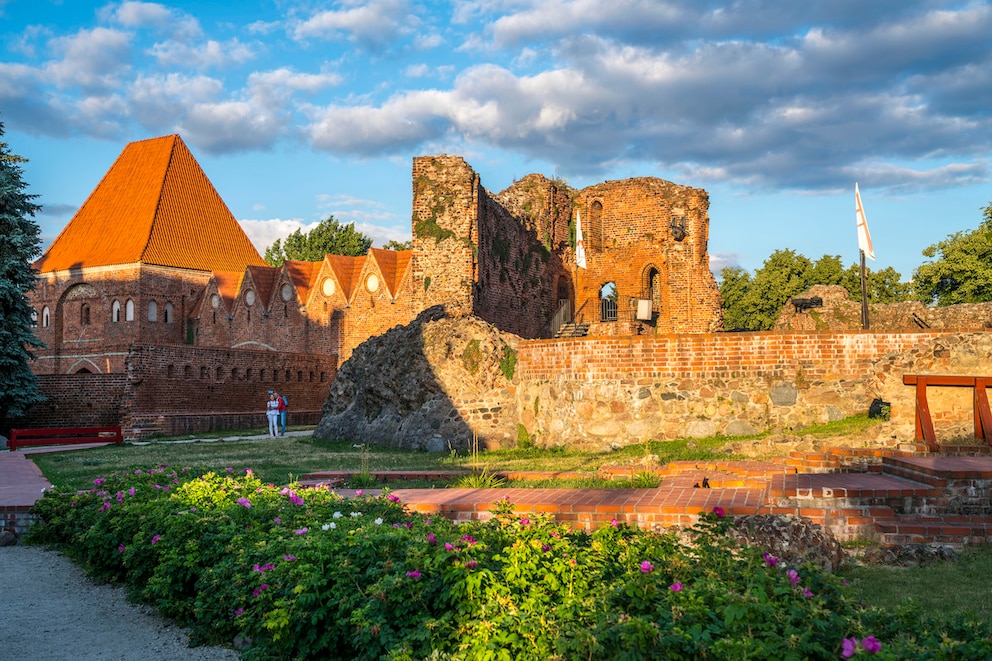
Remnants of the Castle Complex
As a Hanseatic city, Toruń had economic success in the Middle Ages due to its strategic location on the Vistula. From here, the Vistula was navigable to the Baltic Sea with ocean-going ships. Today, over 330 monuments, including numerous patrician houses, proud churches, and fortified city gates, testify to its wealth.
BILD Travel: Discover the best hotels in Poland now!
Construction of the castle complex on a hill by the Vistula began in 1233. On February 4, 1454, Toruń citizens besieged the castle. It was captured after just four days and then destroyed by order of the city council. Only parts of the moat and fragments of the castle building remain today. The Dansker, the former latrine tower, is the only structure still in good condition.
Magnificent Town Hall
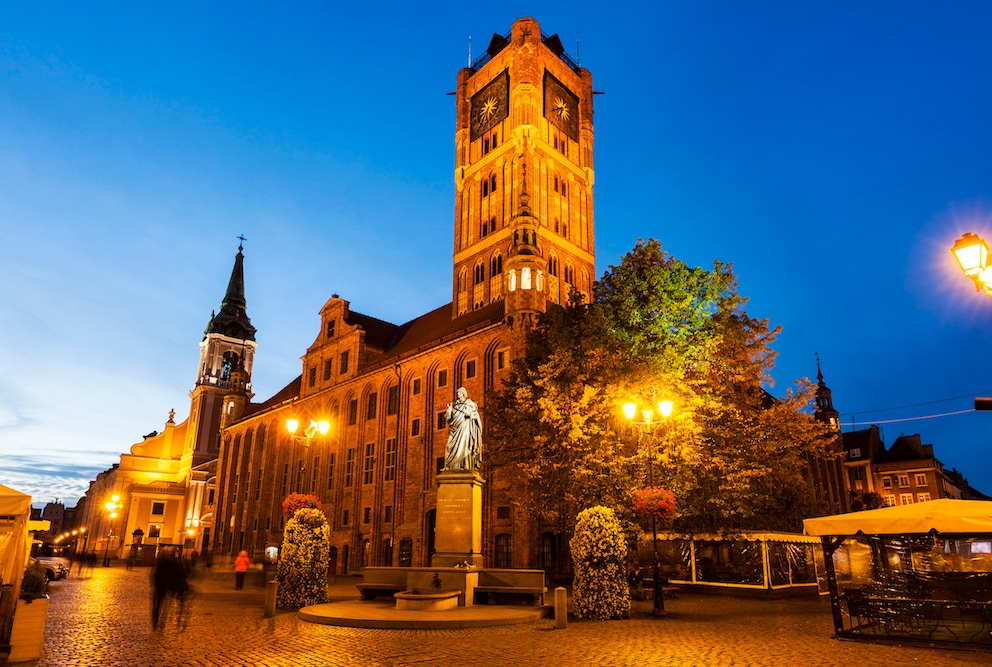
A walk on the Old Market, located directly by the Old Town Hall, is also worthwhile. The town hall combines elements of Gothic and Late Renaissance architecture. The oldest part of the town hall is the mighty square tower from 1279. In 1703, Swedish troops destroyed the building, but it was later rebuilt. The ground floor features historical molds for baking the famous Toruń gingerbread.
Traces of Copernicus
Also on the marketplace is the monument to astronomer Nicolaus Copernicus (1473–1543), Toruń’s most famous citizen and the namesake of the university. His nearby birthplace houses a collection of documents and astronomical instruments from his era. The ground and basement floors feature a gingerbread museum.
Churches and Towers
The monumental St. Mary’s Church from the 14th century is known for its star vault. In St. John’s Cathedral, whose construction began in the 13th century and was later expanded, “Tuba Dei” (God’s Trombone), the second-largest bell in Poland, rings. Also worth seeing is the so-called “Leaning Tower,” a bastion-like tower structure that has tilted over the centuries on its clay foundation.

6 of the Most Beautiful Old Towns in Bavaria
This Small Town in Bavaria Is a True Hidden Gem!
Vibrant Downtown
In the evening, the area around the Old Market in the city of 200,000 residents is particularly lively. Almost every house invites you to pubs, discos, or jazz cellars. One of the most famous clubs is the cellar “Pod Aniolem” under the town hall. Concerts and art exhibitions occasionally take place in the Gothic vaults. No wonder, as 35,000 students study at the university.
For Art and Culture Enthusiasts
Among the most famous events in Toruń is the International Theatre Festival “Kontakt,” featuring ensembles from many countries worldwide. For art lovers, the Center for Contemporary Art is also recommended; it is the first museum built in Poland after 1945.
An attraction in itself is the puppet theater next to the castle: The facade, designed as a giant cabinet, piques curiosity. Besides several museums, including the Copernicus Museum, the Ethnographic Museum with a large open-air area where houses from Kuyavia and Kashubia have been authentically reconstructed is particularly worthwhile. The museum is famous for its Easter and Christmas markets as well as folklore festivals.
Text contribution: Dieter Weirauch