

November 17, 2025, 10:53 am | Read time: 7 minutes
Fifty years ago, Thailand established its first marine protected area: Tarutao. The islands in the national park have been spared from mass tourism–a situation linked to piracy and criminal history.
Ko Tarutao in the far southwest of Thailand is a dream island that would make it into any picture book. But after a day alone on the beach, the long-desired Robinson Crusoe feeling becomes almost eerie.
Overview
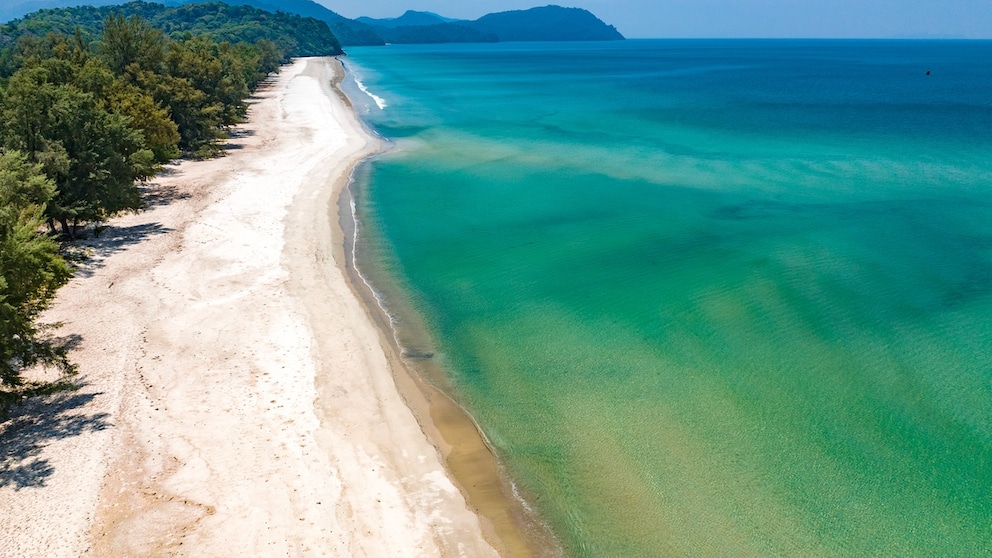
The nearly impenetrable jungle reaches right up to the sandy beach. In this realm of towering trees, vines, and tropical plants, there is chirping, buzzing, and screeching. It’s vibrant life. Yet what you won’t see in the sand of Pante Malacca Bay: any footprints. Not a soul in sight. Hotel complexes and beach bars? None! The only companions: crabs and monkeys.
Absolute Peace on Ko Tarutao
On Ko Tarutao, you quickly get the feeling of being stranded. It’s not for everyone. At sunset, there are no gin and tonics or chillout music. But for those seeking absolute peace and nature enthusiasts, Ko Tarutao is perfect. In a globalized world, such places have become rare. Especially in Thailand, where even the smallest hideaways quickly lose their “insider tip” status.
Even more surprising: While Ko Tarutao is quite remote in the Andaman Sea near the Malaysian border, it is anything but small at 150 square kilometers. The island is 26 kilometers long, 11 kilometers wide, and thus the fourth-largest island in the country. So why is Ko Tarutao often unknown even to Thailand fans and has remained such a natural paradise?
Ko Tarutao is Thailand’s First Marine Protected Area
The answer lies 50 years back. On April 19, 1974, Thailand’s first marine national park was established here. It consists of 51 islands in the southern Andaman Sea, covering an area of 1,450 square kilometers. Alongside Ko Adang and Ko Rawi, Ko Tarutao is the largest island in the park, which also bears its name.
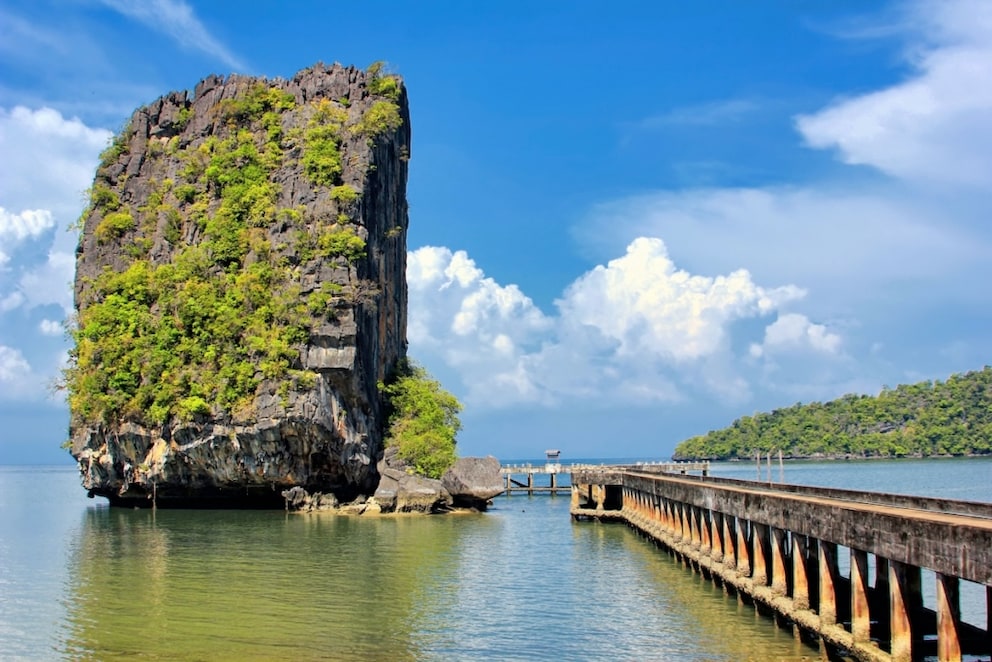
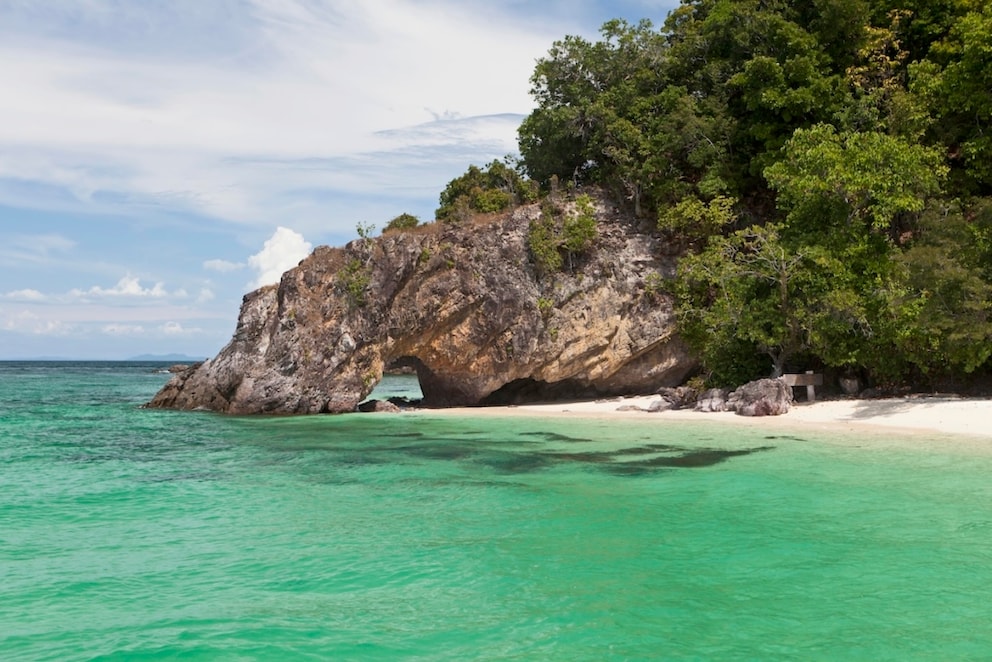
Many islands, like Ko Khai with its natural rock arch that became the park’s symbol, are uninhabited small islets. Ideal refuges, for example, for sea turtles that lay their eggs here. Dolphins, whales, and dugongs live on the reefs with rare coral species. On the islands themselves, macaques, monitor lizards, herons, wild boars, toucans, and pythons are native.
“Since hardly any people lived on these remote and hard-to-reach islands, the flora and fauna here were more untouched than on other island groups even 50 years ago,” says park ranger Bonkhun Rarueng. This is why a marine national park was established here.
Mountains and Rainforest
Additionally, the mountainous island, whose highest peak measures 708 meters, is covered with dense rainforest and limestone cliffs, making agriculture practically impossible. But there is another reason why such a large island was not populated, unlike its southern neighbor, Malaysia’s Pulau Langkawi: Tarutao was once declared a place of exile. In 1939, the government in Bangkok made it a prison island.
“This is where the prisoners arrived back then,” says Rarueng after a motorcycle ride through dense jungle and a subsequent hike to Talo Wao Bay on the east coast. Penal colonies were also established in Talo Udang Bay at the southern tip of the island.
From the pier, the ranger leads along the “Historical Trail” to the remains of the penal colony. Wooden barracks, a governor’s house, a small hospital–all long overgrown and destroyed by the jungle. By the end of World War II, the government no longer cared for Tarutao. The food supply from the mainland was cut off. “Prisoners and guards alike suffered from hunger and eventually turned to piracy, attacking and plundering merchant ships in the busy Strait of Malacca,” says Rarueng.
This provoked the maritime and trading power of Great Britain. But the rugged jungle island served as a good hideout. It wasn’t until 1964 that the British Royal Navy was able to put an end to the piracy.
7 of the Most Beautiful Beaches in Thailand

The most beautiful beaches: 11 we’d like to be at right now
Electricity Only Between 6 p.m. and Midnight
Today, the national park administration rents out a few simple stone bungalows idyllically located on the beach on Ko Tarutao. The construction of hotels is prohibited. The restaurant, besieged by hordes of monkeys during the day, serves only breakfast and dinner.
The island is supplied with electricity only between 6 p.m. and midnight. There is no television or internet, nor are there taxis or tuk-tuks or a tourist infrastructure like on Ko Samui or Phuket. “Most Thailand vacationers seek more service, more comfort, more party,” says the ranger.
The few visitors rent bicycles to reach secluded bays and waterfalls in the island’s interior, some hike and are often watched skeptically by hornbills. Challenges include the steep terrain of the mountainous island and the tropical temperatures.
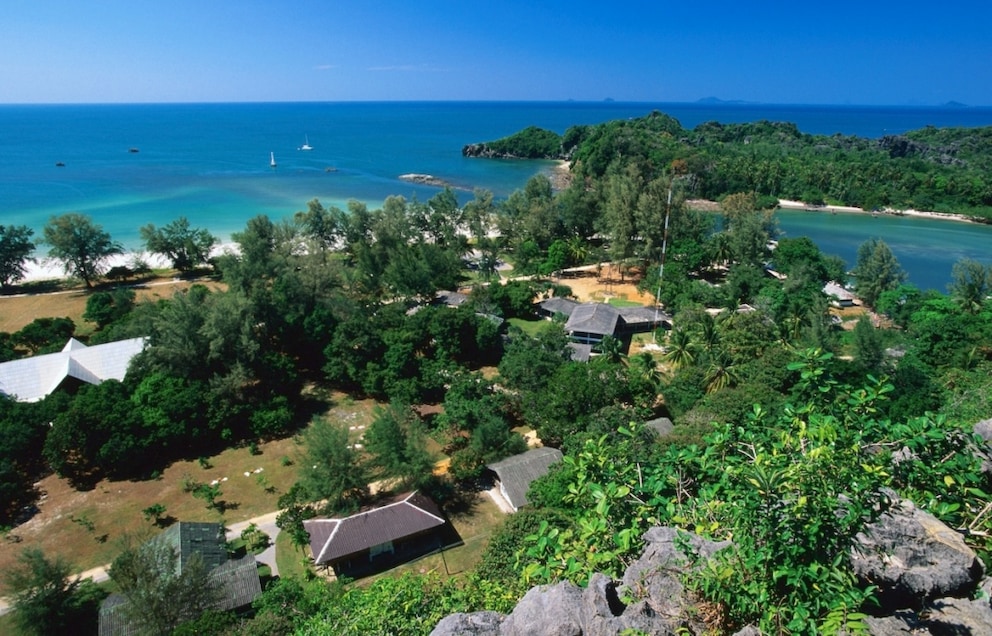
Most jungle trails end at dream beaches like the approximately four-kilometer-long Ao Son Beach, which is also unparalleled in solitude. But human traces can still be found: On many beaches of Ko Tarutao, trash from the tourist islands is washed ashore. “We rangers can’t fight against it,” says Rarueng.
However, everything you do on the national park island becomes a small adventure: like the short jungle hike to the “Cliff View Point” with its Buddha statue and the great panorama of the northern part of the island or a kayak tour on a river into the island’s interior to the Crocodile Cave. At the national park pier, rangers rent out kayaks and headlamps. You can photograph the printed aerial view of the route.
Indescribable Feelings
With the ebb tide and enough drinking water, the journey begins. The tour to the cave through a labyrinth of mangrove forests takes a good two hours. And what if you now turn into the wrong tributary? No boat crosses the path. Herons fly over the water. The feeling of paddling alone through this natural paradise is indescribable.
Suddenly, a landing appears. Dock, disembark. A path of perhaps 200 meters leads to the entrance. Stalagmites and stalactites appear in the beam of the headlamp. A kind of plastic walkway leads over the river, which continues underground, deeper into the cave.
You have to walk bent over, so low is the ceiling, where thousands of bats hang. It’s just as well that the rangers mentioned beforehand that no crocodiles have been sighted here for decades.
After the excitement of the tour, back at the restaurant, hunger sets in. Eating the Pad Thai is a breeze. In the bungalow, with the onset of night, the next adventure begins: The jungle around the solitary dwelling now truly comes to life.
All that’s left is to listen to the exotic sounds and the monkeys on the roof. What did Ranger Bonkhun Rarueng say again? “Ko Tarutao is out of time. This is probably how other islands in Thailand looked 100 years ago.” Tarutao means “The Mysterious.” There could be less fitting names.
Location on the Map:

Getting There
Getting there: From Bangkok, fly to Hat Yai or Trang. Continue by bus or taxi to Pak Bara, from where ferries depart for the national park.
With material from dpa