

July 30, 2025, 5:04 am | Read time: 6 minutes
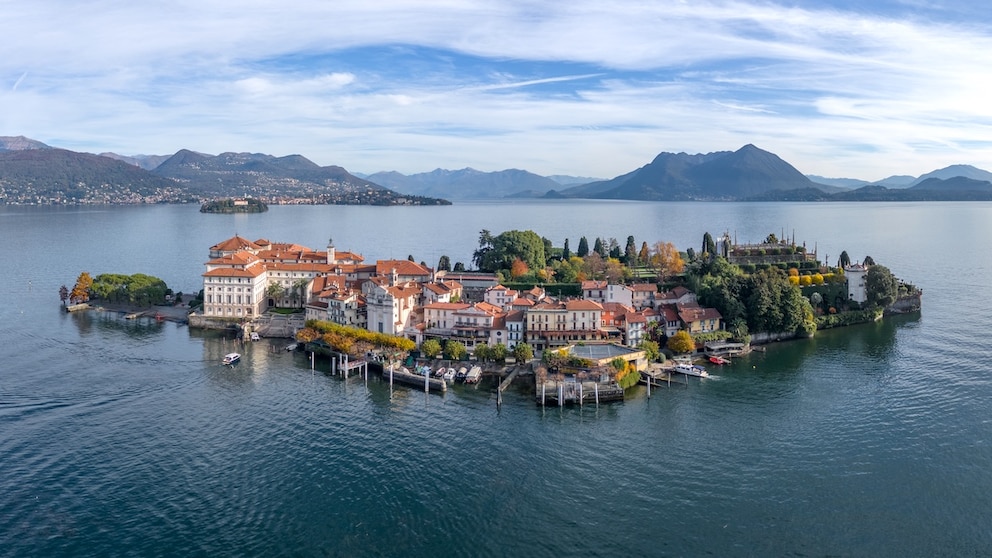
Queen Victoria visited, Napoleon too, banana plants and tree ferns flourish: The islands in Lake Maggiore boast magnificent palaces and an impressive array of flora and fauna. TRAVELBOOK provides an overview of all the islands in Lake Maggiore and offers many tips for a visit.
Overview
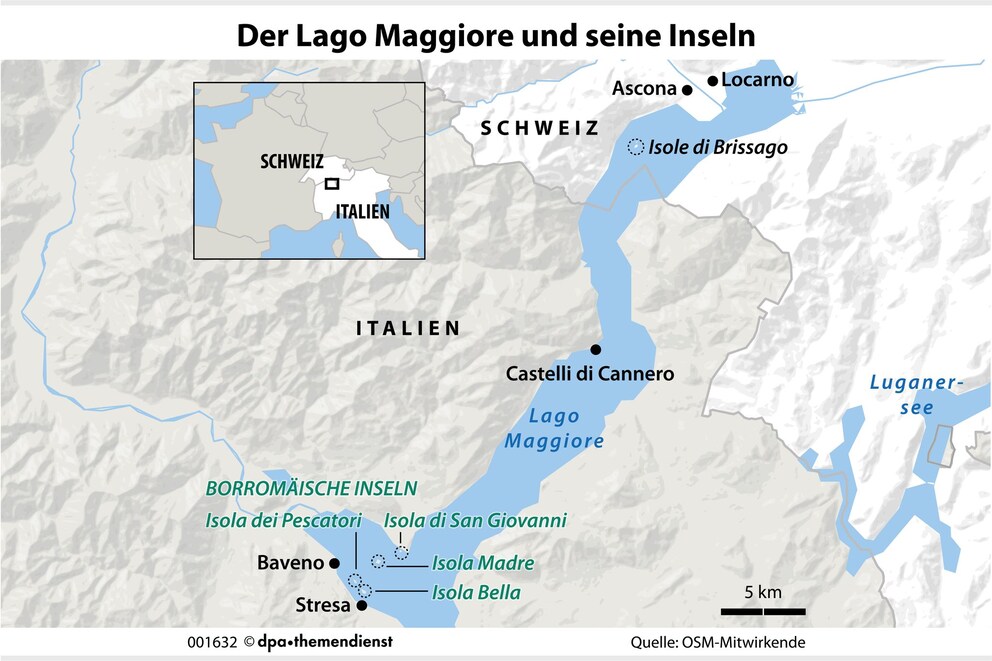
The Islands in Lake Maggiore at a Glance
Brissago Islands
Isola San Pancrazio and Isola Piccola
Isola San Pancrazio is located in the Swiss part of Lake Maggiore and was barren rocks 150 years ago. A Russian baroness, allegedly an illegitimate daughter of Tsar Alexander II, transformed it into the blooming paradise it is today.
The story began in 1885 when Antoinette de Saint-Léger bought the two islets, now known as the Brissago Islands. She had soil transported from the mainland by boat and ordered plants from botanical societies worldwide.
Today, South African king proteas bloom in pale pink, American bald cypresses root at the shore, and ancient Australian cycads stand by the path. Turtles float in the pond among papyrus and water lilies, and carnivorous plants cling to rocks. A 140-year-old honey palm is said to have been planted by the baroness herself.
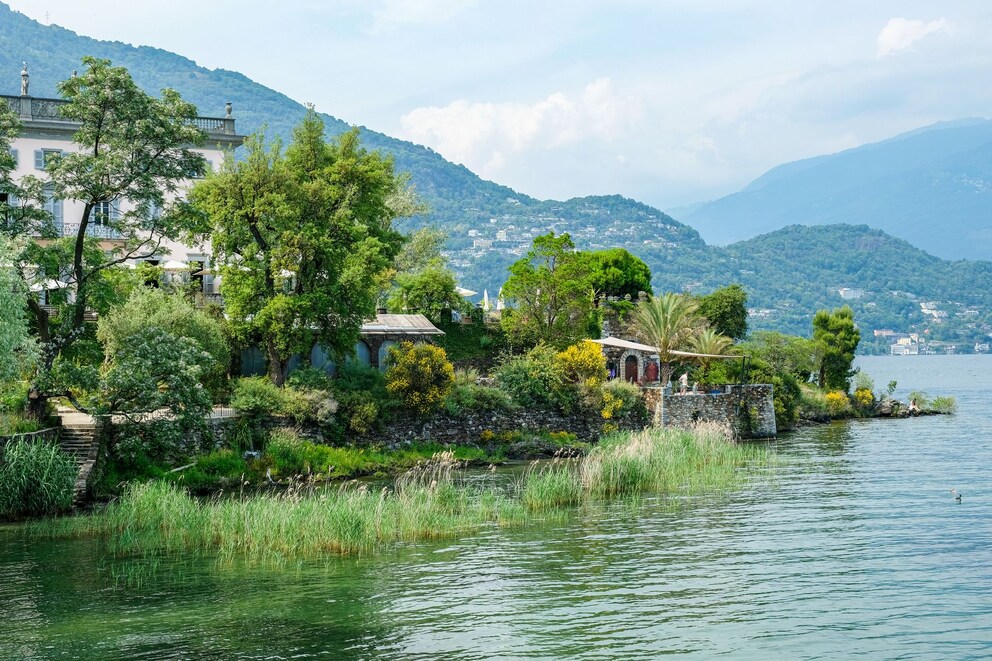
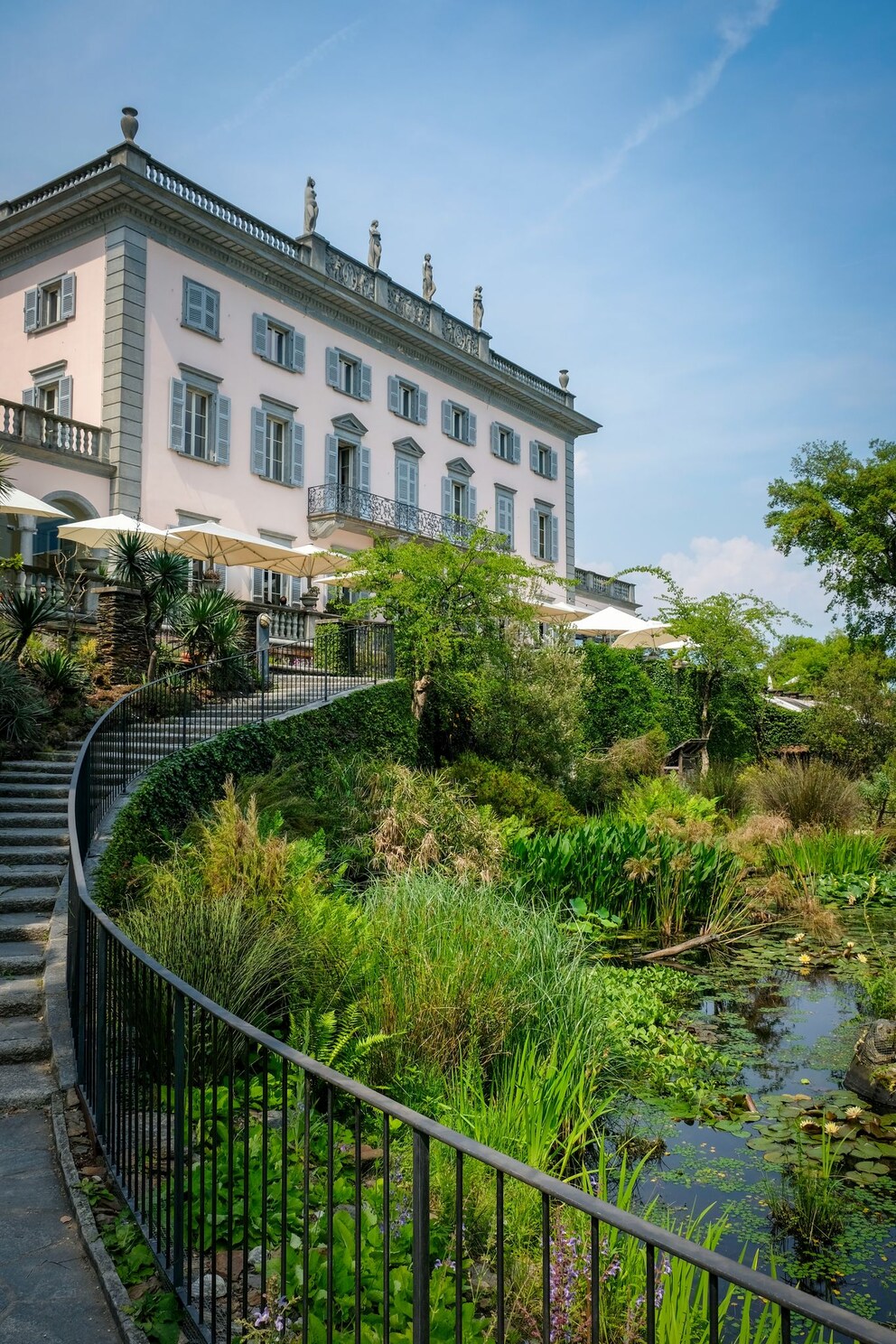
The exotic plants thrive thanks to the humid, warm microclimate. The surrounding mountains protect against cold winds, and the lake reflects the sun. Temperatures are up to four degrees higher than on the shore. When the baroness ran out of money in 1927, Hamburg merchant Max Emden bought San Pancrazio Island. Emden demolished the baroness’s house and built an even grander villa, now a hotel bearing his name.
He maintained the botanical garden, although he was more interested in beautiful women than plants. For his lavish parties, he had a Roman bath built and transported ladies from Ascona by motorboat. Since 1950, the larger of the Brissago Islands has been open to the public. This year, the anniversary is celebrated with concerts and exhibitions.
Castelli di Cannero
Traveling further south along the west coast, you soon pass the Castelli di Cannero after crossing the Italian border. The island castle was closed for restoration for decades and reopened this summer as a multimedia museum.
Audio guides narrate the tour, explaining how the Mazzarditi brothers extorted villagers from the castle in the Middle Ages, how Ludovico Borromeo built a new fortress around 1520 as a bulwark against advancing Swiss forces, and how Queen Victoria admired the picturesque ruin in 1879, which had been a citrus plantation and rabbit hutch in the meantime.
Borromean Islands
Isola Madre
Like the British queen back then, most travelers head further south to the Borromean Bay. From the vacation spots of Stresa and Baveno on Lake Maggiore, with their venerable grand hotels, they take ferries and taxi boats to the small islands, which also bear the name of the noble Borromeo family. Isola Madre, in the middle of the wide bay, is the largest of the five islands. And the warmest. Bitter oranges testify to the beginnings when citrus plants were acclimatized here.
The Borromeos acquired the island in 1501, and over the centuries, they planted exotic species from around the world on terraces. Visitors stroll past banana plants and Australian bottlebrushes, evergreen magnolias and rhododendrons tower tree-high, and Tasmanian tree ferns lean under a dripping rock wall. In spring, 150 types of camellias bloom on the islands.
As if all this weren’t charming enough, silver and gold pheasants, white and blue peacocks strut on the lawn between laurel hedges and cypresses. And colorful parrots chirp in aviaries.
In the palace on the top terrace, the aristocrats spent the hot months. Standing like a doorman is the island’s most famous tree: a 160-year-old Kashmir cypress. On June 28, 2006, a whirlwind toppled it, but engineers managed to save the rare giant. Cranes flown in by helicopter set the colossus upright again, and steel cables now anchor it to the ground.
In the residence, paintings from the family’s collection are displayed, liveried servant dolls stand beside the dining table and canopy bed. And stage sets from the puppet theater show how the Borromeos entertained illustrious guests (and themselves).
Isola Bella
Compared to the palace on Isola Bella, all this seems almost modest. In the Palazzo Borromeo, built from 1632 and expanded several times, the family flaunted their wealth. A tour through 30 halls and rooms overwhelms with marble floors and gold tendrils, stucco ceilings and Murano glass chandeliers. In the art gallery, the walls are covered with a symmetrical mosaic of 130 gold-framed pictures.
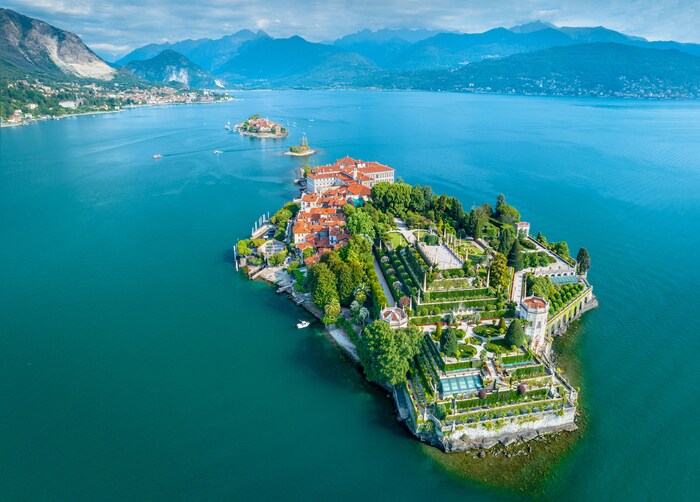
Visitors pass through throne, banquet, and music halls to the magnificent canopy bed where Napoleon slept during his visit on August 17, 1797. To escape the summer heat, the Borromeos had six grottoes built, encrusted with stone pseudo-shells. Coral stands in niches, and on a rumpled marble sheet lies the sleeping Venus.
The grand finale awaits outside in the garden: the baroque stepped pyramid with obelisks and statues, crowned by a unicorn, the Borromeo family crest. Azaleas and camellias, camphor and tulip trees grow on the surrounding terraces.
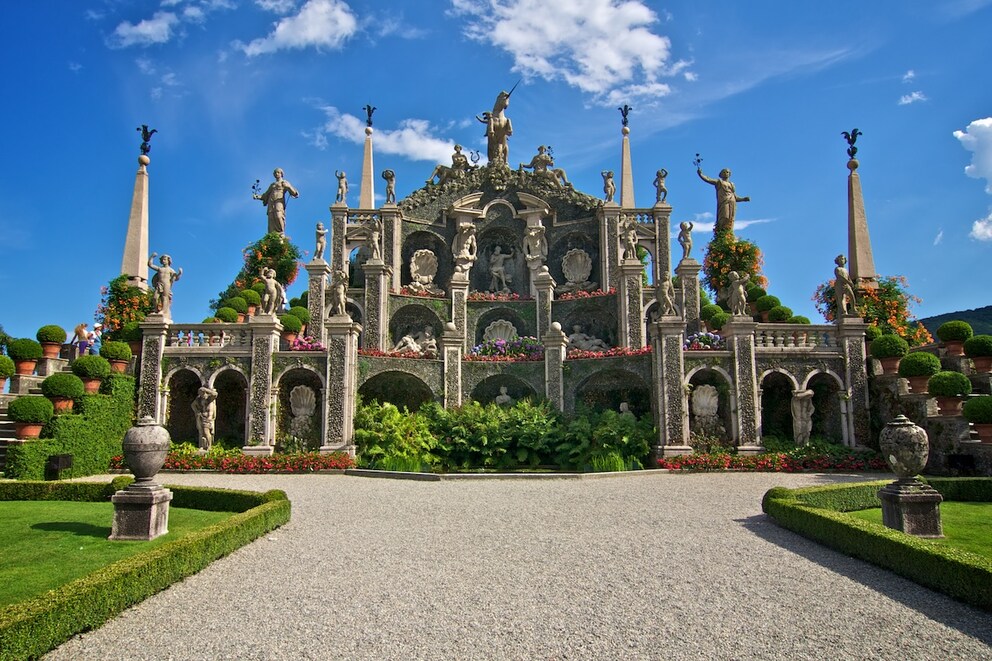
Isola dei Pescatori
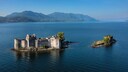
Of course, you have to share the splendor with the masses. But those who disembark at Isola dei Pescatori in the early evening encounter only a few ducks on the promenade. Most restaurants and snack bars, where many day-trippers stop for lunch, are now closed.
On the plane tree avenue to the northern tip, where fishermen once laid out and mended their nets, two little girls run with their scooters, their mother leisurely trailing behind. It’s probably quieter only on Isola di San Giovanni. But this privately owned Borromean island, just a few strokes from the mainland, is off-limits to tourists.
Old Lake Maggiore Fortress Reopens to Visitors
The 6 Most Beautiful Sights on Lake Maggiore
Islands in Lake Maggiore – Practical Tips
Best Travel Time
The islands are open from mid-March to early November. Most plants bloom in April and May.
Arrival
By train via Zurich and Bellinzona to Locarno. Ferries regularly depart from the harbor near the station to the Brissago Islands. An Italian ferry departs at 8:30 a.m. from Locarno and stops at all Borromean Islands.
Accommodation
On the islands, there are mainly upscale hotels like the “Villa Emden” or the “Hotel Belvedere.” In Locarno and the towns in the Borromean Bay, there is everything from campsites to grand hotels.
Tours
On the Brissago Islands, a botanical tour is offered twice daily, included in the ticket.
Event
On San Pancrazio Island, the larger of the Brissago Islands, the exhibition “Mutanti” by photographer Daniel Pittet is on display until 2026: mirrored macro shots of garden plants that hang like colorful animals on walls and in the villa.
The Islands on the Map
With material from dpa