

December 4, 2025, 5:29 am | Read time: 7 minutes
What connects an old fortress, street art, vegan cuisine, and café culture? Trencin in Slovakia. The city surprises with history, art, and bursts with ideas for the European Capital of Culture year 2026.
When you arrive in Trencin, you quickly notice: Things are moving here. The reason: Next year, Trencin, alongside Oulu in Finland, will hold the title of European Capital of Culture.
The city in northwestern Slovakia is still off the beaten path of mass tourism. With a redesigned pedestrian zone, renovated museums, a “Fiesta Bridge” over the Vah River, and many other projects, Trencin aims to present its best side.
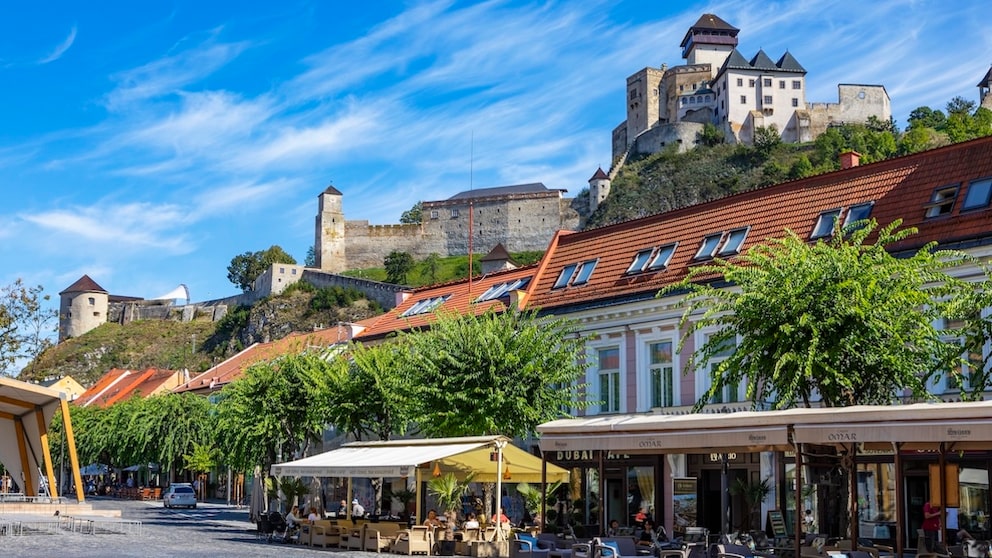
The Castle is the Landmark
What would Trencin be without its castle? The medieval fortress is visible from afar, towering high above the city. At the popular café “Coffee Sheep,” you turn into a small alley that leads steeply up through switchbacks. Along the way, you encounter sheep right in the city. An unusual art installation also awaits on the way to the castle: Climb a scaffolding to spin and look through a giant color wheel. The panoramic view of the valley basin changes from gray to yellow. The color filters depict air pollution from exhaust gases and fine dust at different times.
Continue to the ticket office, where you can choose between a self-guided tour or a guided one. The city is rightly proud of its historical heritage. Climb up to the tower, one of the oldest parts of the complex. Until then, exhibits provide interesting information about the castle. In the Middle Ages, the nobleman Matthäus Csák (1260–1321) ruled vast areas of present-day Slovakia and Hungary from here. His living quarters seem spartan by today’s standards.
Mountain Biking and Skiing on the Outskirts
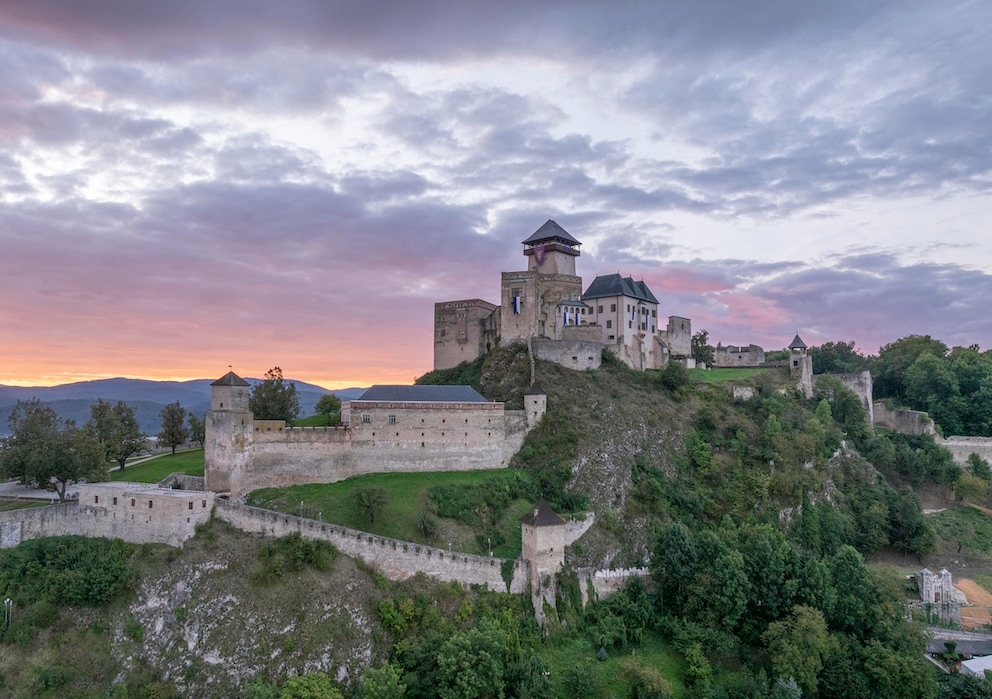
If you’re up for a walk and want to see some of the landscape, take a longer route to the castle. Behind the city tower, turn left along the old city wall to the 215-hectare Brezina Forest Park. The route is well-marked and offers beautiful views. For the physically active, the forest area provides a mountain bike trail. In winter, cross-country skiers glide through the snow-covered landscape.
When knights still lived in the castle, the area looked quite different: Old pictures show that the hills were bare and treeless. This ensured that attackers could be spotted from a great distance in time.
Break with Coffee and Sweet Palacinky
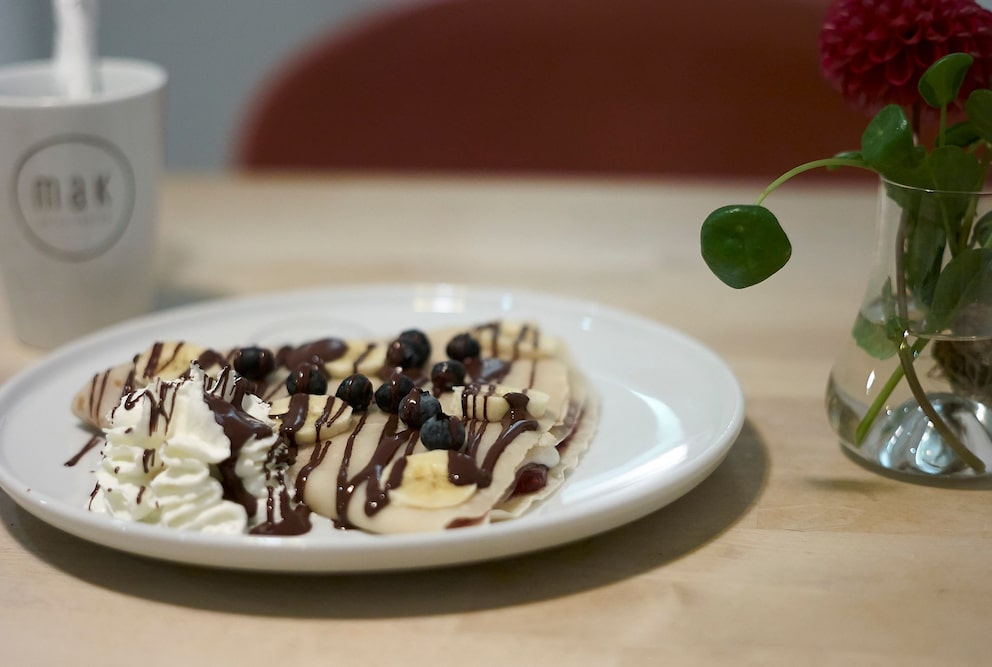
After a castle visit, a coffee break is worthwhile. On the central Mierove namestie, one café follows the next. Among the culinary delicacies are the palacinky–pronounced palatzinki. The thin pancakes resemble French crêpes and are a legacy of the former Danube monarchy. They come in endless varieties, from sweet to savory. At Café “Lary Fary,” you can order a fruity delight with cherries and poppy seeds. At “Mak palacinkaren” a few streets away, children enjoy the original “princess” version with marshmallows, while adults prefer the classic with quark and jam.
For Slovaks, coffee seems to be the element of social cohesion, much like beer is for Czechs. Tucked away in a small side alley next to Ludovit Stur Square, you’ll find the coffee roastery “Coffee Lab.” Owner Martin Ondik is visibly proud of his roasting and espresso machines, which he keeps spotless. The atmosphere is relaxed, and the clientele is local. Regulars stop by to chat. As a visitor, you quickly get the impression that everyone knows everyone here, even though Trencin has more than 54,000 residents.
Legend of the Water Sprite
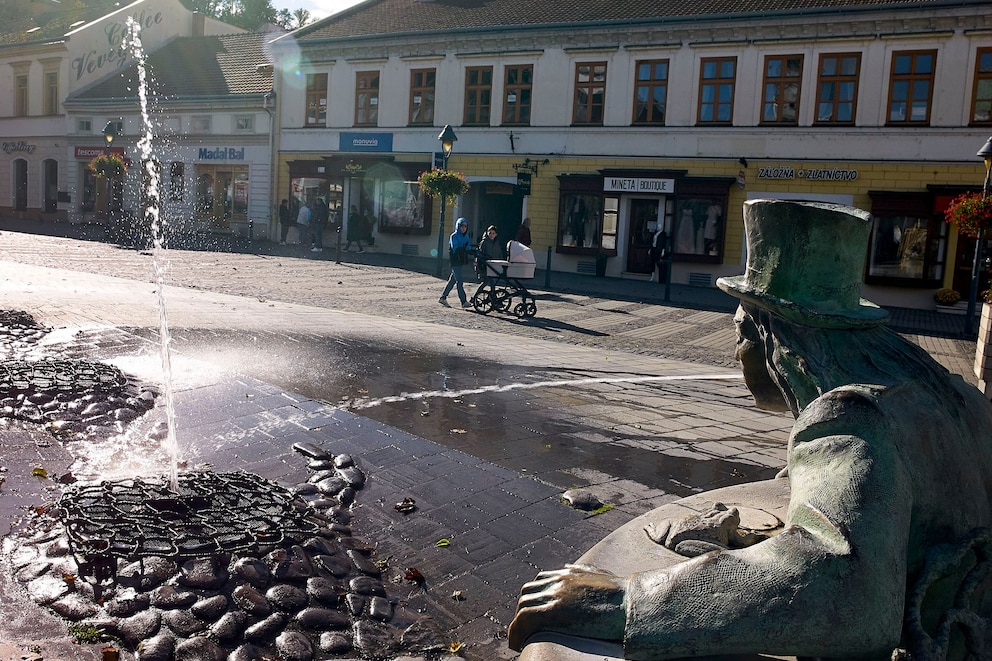
Back outside on Ludovit Stur Square, you encounter an attraction that magically draws tourists and small children. The statue of a green water sprite regularly shoots a fountain in a high arc. In the evenings, there are great light effects.
The statue from 1998 ties into the local legend of the water sprite Valentin. He is said to have once migrated from Moravia in today’s Czech Republic. In Trencin, Valentin fell in love with the gingerbread baker Anicka, who returned his feelings. But the townspeople, fearing the water spirit, opposed the union. One day, the gingerbread baker’s house caught fire. The water sprite did not hesitate and extinguished the fire, but lost his life in the process. According to legend, the people erected a fountain in memory of this heroic deed.
Old Railway Becomes Fiesta Bridge
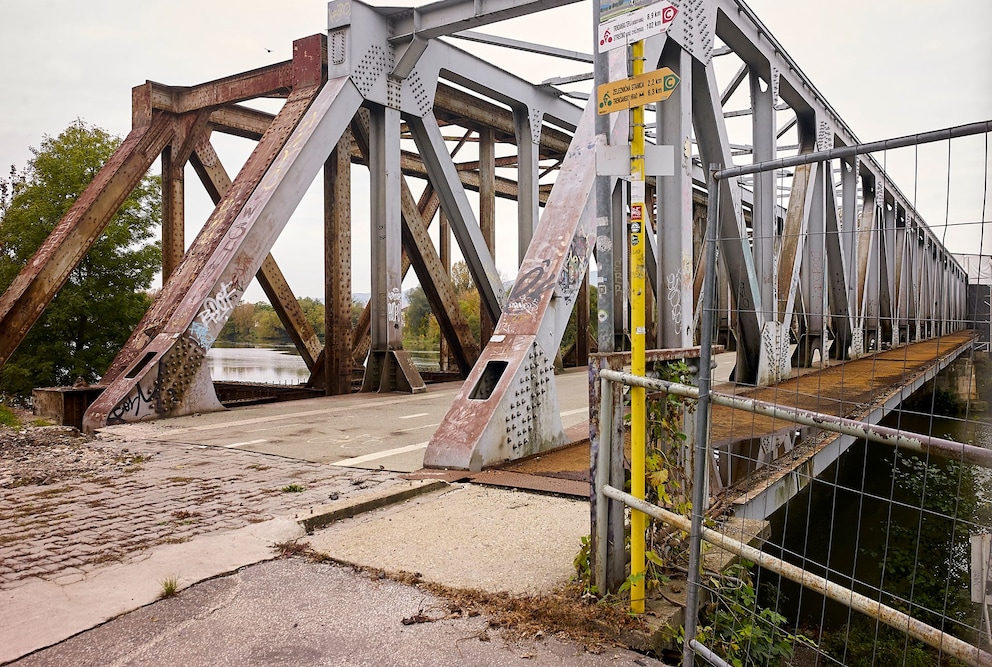
The Vah River plays a crucial role in Trencin’s plans for the European Capital of Culture year 2026. An old railway bridge is to become the “Fiesta Bridge.” “It will become a promenade, a place to stay with green spaces and a variety of dining options, and even a space for cultural or sporting activities,” announced city architect Martin Bedats. Plans include a climbing wall and trampolines for children.
The bridge is easily reached from downtown with a short walk. In an underpass beneath a highway, you can admire works by street artists in a gallery along the way.
The 255-meter-long railway bridge, once slated for demolition, is currently still a construction site. The planned costs for maintenance and conversion amount to nearly 15 million euros. The planners hope the “iconic structure” will become part of the city’s visual and social identity. The bridge connects both banks of the Vah, the longest river in the EU and NATO member state.
Artists from Across Europe Visit
If you don’t want to wait for art experiences, you’ll already find them in the city gallery. It is named after the Slovak painter Milos Alexander Bazovsky (1899-1968). After studying in Budapest, Prague, and Vienna, he found inspiration in folk motifs.
As part of the Capital of Culture program, contemporary artists from other European countries come to the gallery for residencies. For example, Norwegian artist Marit Benthe Norheim presented her mermaid sculptures in Trencin, which appear friendly, sometimes rather fearsome and mysterious. In a workshop by the artist, children shared their experiences with water.
In addition to historical buildings and artistic offerings, Trencin, despite its small size, also has a lot to offer culinary-wise. At the restaurant “Roots Vegan Food,” daily changing lunch dishes are offered without meat–still a rarity in this part of Europe. One could try the beet Wellington with pea puree and potatoes.
The pizzeria “Castello” offers Italian cuisine, and “Mestsky hostinec” serves burgers with beef from the farm. At the brewery “Lanius,” you can end the day with a beer in peace. You should try the “pretzel beer”–a Slovak homage to the Munich Oktoberfest.

New Train Offers Bargain Prices Across Europe

The Best Prague Alternative? This City Has Everything Except the Hustle and Bustle
Opening Ceremony in Mid-February
The grand opening ceremony will take place in Trencin on February 15. A literature festival is planned for March, followed by a light art festival and a series of concerts featuring Roma music in April. The program also includes a series of art interventions in public spaces, such as in a hospital and city hall. One of the highlights of the year is the Fiesta Festival on the redesigned bridge over the Vah in September.
Travel to Trencin

Trencin is located on the Bratislava-Zilina railway line. From Dresden, the city can be reached in just over seven hours with transfers in Prague and Puchov. From Munich, it also takes about seven hours via Vienna and Bratislava. The airport in Bratislava, with direct connections to Dortmund and Berlin, can be reached by train and airport bus in just under two hours, and Vienna-Schwechat airport in three and a half hours.
Trencin is conveniently located on the Slovak D1 highway, which leads to Bratislava, where there is a connection to the D2 towards the Czech Republic and the Austrian highway network.