

December 30, 2025, 2:04 pm | Read time: 5 minutes
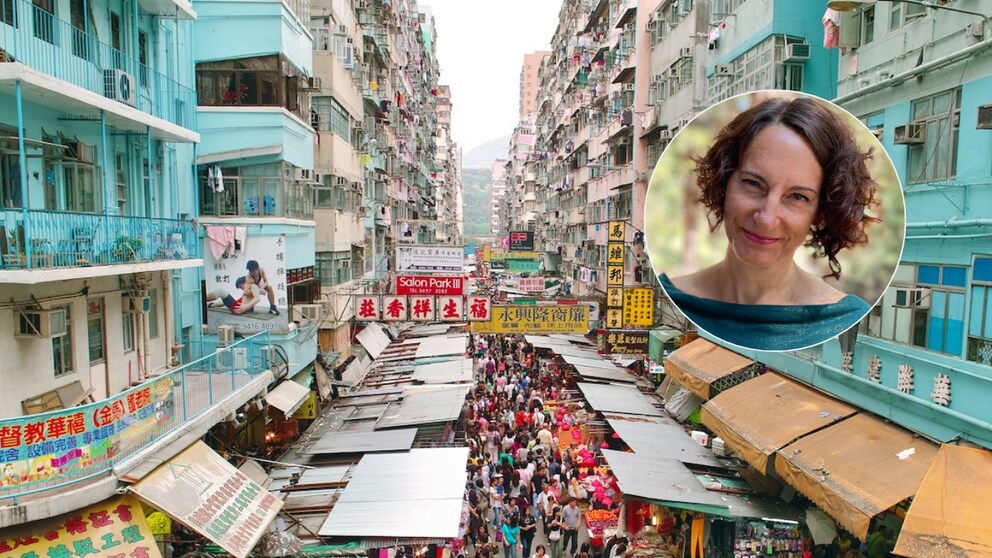
Anyone who has seen the impressive skyline of Hong Kong—with nearly 3,000 skyscrapers, the tallest over 400 meters high—will never forget this gigantic glittering city. But those who venture through the narrow alleys between the glass facades into the street labyrinth of the megacity will see a completely different side of the city.
I had been in Hong Kong for a few days, admiring the gigantic skyscrapers with my head tilted back. I had visited the Kowloon Walled City Park, taken the Star Ferry to Hong Kong Island, and tried many street food stalls. But I never expected that a simple pedestrian crossing would both confuse and touch me. It was a Sunday, the air was warm like from a hairdryer, and I just wanted to quickly cross a busy intersection in the Mong Kok district. So I took the stairs up to one of the typical elevated walkways. But what was this? I suddenly stopped.
Overview
A Mass Picnic on the Pedestrian Crossing?
Because in front of me sat hundreds of women on the ground—on plastic tarps, cardboard, blankets, between railings, under neon-flashing billboards. Some were having lively conversations, others were taking selfies, and still others were braiding each other’s hair. The smell of fried chicken and exotic spices mixed with the perfume that gently lingered in the air. I had no idea what was going on here—and was immediately fascinated for that very reason.
Who These Women Are—and Why They Sit Here
In fact, I witnessed a ritual that Sunday afternoon that is as much a part of Hong Kong as the Star Ferry or Victoria Peak. Around 300,000 domestic helpers, almost all from Indonesia or the Philippines, work in the metropolis. Almost all are women. They are nannies, cooks, caregivers, cleaners. Their workweek often includes up to 80 hours. And they have one day off: Sunday.
While many Hongkongers use this day to relax, shop, or go hiking, the domestic helpers can hardly retreat to their often tiny living situations. Many sleep in storage rooms or on folding beds in their employers’ living rooms. Inviting friends is often not allowed. So they meet on their free Sunday outside—anywhere there is space.
Bridges, pedestrian crossings, parks, the areas under bank towers: The entire public space transforms into a social network of real encounters on Sundays. What looks like an improvised street picnic to tourists is actually a huge communal ritual that has existed for decades.
A Picnic That Means More Than Food
I slowly made my way through the crowd and saw lovingly packed Tupperware, thermos flasks with tea, Martabak Manis (filled pancakes from Indonesia), and Sapin-Sapin (rice cakes from the Philippines). A group was playing cards, and another was laughingly singing karaoke with the help of a Bluetooth speaker. Next to me, a woman was excitedly practicing a video message for her child, whom she hadn’t seen for months.
I realized: For these women, Sunday is not just a day off. It is their anchor, their moment of normalcy. A brief break from work, but also a reconnection to everything thousands of miles away—to family, friends, their own identity.

Five Things You Should Know Before a Trip to France

Author: “What Surprised Me on My Last Trip to L.A.”
From Mong Kok to Central–An Invisible Network
The joyful gatherings are not limited to the pedestrian bridge in Mong Kok. In the Central district (where shops display handbags for 12,000 euros in the windows), many Filipinas sit on Sundays, often on cardboard boxes they transform into small living rooms: with curtains made from fabric scraps, mini-altars, makeup mirrors. Many offer cell phone repairs or haircuts. This gathering has since earned the nickname “Little Manila.” In Causeway Bay, groups from Indonesia dominate, where more cooking, laughing, dancing—and sharing take place: On small tables, paper plates with homemade Indonesian snacks are neatly arranged side by side.
What looks like a spontaneous party to outsiders follows an astonishing order: Each group has its fixed place, each corner its own social structure. It is a microcosm that redefines the city for a day.
What This Sunday Did to Me
I originally just wanted to cross the street quickly—but I stayed on the pedestrian crossing much longer than I had planned. First out of curiosity, then out of respect, and finally out of genuine admiration. This Sunday ritual showed me a side of the metropolis that is easy to overlook as a tourist–even though it takes place right before our eyes. I felt quite overwhelmed: Hong Kong, this city of billionaires, designer shopping centers, star architect facades—and then this parallel world of nannies and domestic helpers, who often work for the minimum wage (about 550 euros per month)—what a contrast.
A friendly voice behind me pulls me out of my thoughts. A woman offers me a Tupperware filled with fragrant Sapin-Sapin and smiles. A small piece of pastry, but a large piece of community that I won’t soon forget.