

January 1, 2026, 6:48 am | Read time: 6 minutes
Hong Kong is one of the most densely populated places in the world—about 7,000 people live per square kilometer here (in Germany, it’s around 240). And this city is just as packed with things you absolutely want to see on a trip. TRAVELBOOK author Doris Tromballa didn’t want to miss any highlights, but also didn’t want to just go through the standard program. That’s why she has put together her ultimate subjective must-see list for Hong Kong with five unusual “sights”!
A ride on the Star Ferry, three hundred selfies at Victoria Peak, and the world-class art collection of the Hong Kong Museum of Art: These are at the top of every Hong Kong travel list. Also on mine. And yet, I made a few excursions into lesser-known corners of the city. Very worthwhile!
1. Film Sets of Kowloon Walled City–Reconstruction of a Lost World
The “Kowloon Walled City” was a living myth for decades. The dense high-rise settlement emerged without architects, city planners, or permits—but as a “do-it-yourself” project—up to 14 stories high. The reason for the rampant illegal construction was that it was unclear who was actually responsible for administration on the former British territory. And so, Walled City became a refuge for those who had run afoul of the law or wanted to hide from authorities for other reasons. Up to 30,000 people are said to have lived and worked in the skyscraper labyrinth at times. It developed its own, unmanageable order—dense, chaotic, yet surprisingly functional.
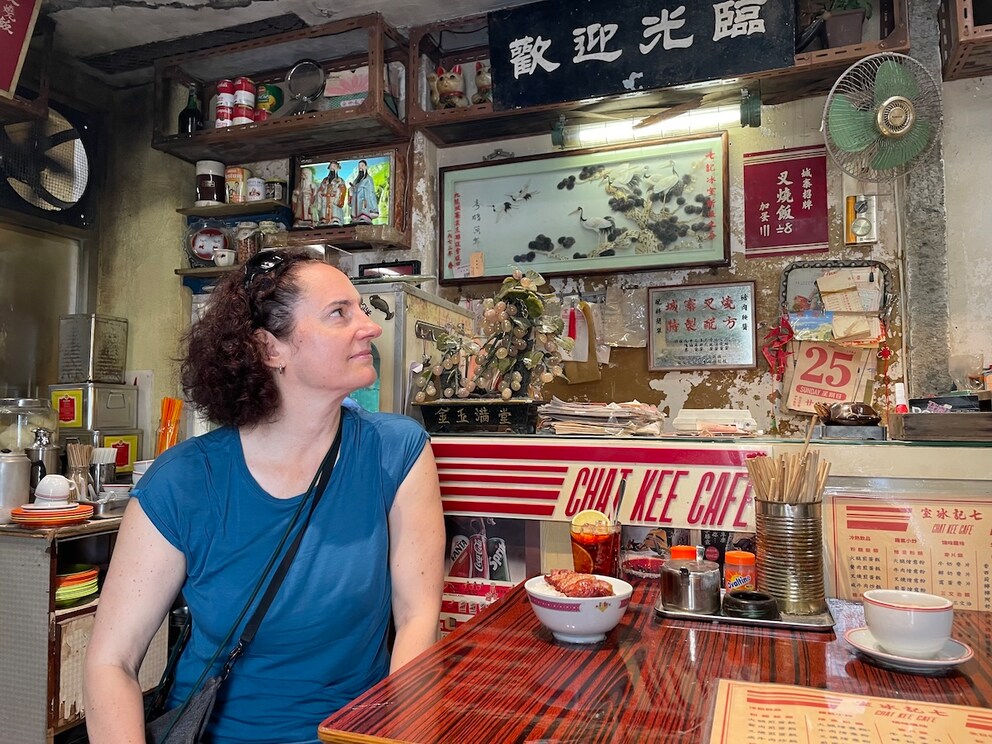
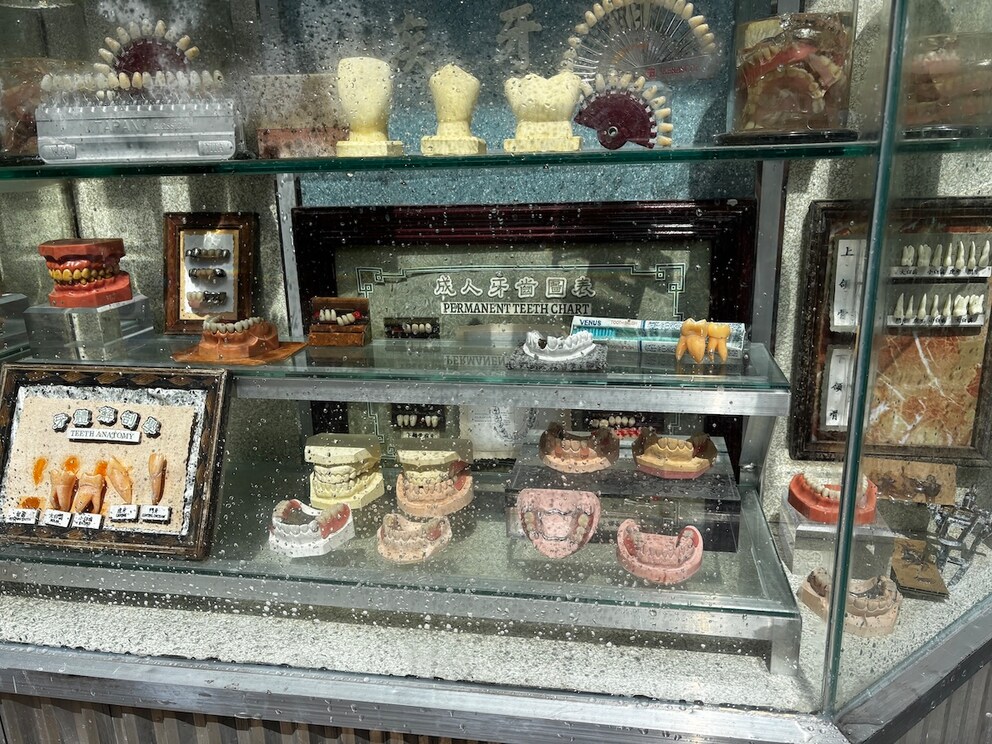
In the 1990s, the Walled City was demolished—and yet I visited it. At least it feels that way. Because in an open-air exhibition, you can immerse yourself in the eerily beautiful world of the past. Where the Walled City once towered into the sky, there is now a park, and in this park, the creators of the film “Twilight of the Warriors: Walled In” (2024) have displayed the sets built for the film. For the movie, numerous locations with the atmosphere of the magical city were reconstructed from historical photos, films, and documents. The exhibition shows what cafés, dental practices (creepy!), and craft shops looked like there. Walking through the sets, I had the impression that the city secretly continues to exist—in films, in stories, in this exhibition.
2. Symphony of Lights–When Skyscrapers Come to Life
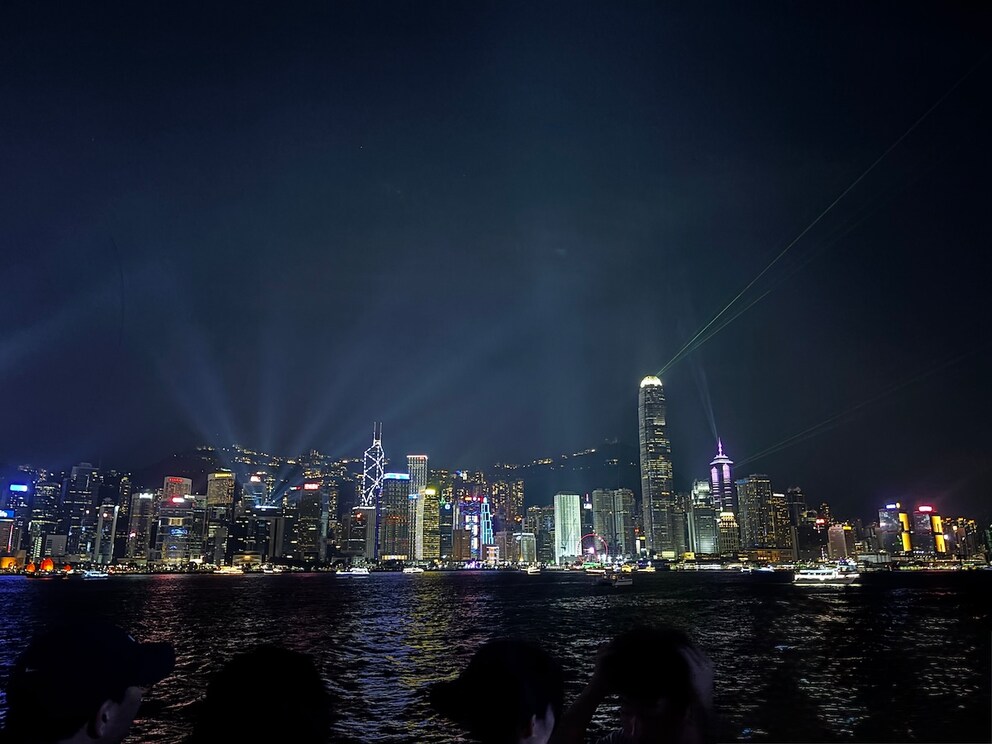
The “Symphony of Lights” at Victoria Harbour is a unique spectacle worldwide. It takes advantage of the (already stunning in daylight) skyline that the opposite part of the city, Hong Kong Island, has to offer. Every evening, promptly at 8 p.m., the skyscrapers there come to life: Billions of LED lights create blinking lines, iridescent surfaces, and pulsating hearts on the facades. From the speakers at the harbor, an orchestral piece composed specifically for the “Symphony of Lights” plays. Those who want to watch the show from their hotel room (and can) can also download the music via a dedicated app to their phone and play it in sync. Note: The show is currently suspended but is expected to shine again over Hong Kong’s harbor soon.
3. The Bronze Lions of HSBC–Two Silent Chroniclers of City History
Anyone wandering in awe through the skyscraper canyons on Hong Kong Island should definitely take a short break at the HSBC building. Not only because it’s wonderfully cool in the bank building’s foyer, but because two lucky charms can be found at the entrance: Sitting there are Stephen and Stitt, two mighty bronze lions. They are considered unofficial landmarks and symbolic guardians of the financial district.
Their history dates back to the 1930s; during the Japanese occupation in World War II, they were damaged and later almost melted down. The clearly visible bullet holes still remind us of that time. Many passersby touch the lions’ snouts because it is said to bring good luck. Above all, Stephen and Stitt stand as a memorial to how closely tradition, colonial past, and modern urban development are intertwined in Hong Kong.
What I Discovered on a Pedestrian Bridge in Hong Kong–and Will Never Forget
This Country Has the Most Michelin-Starred Street Food Stalls
4. The “Cup Noodles Museum”–Make Your Own Instant Noodles
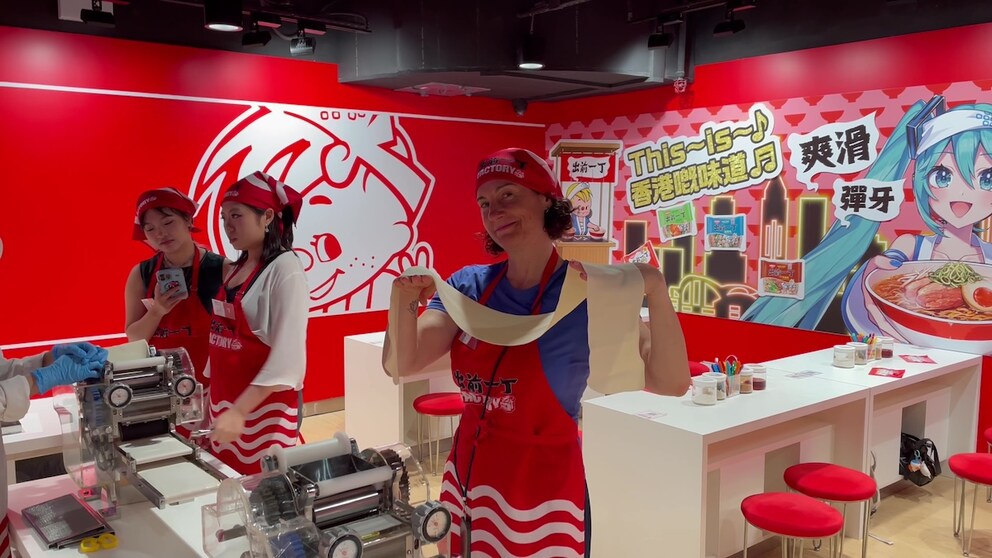
Not only in Asia, but also here, instant noodles have long been a tasty, convenient meal. Tear open the cup, add water, wait three minutes—done! However, many are unaware of how much food technology and experimentation were needed to create this seemingly simple dish. And this knowledge gap can be closed at the “Cup Noodles Museum” in Hong Kong: Japanese entrepreneur Momofuku Ando wanted to address the food shortage of the post-war period—and besides rice, noodles are a staple of Asian cuisine. But the problem was that noodles had to be cooked for a long time or spoiled quickly when fresh. Momofuku Ando’s wife, Masako, inspired him when he watched her preparing tempura (fried vegetables) and noticed how frying removed moisture. This gave him the idea to briefly fry fresh noodles to preserve them first and then cook them quickly.
That’s exactly what you can do at the “Cup Noodles Museum”: In a two-hour workshop, all participants knead their own dough, pass it through the noodle machine (14 times!), and watch as it is expertly fried. You can decorate your own noodle packaging and get a second pack for free. A great fun, not just for kids. Note: The museum will take a creative break at the end of January 2026, but is expected to reopen soon.
5. Ko Shing Street–Is That Medicine or Can It Go?
Ko Shing Street is not for the faint-hearted. The street is a center of traditional Chinese remedies. And here you can find everything you can imagine, but perhaps don’t want to: Not only powerful herb bundles, mushrooms, and roots, but also dried starfish, ray wings, and lizards (on skewers!). In small bags, you can buy centipedes or scorpions (also dried) or powder made from frog bladder or deer antler. But should you? I decided against a purchase, but the atmosphere on “Medicinal Street,” as Ko Shing Street is also called, is simply like something from another time.