

June 3, 2026, 3:50 pm | Read time: 7 minutes
Untouched primeval forests, wild predators, and solitary high mountains—the Făgăraș Mountains in Romania offer a unique natural experience rarely found elsewhere in Europe. Lena Braun was on-site for TRAVELBOOK and reports on her five-day exploration tour through the Carpathians in Romania.
I’ve already explained in another article that this area is set to become the largest national park in Europe. The nature, wildlife, and cultural impressions I gathered during my trip left a lasting impact on me. I’m convinced that this largely unknown travel destination can offer the right audience an experience that will be remembered for a long time.
How Mystical a Primeval Forest Can Be
We have plenty of forests in Germany, after all. Walking, jogging, or spending time in nature is part of everyday life for many. Since I’ve already been in various forests—from European mixed forests to German floodplain forests to tropical rainforests—I didn’t think a collection of trees could impress me again.
But that’s exactly what happened in the Romanian primeval forest. The weather was rather bad—to my luck. Thick fog hung between the trees, fine raindrops fell through the canopy, and the scent of earth and leaves was even more intense than on a dry summer day. Not to mention the fresh, clear air.
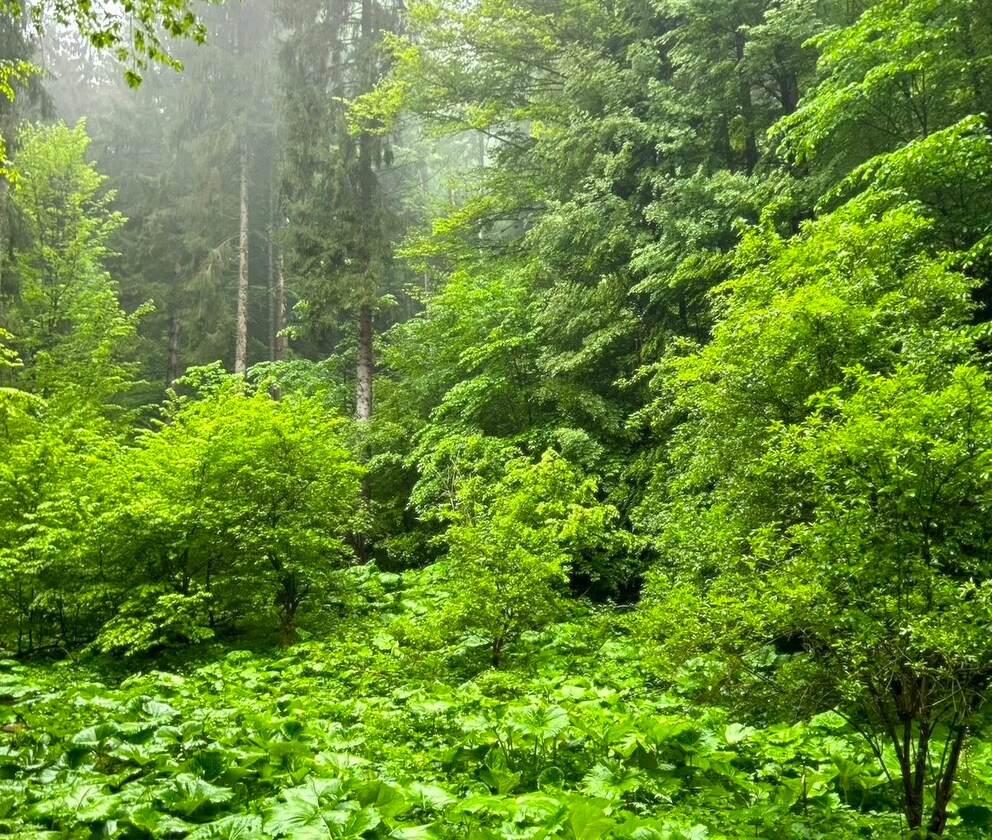
In this special primeval forest near the village of Șinca, northwest of Brașov, the tallest silver firs and beeches in Europe grow (depending on sources). The forest is dense and sometimes so dark that hardly any light reaches the ground. At the same time, you can feel its originality everywhere. Nothing seems ordered or managed; much lies crisscrossed, and that’s precisely what makes it so appealing. Here, nature can still be nature.
It was only here that I realized what the term “primeval forest” or “virgin forest” actually means. It refers to an ecosystem largely unaffected by humans, shaped solely by growth, aging, and decay. An originality that we hardly know from German-managed forests. You feel like you’re not just seeing the forest but actually experiencing it.
Of course, I had to be made aware of many of these peculiarities first. During a hike, our guide explained what we should pay attention to. Only then did I begin to consciously perceive my surroundings and experience the forest with all my senses. An experience that has permanently changed my perspective on future forest visits.
That You Can See Wild Predators Here
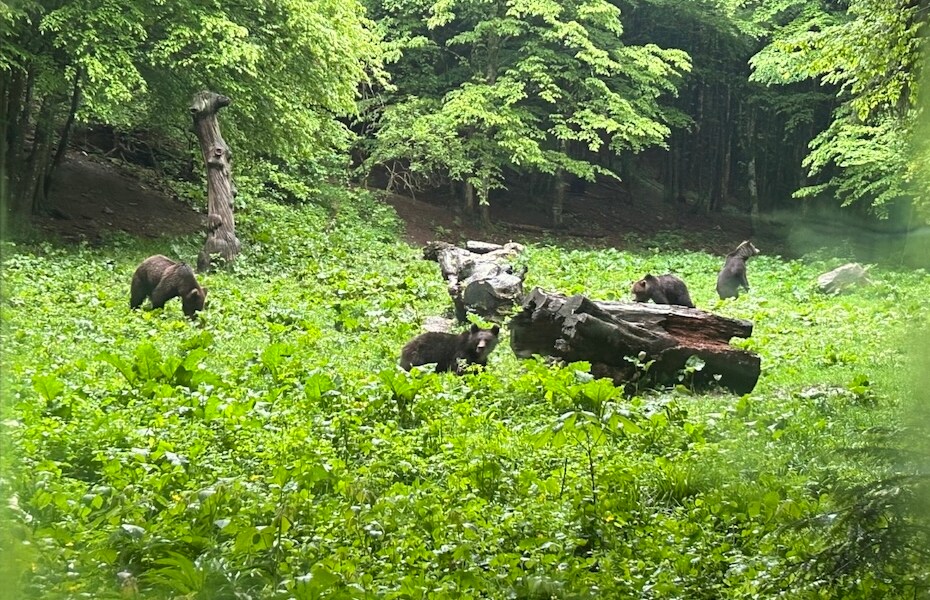
After all, you often hear about wild animals in the forest. I’ve always been delighted to see a deer or a hare by the roadside. But that’s hardly comparable to the wild predators that still live in the Romanian Carpathians today. The last great wilderness of Europe offers them an exceptionally good habitat. According to TravelCarpathia, more large predators live here than anywhere else in Europe. Over 5,000 brown bears, around 3,000 wolves, about 2,000 lynxes, and numerous wildcats roam the mountains.
If you want to check a bear off your bucket list as safely as possible, you can visit special observation huts. These are managed by foresters who regularly bait the animals with corn. This often attracts the brown bears to the same places daily. Accordingly, the demand is high: Travel groups with cameras wait in two-story wooden huts behind glass panes for their big moment. Although the animals move freely in their natural habitat, the whole thing reminded me more of a zoo than an authentic wildlife observation.
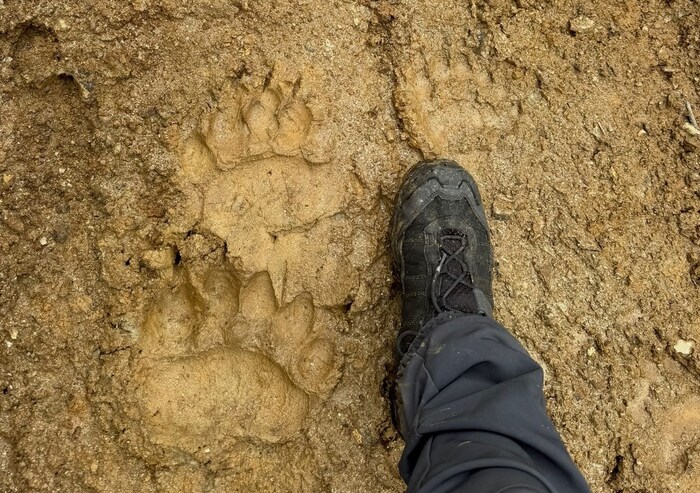
Far more impressive for me were the encounters with the usually very shy animals in the wild. On remote hiking trails far from civilization, their presence was palpable everywhere: through broken branches, churned-up earth, intense smells, or fresh paw prints in the muddy ground. Knowing that somewhere in the forests around me, bears are roaming, bison are grazing, and wolves are hunting gave me a constant chill.
“Yellowstone of the Carpathians! Plans for Europe’s Largest National Park”
Where Exactly is the Proverbial “Walachia”?
How True Seclusion Feels
To reach such secluded hiking trails, you first have to cover quite a distance. Understandably, the wild animals shouldn’t wander into the cities. But even the journey there became a little adventure for me.
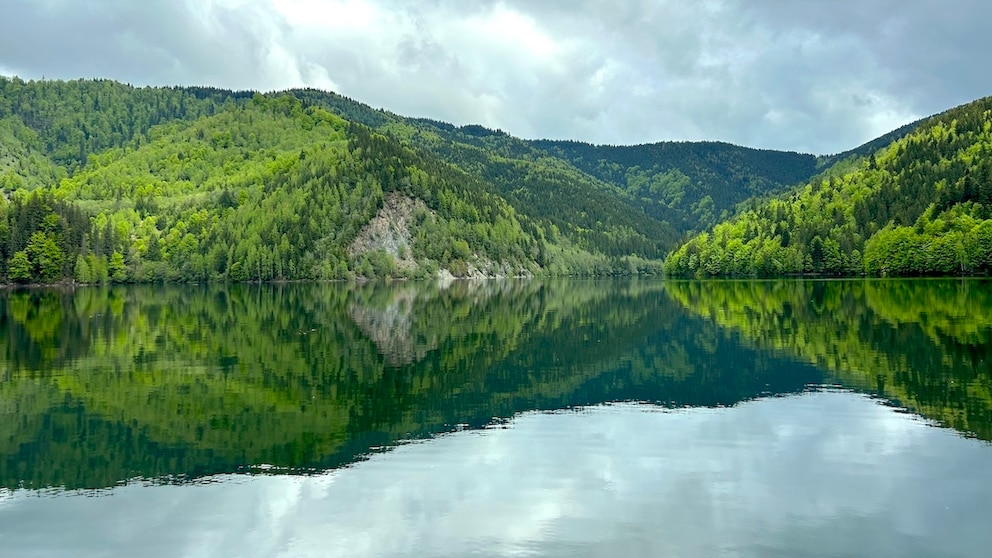
We drove over bumpy forest roads, through deep puddles, and along steep slopes in off-road vehicles. Being shaken for an hour feels a bit like riding a roller coaster. However, at the same time, it conveys a sense of true seclusion. We then crossed a dam closed to the public (see image above) with a small electric boat. As the four of us glided over the untouched water and no other person was in sight, I felt almost privileged.
From the “landing spot,” which was really just a gap in the forest, we hiked about three kilometers uphill, covering around 500 meters in elevation. When I asked our guide how she could take this route week after week, she calmly replied, “I know what’s waiting for me at the top. It will be worth it, you’ll see.”
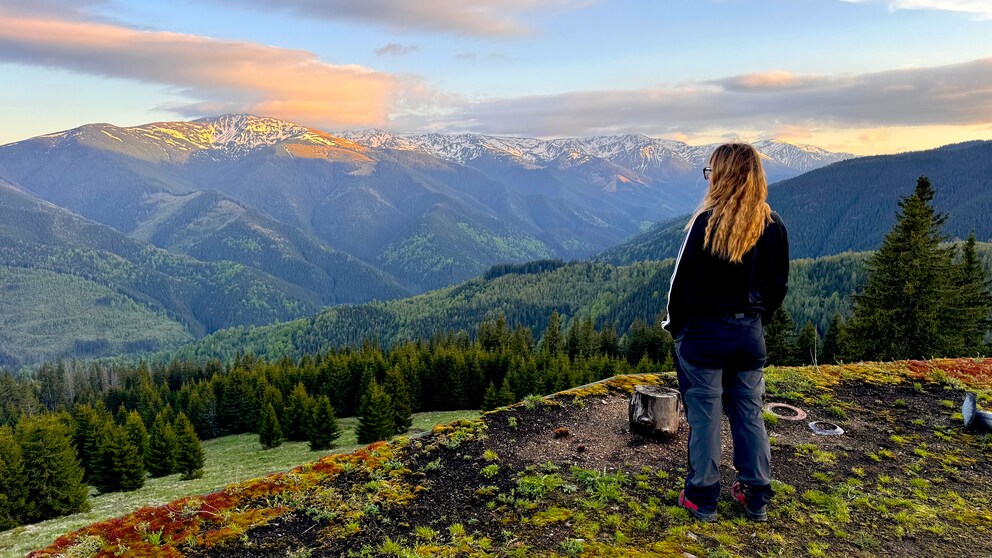
She was right. Once at the top, I would have taken every single step again immediately. The Comisu wildlife observation huts are located on a steep clearing in the middle of the mountains. All around, there’s nothing but forest, wildlife, and an impressive view of the surrounding peaks.
It’s Not About Dracula Here
Even before my trip, and also in conversations afterward, I realized how unknown the Carpathians actually are in Germany. Both as a travel destination and in connection with the plans for a future national park, few people know about this region. Yet Romania has much more to offer than a city trip to Bucharest—especially for nature lovers, active vacationers, and horse enthusiasts.
The region in central Romania, where the Carpathians and the Făgăraș Mountains are located, is called Transylvania. Once home to the Transylvanian Saxons, who shaped the region’s culture for centuries. Most associate it with Bram Stoker’s Dracula story. On-site, however, this myth plays a much smaller role than one might expect. Even Bran Castle, often associated with Dracula’s castle, focuses in its exhibition mainly on the actual historical backgrounds of the region.
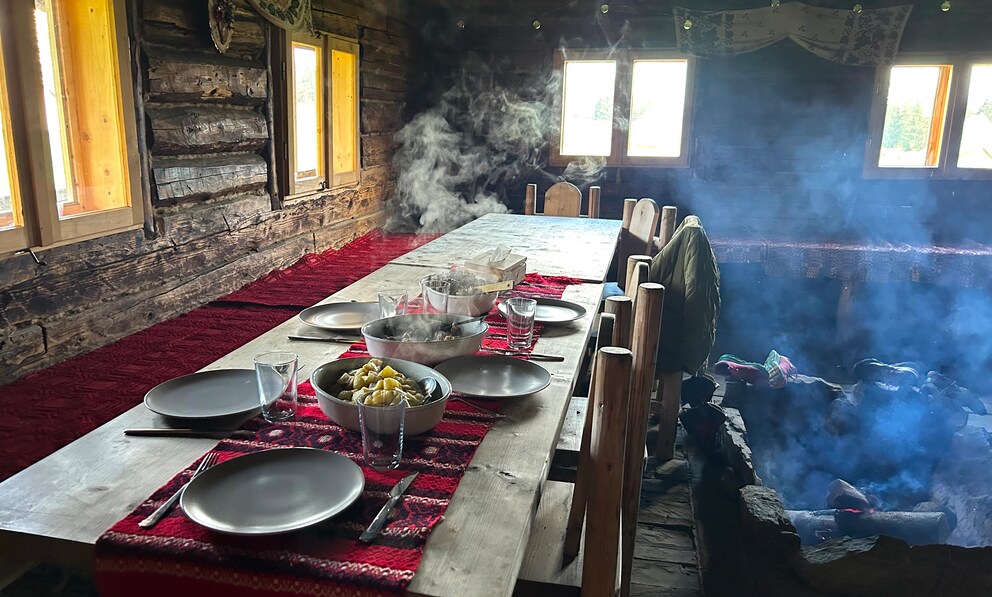
Places like Brașov or Rucăr have far more to offer culturally than being reduced to a fictional horror story. But above all, the nature impressed me. The Carpathians are an underrated travel destination that has so far largely been spared from mass tourism. Hopefully, it will stay that way. At the same time, it would be desirable for this unique landscape to be discovered by people who are looking for exactly that: wilderness, originality, and the rare opportunity to be far away from everything for a while.
The trip was supported by “Travel Carpathia.” Our standards of transparency and journalistic independence can be found at www.axelspringer.de/unabhaengigkeit.