


July 30, 2026, 10:53 am | Read time: 8 minutes
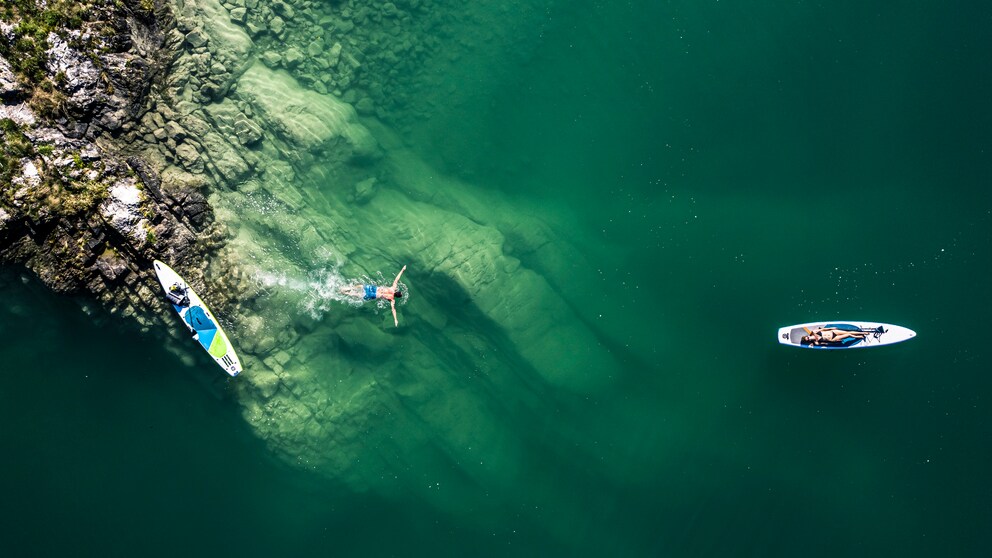
Relaxing on the sand or grass and gazing at the water—you don’t necessarily have to go to the sea or leave Germany. TRAVELBOOK has found 16 great lakes across the country–one in each state!
If you want to visit the real sea in Germany, you have to head north. However, there are excellent alternatives to the coast throughout the country: TRAVELBOOK showcases 16 of Germany’s most beautiful swimming lakes.
Note: Especially in high temperatures, standing bodies of water can be contaminated with harmful blue-green algae.
Overview
- 16 Great Swimming Lakes in Germany
- Bavaria: Walchensee
- Baden-Württemberg: Schluchsee
- Berlin: Wannsee
- Brandenburg: Scharmützelsee
- Bremen: Werdersee
- Hamburg: Boberger See
- Hesse: Edersee
- Mecklenburg-Vorpommern: Müritz
- Lower Saxony: Steinhuder Meer
- North Rhine-Westphalia: Unterbacher See
- Rhineland-Palatinate: Laacher See
- Saarland: Bostalsee
- Saxony: Kulkwitzer Seen
- Saxony-Anhalt: Arendsee
- Schleswig-Holstein: Großer Plöner See
- Thuringia: Stausee Hohenfelden
16 Great Swimming Lakes in Germany
Bavaria: Walchensee
Chiemsee, Tegernsee, Starnberger See, Königssee… Bavaria offers countless stunning lakes, making it hard to choose just one to recommend. Our choice ultimately fell on Walchensee.
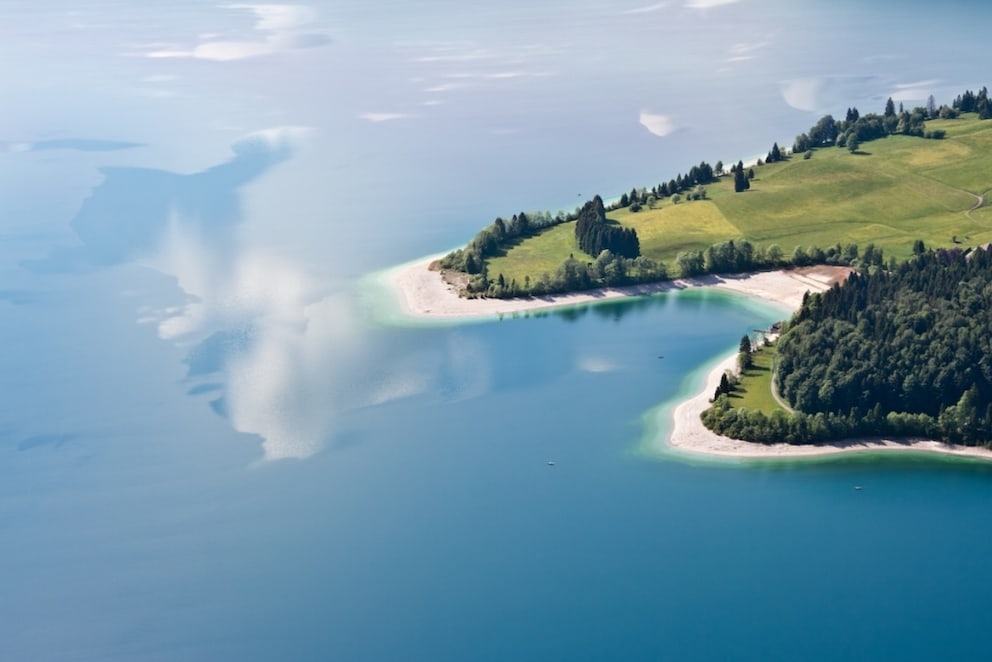
The water of this approximately 16-square-kilometer Alpine lake south of Munich is particularly clear and shimmers turquoise, with some beautiful beach sections that gently slope into the water. The lakebed also holds several wrecks, making it a hotspot for divers thanks to the clear visibility. Sailors and surfers also find perfect conditions here. From the summit of Fahrenbergkopf, accessible by cable car, you can admire the lake in all its glory from above.
Baden-Württemberg: Schluchsee
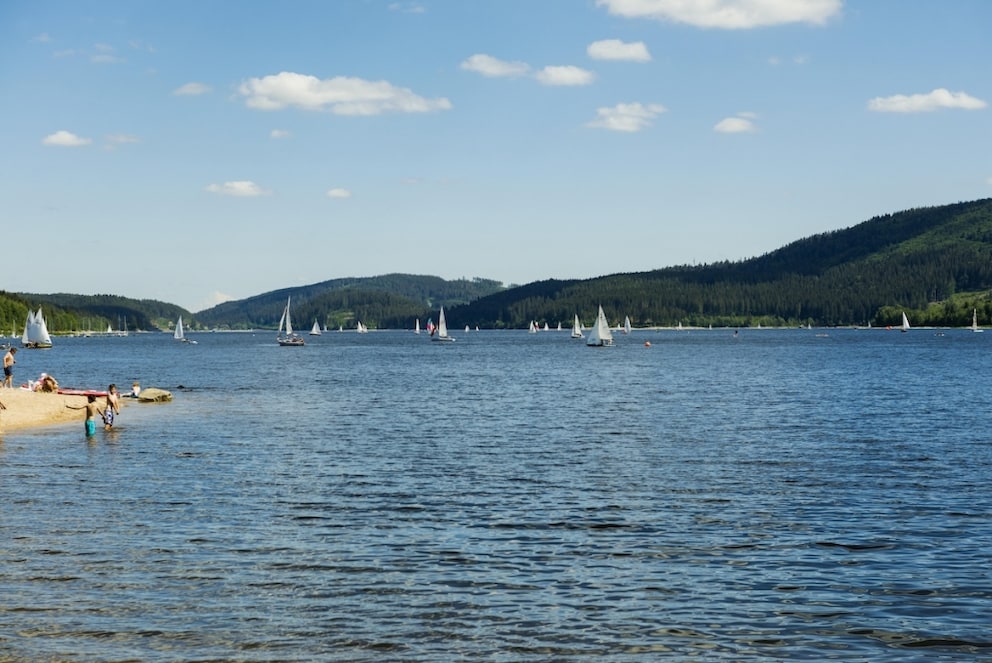
In Baden-Württemberg, the first lake that comes to mind is naturally Lake Constance, undoubtedly one of the most beautiful bodies of water in the region. However, since Germany shares Lake Constance with two other countries, we chose another beautiful lake entirely within Baden-Württemberg: Schluchsee. Located in the Black Forest, this former glacial lake, now a reservoir, offers numerous freely accessible shorelines and pleasantly cool water. You can also hike around Schluchsee on an 18-kilometer tour.
Berlin: Wannsee
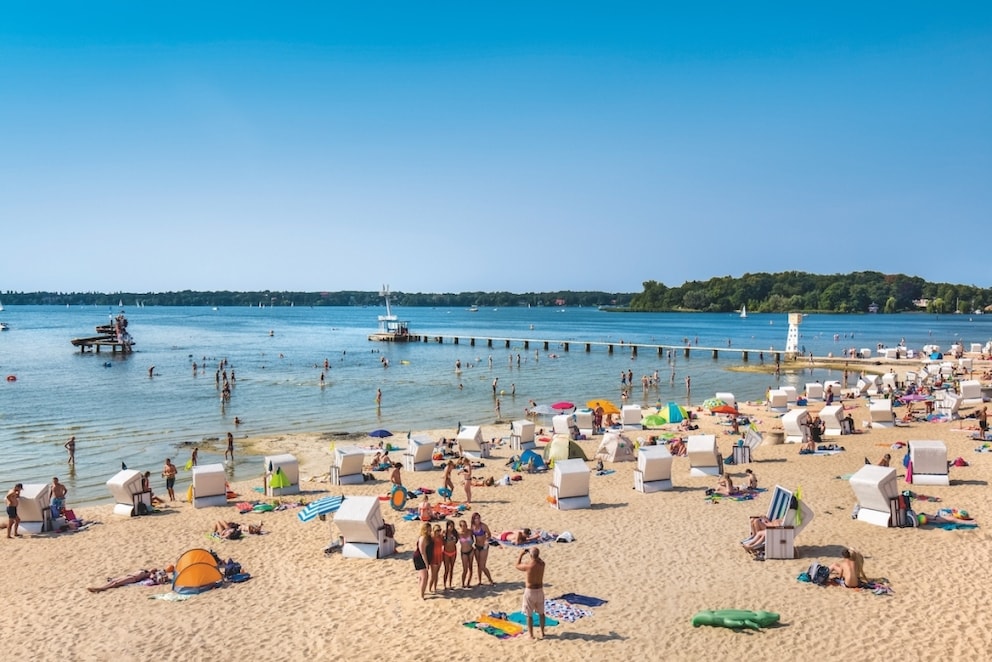
Berlin also has many lakes, some of which are true gems and insider tips. But for us, Wannsee remains the most beautiful. Especially at Strandbad Wannsee, you feel almost like you’re at the sea: fine, golden sand stretches over 1,200 meters, pedal boats, several kiosks, and space for up to 50,000 bathers. The water is so clear and shallow near the shore that it feels a bit like a giant bathtub. Of course, with a view. For Berliners who don’t want to or can’t drive the roughly 200 kilometers to the Baltic Sea, the Großer Wannsee is a worthy sea substitute. And there’s even a small piece of the real Baltic Sea here, as the sand was once transported by freight wagons from Travemünde to Berlin. The typical Baltic beach chairs are also found at Wannsee.
Brandenburg: Scharmützelsee
Known as the Märkisches Meer, the Scharmützelsee is about 80 kilometers from Berlin. This glacial lake is approximately 12 square kilometers and offers beautiful walking paths and many idyllic swimming spots along its shores. The Scharmützelsee has been repeatedly voted Germany’s most beautiful lake in the major poll by the portal Seen.de.
Bremen: Werdersee
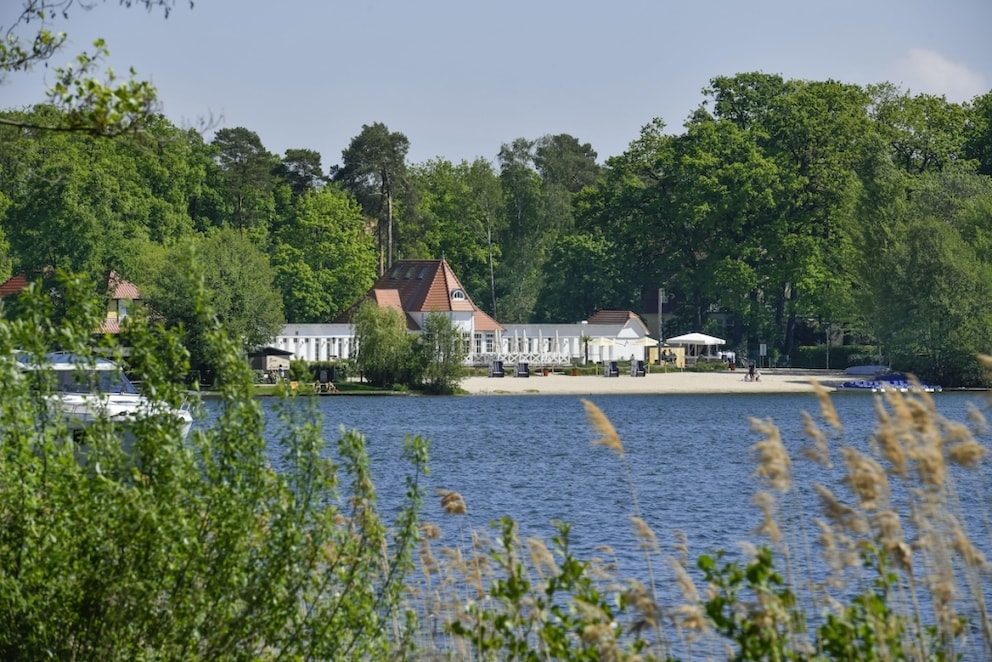
Admittedly, the Werdersee is not really a lake but a side arm of the Weser. For the people of Bremen, however, it is still their largest and favorite swimming spot, and rightly so: Spanning 370,000 square meters, it features expansive park areas, lounging spaces, and a swimming bay with a small beach section. The big advantage: It’s super quick to get to the city from here.

Hamburg: Boberger See
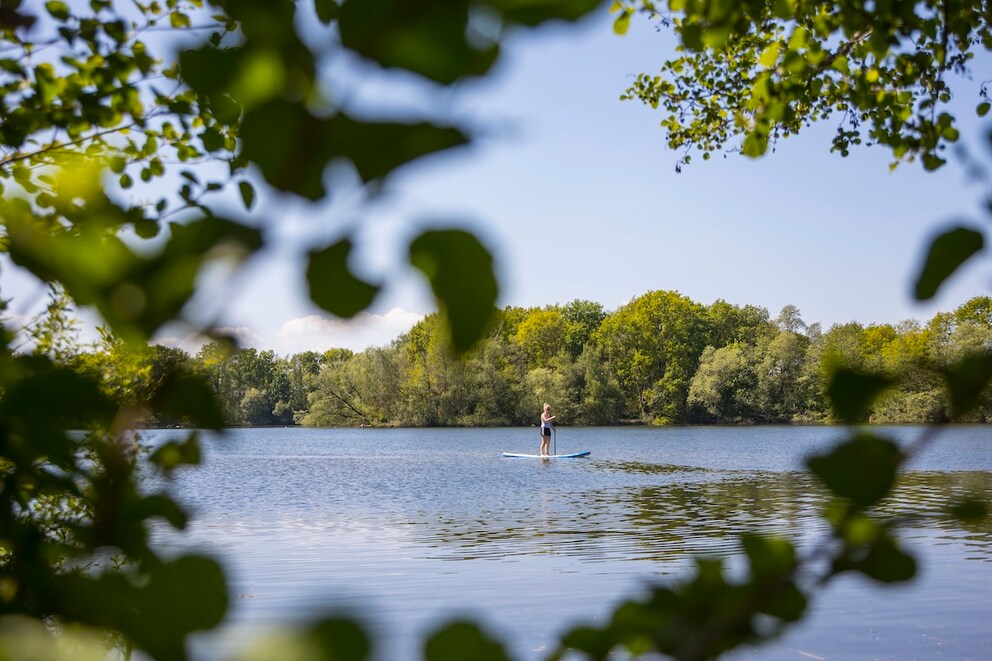
“Fifteen minutes by car from downtown Hamburg, and you might think you’ve landed somewhere by the sea—pure beach feeling,” raves a visitor to Boberger See, located in a nature reserve in the southwest of the city, in his Tripadvisor review. The quarry lake, from which sand and gravel were once extracted, is 18 meters deep. The adjacent dunes, part of which are used as a glider airfield, are also worth seeing.
Hesse: Edersee
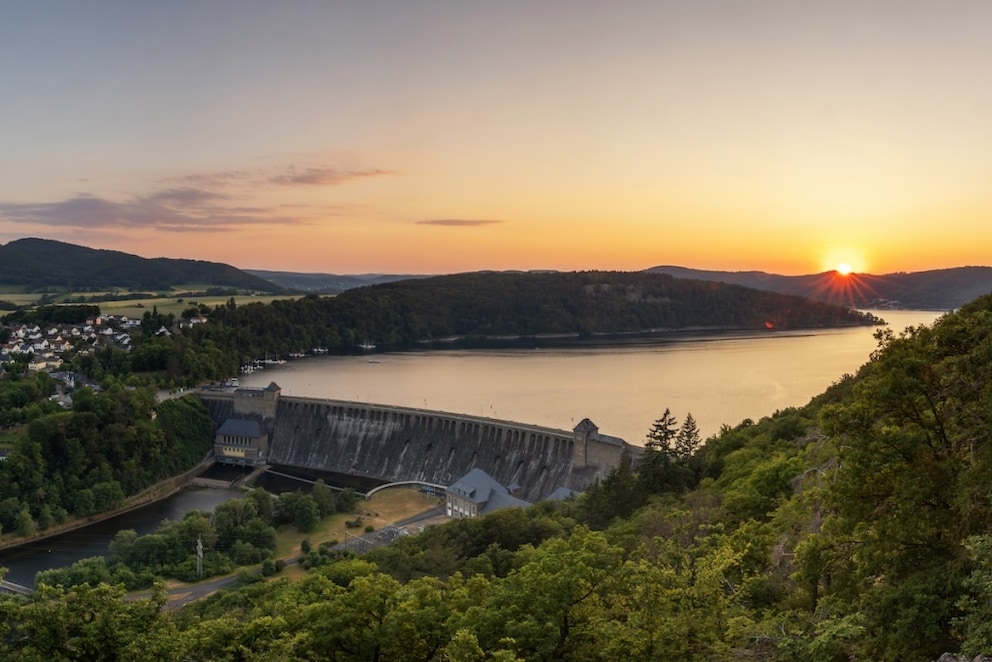
The Edersee, 50 kilometers southwest of Kassel, is nestled in the charming low mountain landscape of the Kellerwald-Edersee Nature and National Park. In the Waldecker Bucht, there is a public beach with a sunbathing lawn and bathing island, and sun-seekers will find a man-made sandy beach with a beach volleyball court in Rehbach.
Mecklenburg-Vorpommern: Müritz
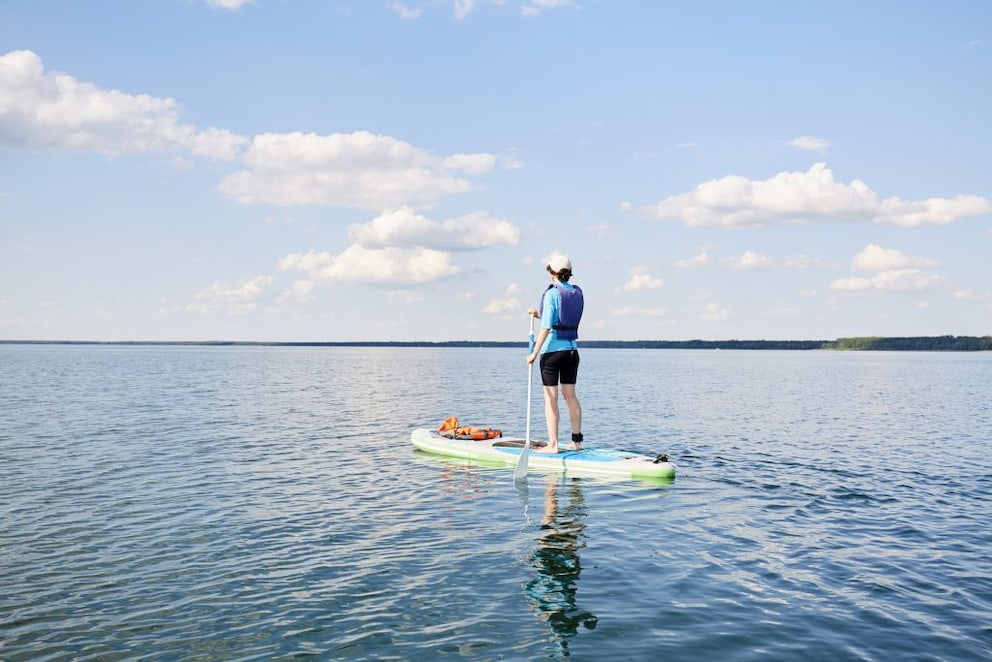
The Müritz is the largest lake in the beautiful Mecklenburg Lake District and also the largest lake entirely within Germany. Almost the entire lake is a protected landscape and part of the Müritz National Park. There are also several swimming spots with sandy beaches, such as the beach at Bolter Kanal in Boeker Mühle on the southeastern shore of the Müritz, which features a fine sandy beach, bathing islands, and a large adventure playground.
Lower Saxony: Steinhuder Meer
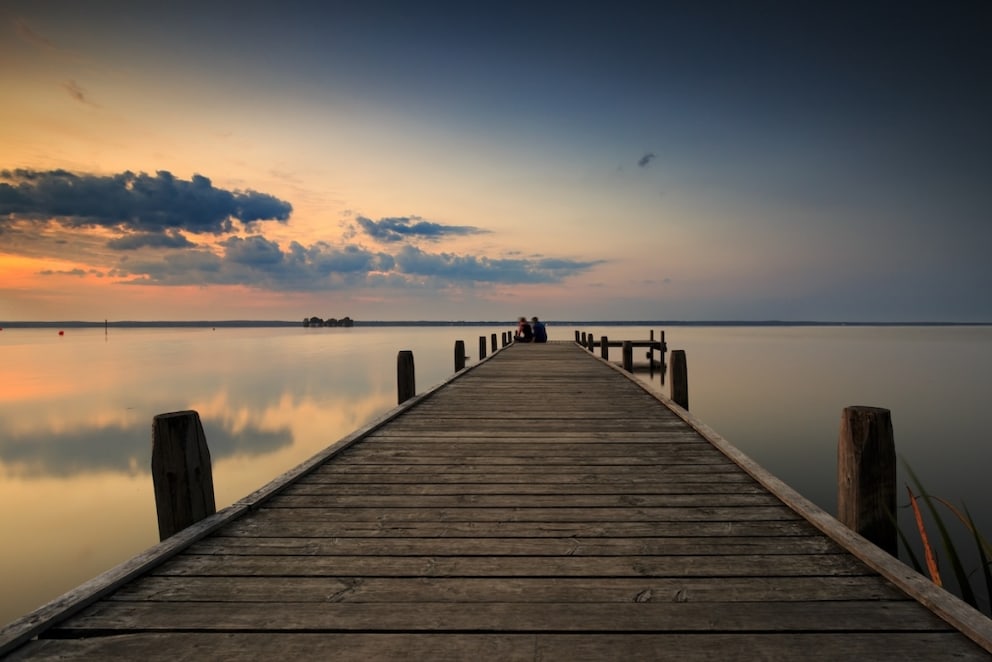
Though only a “sea” by name, this is the largest lake in Lower Saxony and a popular summer destination not just for Hannover residents. The artificial bathing island, connected to the mainland by a pedestrian bridge, is particularly beautiful and features a vast beach area with fine sand in the northeast. Admission is free, but the bathing island can only be visited during the day. In the evening (10 p.m.), access via the bridge is closed. But there are many other beautiful swimming spots along the shores of this approximately 30-square-kilometer lake.
North Rhine-Westphalia: Unterbacher See
Located in a nature reserve in the southeast of Düsseldorf, Unterbacher See is a source of pride for the people of Düsseldorf. One reviewer on Tripadvisor raves: “Beautiful beaches south and north, plenty of space to play with children, including a sandy beach and lawn, reasonable entrance fee. You can also rent pedal boats, sailboats, etc., a little vacation right on your doorstep.” There are also campsites, a high ropes course, and a mini-golf course at Unterbacher See.
Rhineland-Palatinate: Laacher See
Laacher See in Rhineland-Palatinate is a very special lake because it is of volcanic origin and almost perfectly round. It is a so-called caldera lake, formed by a massive volcanic eruption. In summer, the lake is a swimming paradise, and you can also hike around it on a beautiful tour.
Saarland: Bostalsee
Many consider Bostalsee the most beautiful lake in the small Saarland. You can spend a relaxing summer day here, with a beach featuring a large sunbathing lawn, volleyball court, water slide, restaurant, and kiosk. If you’re in the mood for some activity, you can also walk or bike around the lake. You can also rent pedal boats and cruise over the water.
Saxony: Kulkwitzer Seen
The “Kulki,” as it is affectionately called, is considered Leipzig’s bathtub. The flooded open-pit mine invites not only splashing and swimming but is also regarded as one of the best diving spots in central Germany due to its very clear water. Among other things, divers can explore an exciting underwater park with a “sunken” ship and airplane wreck. On the water, wakeboarders gather, and there is a floating beach, a boat rental, and a high ropes course.
Saxony-Anhalt: Arendsee
According to the website Seen.de, Arendsee in the Altmark is one of the most beautiful lakes in Germany. During the GDR era, it was a worthy sea substitute for the residents of Saxony-Anhalt, and even today, many bathers visit the largest and deepest natural lake in the state during the summer. Visitors will find shady forest areas and many small swimming spots along its shores, and on the northeast shore, there is a large beach with a lake stage, which is also used as an open-air cinema.
Schleswig-Holstein: Großer Plöner See
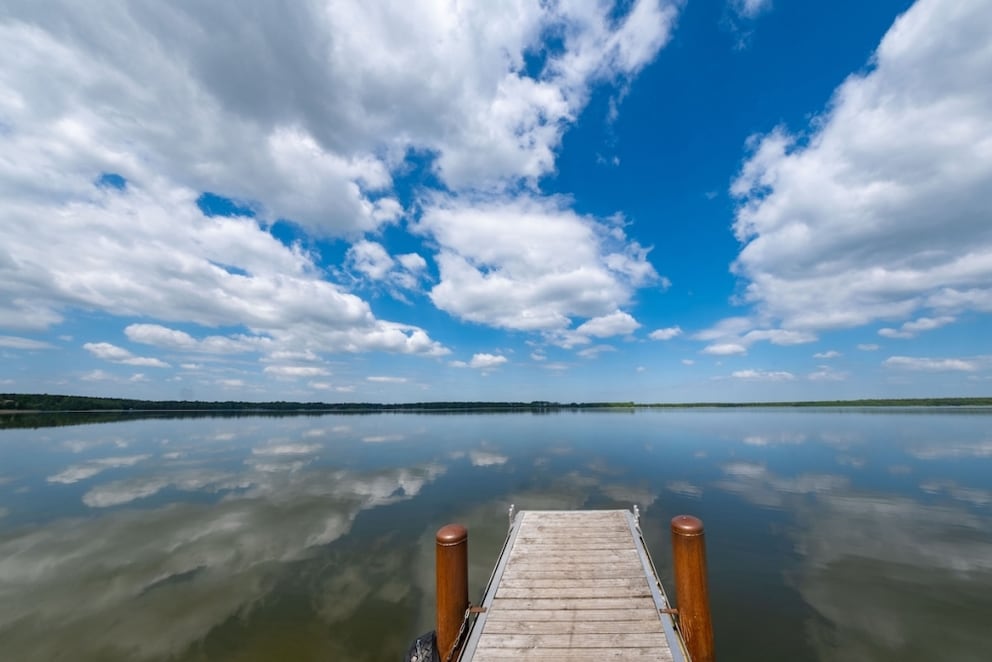
Even though the Baltic Sea is practically on the doorstep, the largest lake in Schleswig-Holstein offers a beautiful nature and swimming experience with its many neighboring lakes and small islands. Besides water enthusiasts, it is a paradise for paddlers and sailors. Those who like to relax in the sand will find a beautiful, fine sandy swimming spot on the Prinzeninsel. There are also lovely sandy beaches in Bosau, Godau, and Plön. Those seeking solitude can head to one of the many natural beaches.
Thuringia: Stausee Hohenfelden
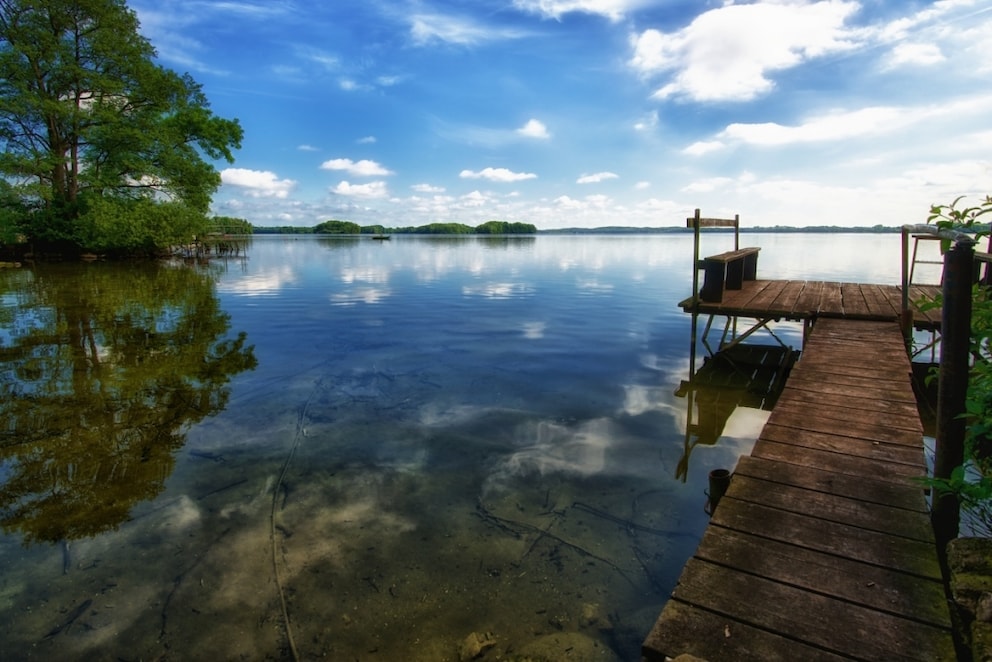
Stausee Hohenfelden is located almost exactly in the middle of Thuringia and has been an important local recreation area in the state since the 1970s. Around its shores, visitors will find everything needed for one or more summer days at the swimming lake—including Thuringia’s largest campsite, vacation homes, several restaurants, a boat rental, and various swimming beaches. There is also a climbing forest, an activity park, and a nature trail.