

March 16, 2026, 2:20 pm | Read time: 8 minutes
Cruises are booming–despite the constant criticism of ocean liners, including alleged poor working conditions on board. But what do the people who work on such giants have to say? The new series “Behind the Scenes of Dream Ships” offers exclusive interviews that provide insights usually denied to guests. It begins with a shipboard photographer who worked for a German cruise line for three years. His conclusion: “Never again! Not for any amount of money.”
What was once a luxury privilege is now aimed at a large market. Every year, more tourists set sail on the giants of the seas. Yet cruise ships are repeatedly criticized, for example, for their environmental impact and allegedly poor working conditions on board. Cruise vacationers, however, tend to overlook this. After all, a floating hotel allows you to discover many places in a short time. Plus, there’s constant entertainment and dining on board–all against the backdrop of the boundless expanse of the sea.
But while a cruise promises relaxation for passengers, hundreds to thousands of people work on board and below deck. They ensure that no vacation wishes go unfulfilled. The working conditions on a cruise ship are repeatedly criticized: reports of wage dumping, overly long shifts, hard labor, people from Asia working for the lowest wages, tiny shared cabins, and monotonous days below deck without a single day off.
TRAVELBOOK has looked behind the scenes or–more accurately–on and below deck of cruise ships, giving a face to the people behind the jobs. Personal experience reports paint different pictures. To kick off our series “Behind the Scenes of Dream Ships,” we spoke with a former shipboard photographer who worked on one of the large floating hotels of a German cruise line from 2009 to 2012. Since we promised him anonymity, we call him Tobias.
Part 1 “Behind the Scenes of Dream Ships”: A Shipboard Photographer Speaks Out
Lured on Board with False Hopes
Tobias studied media management and photojournalism. Shortly before finishing his studies, he learned from a fellow student that a major German cruise line was looking for a shipboard photographer. Intrigued, he did some research: “It sounded tempting. They promised I could discover the world and capture it in pictures. Plus, the food would be free. I thought, great, where do I sign?”
During the assessment center as part of the application process, Tobias took documentary photos in a cult pub. That’s what the cruise line was looking for. Shortly thereafter, he completed safety training and then it was off: from Crete to Dubai. Tobias recalls: “From the plane, it was straight on board. I had 30 minutes in the tiny shared cabin, then I had to snap photos of people on the pool deck. They had talked about expeditions and adventures in the Orient, not about photographing people eating.”
Tobias somewhat exaggeratedly refers to this as being “shanghaied.” The term “shanghaiing” refers to the coercive recruitment of sailors by getting them drunk and disoriented. That wasn’t the case for him, of course, but he feels deceived, and they failed to mention that it wasn’t pictures of the world that were needed, but rather images of the ship and its passengers.
Tobias Criticizes the Working Conditions
At peak times, Tobias was on board for seven months straight. Without a single day off, but always with too many working hours. “Turn off your brain and just do it,” was the only way he could endure the working conditions on “his cruise ships.” Tobias outlines a typical workday during a port day as follows (based on example docking times, which vary greatly by port and tour):
A Port Day in the Life of a Shipboard Photographer
The alarm went off at 6 a.m., an hour before docking at the port. From 7 a.m. to 10:30 a.m., Tobias photographed passengers at the gangway as they left the ship. They found it amusing the first time–by the second time, some were very unfriendly. From 10:30 a.m. to 11:30 a.m., Tobias reviewed the photos, sorting out duplicates or unusable ones. After taking the memory cards with about 800 photos to the lab, he ate something and then went ashore himself. He soon knew the ports well, as he cruised on the same ship in the same region for about six months. From 3:30 p.m. to 11:30 p.m., Tobias worked in the photo shop. He prepared the shop and photo gallery by pinning the printed photos to the walls to sell them. However, with the boom of selfies and increasingly better smartphone cameras, selling became increasingly difficult for Tobias.
Overall, a “typical” port day for Tobias involved 12.5 working hours. Overtime was the norm–even on a sea day.
A Sea Day in the Life of a Shipboard Photographer
Whether it was an all-inclusive buffet, pool party, or theme night, he often had to press the shutter against the passengers’ wishes–and hid behind the camera while doing so, Tobias says. The cruise line’s quota pressure was too high. For example, during the 30-minute safety drill, he had to take 400 photos. There were also numerous side jobs: “As a greeter in front of the onboard restaurant, I said ‘Good evening’ 1,000 times or hopped around as Santa Claus, Easter Bunny, and club mascot on deck,” he recalls. And that his uniform was almost always too big and more gray than colorful because it was washed so often.
But Tobias also says: “Other areas had it much harder. The laundry staff, for example, almost never saw daylight. Whether we were in Dubai or New York made no difference to them.
Tobias sums up the working conditions on a cruise ship as: “Hard as old ship’s biscuit. You have to be born for it–or young and naive.”
Also interesting: Which new cruise ships are set to sail in 2022
Poor Pay and No Privacy
Tobias states that his base salary was around 700 to 800 euros net. There was a “good bonus” if he met his ever-increasing quota–but that was often not achievable for him. In good months, he earned about 1,200 euros net. Meals and accommodation in the cabin were included, except for drinks in the crew bar–but that didn’t stop many from drinking as if there were no tomorrow. Many not only worked hard but also partied hard. Tobias didn’t join in, but he says: “Among the crew members, almost everyone had sex with everyone else.”
Sleeping was in a 6-square-meter cabin: two people, windowless, and below the waterline.
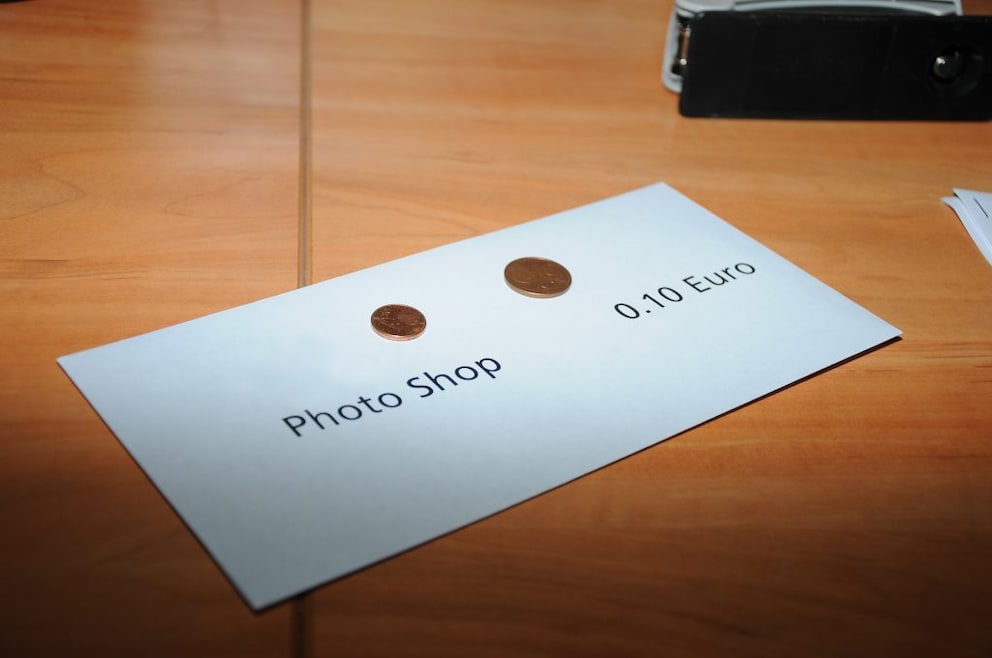
Tobias recalls his only tip: “Although the cruise line states everywhere that tips for the crew are included in the travel price, we only received a tip once. An insult: 10 cents for a week and six employees–otherwise, there was never the promised bonus.”

“On river cruises, everyone has something going on with everyone else.”
Reasons for a Lifetime Ban from Cruise Ships
“I Became a Misanthrope!”
Tobias becomes more emphatic: “There were passengers who complained that there was nothing to eat in the onboard restaurant at 6 p.m., even though they had just returned from a shore excursion in Mumbai, India. Trucks drove from Rostock to Istanbul so that Germans could drink their Radeberger beer outside their country.” In addition, there was the, in his opinion, undeniable environmental pollution.
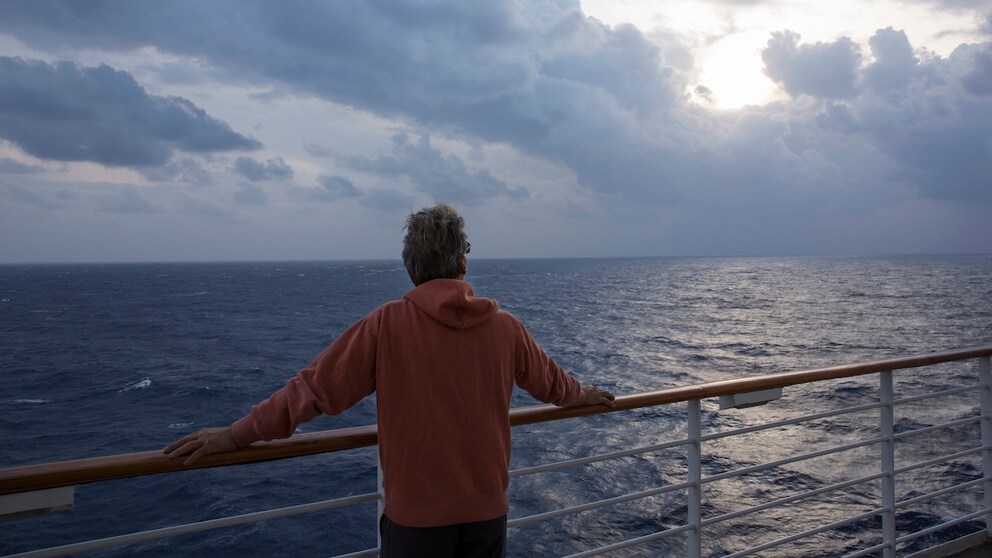
The result of working on the cruise ship: “I became a misanthrope.” After three years, the situation finally escalated. “When I saw a passenger photographing young, scantily clad girls on a Brazilian beach, all my frustration erupted and I lost it–verbally, not physically. The next day, my plane landed in Germany.”
Also interesting: What actually happens to waste on cruise ships?
Why Did Tobias Work as a Shipboard Photographer for Three Years Anyway?
Were there sunny sides as well as shadows? Tobias recalls numerous moments he will never forget: “Who can say they’ve seen Rio from a helicopter? Or that they’ve been to Bob Marley’s grave? That they’ve flown over Dubai in a seaplane? Or that they’ve raced through Oman in a jeep?”
So there were indeed dream moments. And the promised expeditions and adventures during recruitment. “Nowhere else would I have had the opportunity to see so much of the world. That’s why I just pushed a lot aside,” says Tobias, who also met his current girlfriend while working on the ship. And yet, the downsides of the working conditions and negative experiences weigh so heavily that Tobias never wants to set foot on a cruise ship again.
Have you had similar experiences as a cruise ship employee? Write to us at redaktion (at) travelbook.de