

January 6, 2026, 6:12 pm | Read time: 6 minutes
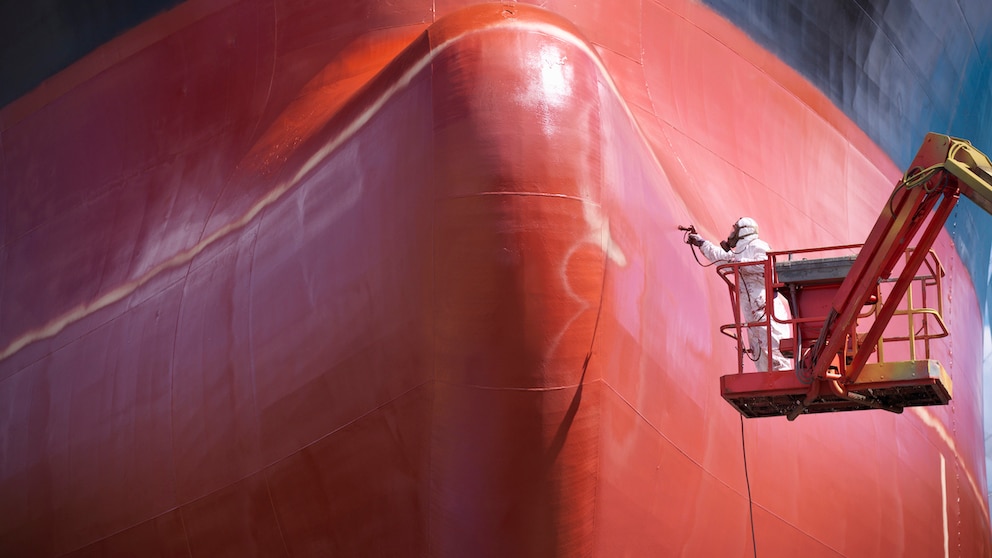
Many ship bottoms are painted red. TRAVELBOOK explores the reasons for this coloring, whether other colors are possible, and how harmful the paint is to the environment in this article.
Have you ever noticed that many ships are red underneath? If not, you probably will from now on. At TRAVELBOOK, we wondered why this is the case. Are there practical, technical, and/or economic reasons for this color choice? Are there rules in the nautical world that prescribe such red painting of boats? Does the color choice perhaps even have an interesting history? How good or bad are these bottom paints for the seas and their inhabitants? So many questions. We consulted various experts.
Overview
Red Paint with a Clear Function
Before we get to the reason for the color choice, we want to clarify why a special paint is applied below a ship’s waterline that stands out so clearly from the color seen above the water. Here’s the explanation.
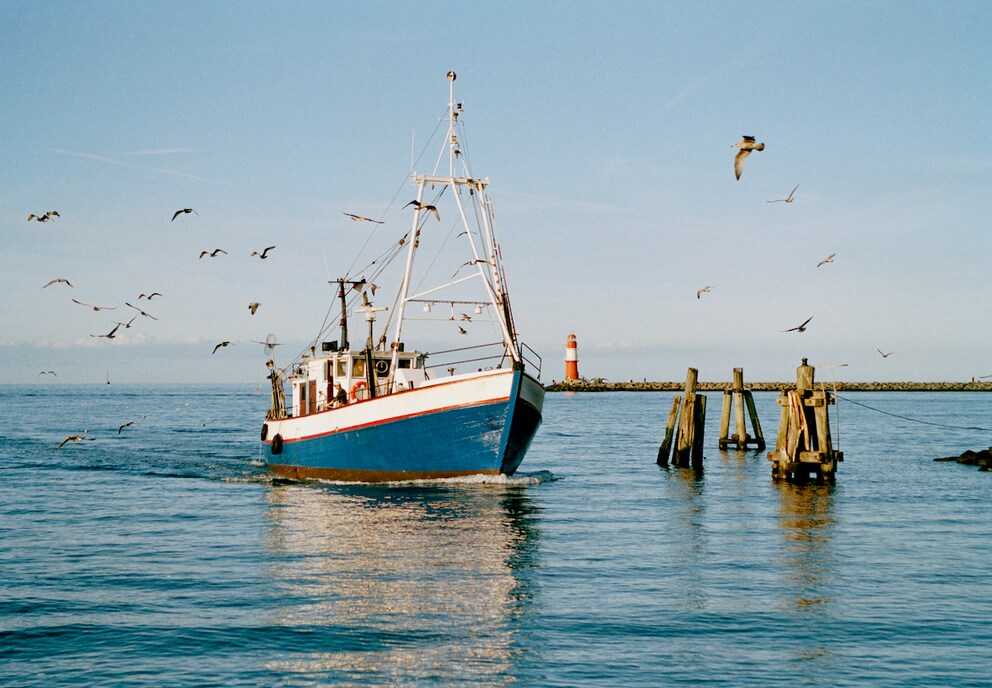
Many organisms live in the sea, such as algae, mussels, and barnacles, that can attach themselves to a ship. This growth is called “biofouling,” defined by the Federal Maritime and Hydrographic Agency (BSH) as “undesirable growth of underwater structures by microorganisms, plants, algae, and animals.”
Why Biofouling is Undesirable
A hull covered in such growth creates more resistance in the water, slowing the ship down. This increases fuel consumption and maintenance needs, as marine growth must be regularly scraped off and the boat’s underside cleaned. Both increase operating costs. Additionally, marine organisms can cause damage to the hull.
The BSH explains: “Effective antifouling systems are indispensable in shipping because they not only prevent the spread of non-native species but also improve the hydrodynamic properties of ships.” Besides reducing fuel and costs, it’s also about reducing harmful emissions. “Against this background, effective growth protection is equally in the interest of ship operators and the environment,” the agency explains.
Antifouling Paints for Boat Protection
To prevent biofouling on ships, so-called antifouling paints are often used. These are special paints that ensure the ship’s bottom gets as few unwanted passengers as possible. This is often achieved through biocides contained in the paints. And these paints are often red.
Why Red?
The reason for the red color primarily lies in its components. In antifouling practice, copper-based paints are traditionally used. Copper has “natural biocidal properties” that prevent unwanted growth by marine organisms on the ship’s hull, writes the controversial (and now closed) U.S. organization Environmental Literacy Council (ELC). Pure copper has a reddish-brown color, so these early antifouling paints colored the boat’s underside red.
Dr. Burkard Watermann, a marine biologist and operator of the private research institute Limnomar (short for: Laboratory for Limnic, Marine Research and Comparative Pathology), confirms to TRAVELBOOK: “The red or brown coloring comes from the copper content of most antifouling products in large shipping.” Additionally, “iron oxide is often added as a pigment, which causes the red tint,” he notes. However, the marine biologist cautions: “Iron oxide is not currently considered hazardous, but copper as a biocide certainly is.”

“Blue Dragon” Spotted! Spain Closes 11-Kilometer Stretch of Beach

Why I Never Wanted to Go on a Cruise–But Still Enjoyed My Mini-Cruise!
Environmental Compatibility and Alternatives
Given the negative impacts that biocides—such as copper—have on the environment, the call for more environmentally friendly alternatives is growing. However, not for very long: In addition to copper paints, the more effective organotin compounds, especially tributyltin, were used from the mid-20th century. These turned out to be so environmentally harmful that “tributyltin (TBT) and other highly toxic organotin compounds in antifouling coatings have been banned [since 2008],” as the BSH writes.
According to the ECB, today’s common antifouling paints consist of a complex mixture of biocides, binders, and pigments. Copper(I) oxide or other copper compounds are still included, as well as other biocides. In addition to traditional red colors, there are now other shades, such as blue, green, black, gray, and white.
Marine biologist Dr. Watermann points out that biocide-free systems are available in several pigmentations. According to the expert, red is not the only color used for ship bottoms. In the sports boat sector, other shades are used, “as copper thiocyanate is also used there, which causes a blue tint,” he explains to TRAVELBOOK. In inland shipping, however, the ship’s bottom is often black. This is primarily because “no antifouling coatings are used there, only corrosion protection, which is colored black with graphite.”

The automobile club ADAC has also commented on copper alternatives on its shipping portal Skipper. It states that while lawmakers are increasingly regulating more strictly and restrictively, the personal responsibility of boat owners regarding water protection has simultaneously increased. The ADAC advises opting for environmentally friendly alternatives instead of biocides: “Modern, copper-free, and silicone-based solutions are a good choice,” as are foils and coatings. Additionally, boat owners can “use mechanical alternatives,” such as brush or diving robots. The company also believes that an annual renewal of antifouling is not necessary and instead recommends thorough cleaning as long as the antifouling is still intact.
Why Still Red?
Despite the advances and variety of modern antifouling methods, red still seems to be the first choice for many ships below the waterline. Why? The information platform Maritime Page attributes this to nautical tradition. This is supported by the Brazilian news portal Click Petróleo e Gás (CPG). It states: “The shipbuilding industry relies on established construction and maintenance standards.” Conventional colors facilitate visual inspection, both in ports and during repairs in dry dock: “If the red hull darkens or shows spots, it is a clear sign that a new coat of paint is needed,” writes CPG.
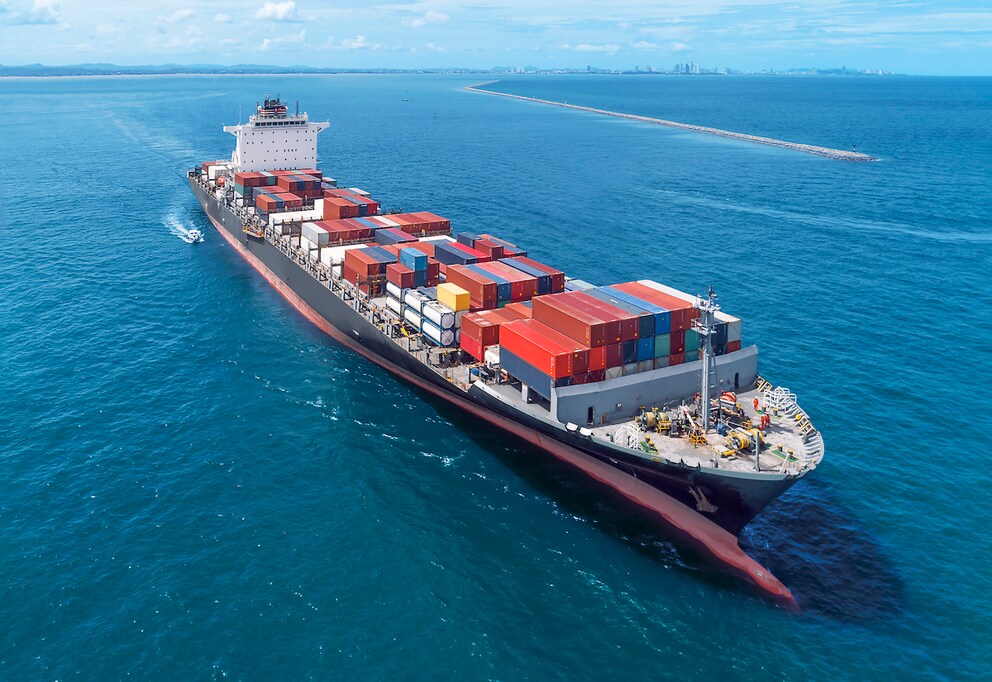
Another reason, according to both sources, is visibility in the water, as red stands out clearly. This contrast allows one to determine the loading condition of a ship, as it is easier to see how deep the hull is in the water. The red color is also more easily recognizable from the air, which is helpful in emergencies, as Maritime Page explains. CPD adds: the contrast of the red hull also facilitates docking and any work in the port.