

February 5, 2022, 10:53 am | Read time: 5 minutes
Baking pizza at home is easier than many think. A few tricks can help. Some ingredients are better pre-cooked, while others are added later to the pizza.
Puff pastry, quark-oil dough–the base of a pizza can be prepared in various ways. However, those who want to try their hand at being a pizza maker and prefer the classic approach will knead a yeast dough. Learn how to perfect this dough and discover tips and tricks to make your pizza flawless here.
The Basic Recipe for Pizza Dough
For the dough, Amsterdam cookbook author Inga Pfannebecker dissolves a packet of dry yeast (7 grams) or half a cube of fresh yeast (21 grams) in 300 milliliters of lukewarm water while stirring. The mixture is then added to 500 grams of flour (pizza flour Type 00 or wheat flour 550), one tablespoon of olive oil, and a slightly heaped teaspoon of salt. Knead the dough and let it rest for about one to two hours in a warm place.
The dough amount is enough for four round pizzas with a diameter of 28 centimeters or two baking sheets measuring 36 by 39 centimeters. “By the way, the longer the dough is kneaded, the better,” says Pfannebecker. She recommends planning 15 minutes for kneading.
7 Tips and Tricks for the Perfect Pizza
Overview
Let the Dough Rest Overnight
If you have the time, you can let the dough rise slowly overnight in the refrigerator. “This gives it the typical hearty flavor.” For this variant, use only 5 grams of fresh yeast or 3 grams of dry yeast–otherwise, it will rise too much. All other ingredients remain the same in quantity. Let the dough rise at room temperature for 30 minutes and then for 24 hours–covered with a cloth–in the refrigerator. After 24 hours, let the dough sit at room temperature for 45 to 60 minutes before further processing.
If desired, part of the dough can be frozen without any issues. “Ideally, freeze the portion intended for freezing when the dough hasn’t fully risen yet,” explains Hamburg cookbook author Anne-Katrin Weber. If the frozen dough is to be used later, be sure to give it enough time to thaw slowly at room temperature.
Never Use Tomato Paste for the Sauce
Classic pizza doesn’t go without tomato sauce as the first topping. “For this, it’s best to use canned diced tomatoes,” recommends Pfannebecker. They are more flavorful than fresh tomatoes. Never use tomato paste for the sauce; it’s too concentrated for the food journalist. To season the sauce made from diced tomatoes, salt, pepper, a pinch of sugar, and, if needed, some oregano are sufficient. “If you like, you can also season the sauce with some fresh garlic,” says Anne-Katrin Weber.
Don’t Overload the Pizza with Toppings
Next, roll out the dough to the desired size. Spread the sauce on it–and then add toppings as desired. But: “Don’t overload the pizza with too many ingredients,” advises Inga Pfannebecker. Otherwise, neither the dough nor the toppings will shine. Anne-Katrin Weber agrees: “Better to use a few, but very good ingredients.”
If you’ve chosen fresh mushrooms for the pizza, you should sauté them first and then place them on the dough–”otherwise they will release water and make the dough soggy.” Many vegetables work well both raw and sautéed on the dough. “For example, fennel can be used thinly sliced as a topping,” says Weber. Eggplant or zucchini sliced thin can be sautéed first–but it’s not necessary. And, of course, well-drained canned tuna or thinly sliced salami make great toppings–or whatever you’re in the mood for.
Also interesting: Pinsa–like pizza, only much fluffier!
Choose the Right Spices
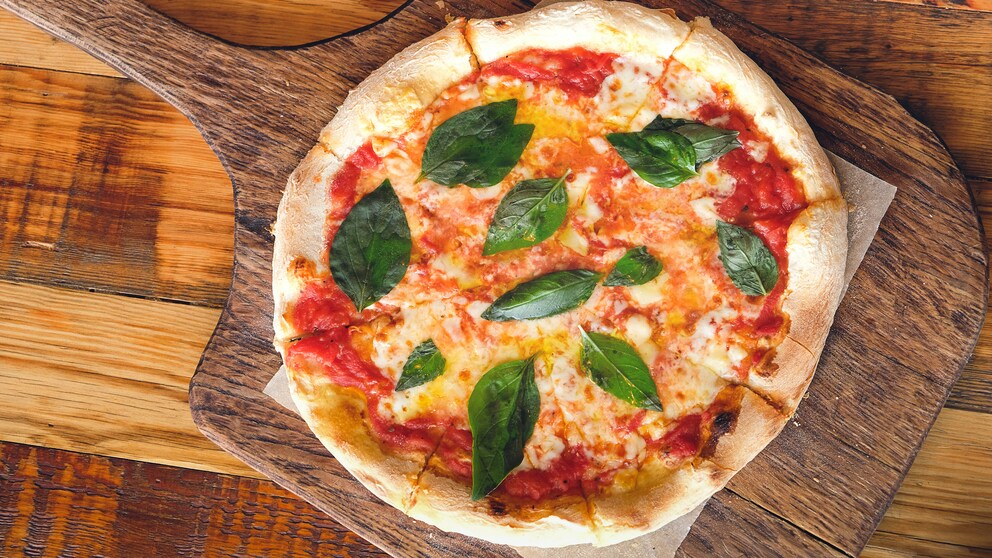
A few spices are essential on a pizza. “Oregano is the classic and ideally goes on the toppings before baking,” says Anne-Katrin Weber. Fresh basil leaves, on the other hand, are added to the finished baked pizza; otherwise, they would dry out during baking. If you like, you can season the pizza with chili, rosemary, or thyme before baking. Or with garlic–”it develops a nice aroma during baking,” says Pfannebecker.
Don’t Use Too Much Cheese
And finally: the cheese, which protects the other ingredients from drying out. Again, the rule is: “Don’t sprinkle too much cheese on the pizza, as it will cover all other flavors and make the dough too heavy,” says Inga Pfannebecker.
The classic cheese option for pizza: mozzarella. “You can also mix it with varieties like cheddar and Emmental for a stronger flavor.” Or: Add a few spicy Parmesan shavings to the pizza at the end. There are also ready-made cheese blends specifically for pizzas available in stores.

The Difference Between Pinsa and Pizza

Top Secret! The Secret Job of Italy’s “Pizza Detectives”
Preheat the Oven Properly
Now it’s time to bake. It’s important to preheat the oven to the highest possible temperature–and the baking sheet or pizza pans as well. “This way, the dough gets the necessary heat from below and becomes crispy during baking,” says Pfannebecker. Before the dough goes into the oven: “Grease the sheet or baking pans well, using oil,” says Weber.
Also interesting: Bake pizza like in a stone oven with the right oven settings
For Pros: Pizza Stone or Pizza Oven
Those who bake pizza more often should consider getting a pizza stone made of chamotte, recommends Inga Pfannebecker. It is preheated in the oven. “The stone draws moisture from the pizza crust, making it nice and crispy.” There are also special pizza ovens for home use. In them, the dough is baked at around 400 degrees–the high temperatures shorten the baking time, making it as quick as in a pizzeria.