

November 7, 2025, 9:45 am | Read time: 6 minutes
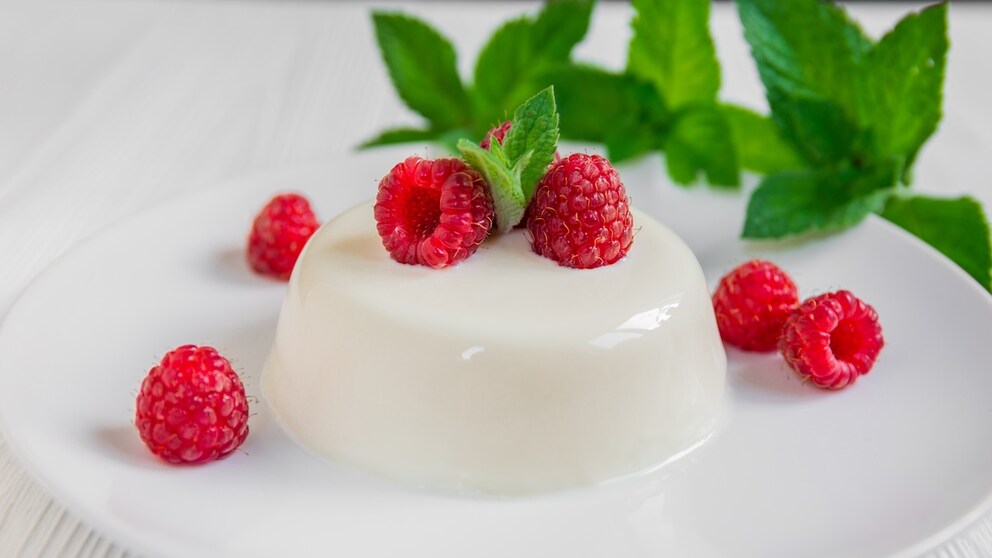
Panna Cotta is one of the most popular Italian desserts. Spoonful by spoonful, it’s a delight—if prepared correctly. Here are seven tips and tricks to make the dessert perfect. Plus: The recipe for Panna Cotta, with options for gelatin or agar-agar.
The best often comes at the end of an exquisite menu or a clever meal: a fine dessert like Panna Cotta. The Italian dessert classic, allegedly invented by a Hungarian in Piedmont in the 19th century, translates to “cooked cream.”
However, the cream is only gently heated, not boiled. Many neglect this principle during preparation, resulting in an unpleasant taste. But there are several other things that can go wrong with Panna Cotta. With these seven tips, the dessert is guaranteed to succeed.
Overview
1. Use Only Fresh and High-quality Ingredients
Cream, sugar, a vanilla bean, and gelatin. No more ingredients are needed for Panna Cotta. “For the dessert to taste good, the quality of the cream and the freshness of the vanilla bean are crucial,” says Munich-based recipe developer and author Annelie Ulrich. Ideally, the cream should be as rich as possible, with a fat content of at least 32 percent. Fat is a flavor carrier. Ulrich’s tip: “It’s better to opt for a high-quality and therefore more expensive cream than a cheap product.”
“The vanilla bean should look elastic and slightly shiny—that’s how you can tell it’s fresh,” says Paul Neitemeier. He is a member of the training team of the German Youth National Culinary Team of the Association of German Chefs (VKD).
2. Measure Gelatin Correctly
To achieve a silky yet stable cream, the correct measurement of gelatin is crucial. “You should always strictly adhere to the amount of gelatin specified in the recipe,” says Neitemeier. Soak the gelatin in cold water or cold milk, allowing it to swell for five minutes. Then, squeeze the gelatin thoroughly and add it to the hot—but not boiling—cream. According to Neitemeier, the hot cream should have a temperature of about 50 degrees Celsius.
If desired, agar-agar can be used instead of gelatin. This purely plant-based gelling agent is suitable for vegetarians and vegans. Like gelatin, agar-agar is flavorless. “Since agar-agar is stronger than gelatin, less is needed to achieve the same firmness,” says Ulrich. The same rule applies to agar-agar: always stick to the amount specified in the recipe.
3. Avoid Clumping
“If clumps form in the Panna Cotta mixture, it’s usually because the gelatin hasn’t dissolved properly,” says Neitemeier. To prevent this, quickly stir the soaked, swollen, and squeezed gelatin sheets into the warm mixture using a whisk. “To ensure a smooth consistency, you can also pass the finished mixture through a fine sieve,” says Ulrich.
4. Find the Right Temperature
“Ideally, you should slowly heat the cream containing the scraped parts of the vanilla bean,” says Neitemeier. Once the mixture reaches a temperature of 50 degrees Celsius, add the amount of sugar specified in the recipe. The cream mixture should be briefly warmed but not brought to a rolling boil. “Otherwise, there’s a risk of the fat separating,” says Ulrich.
5. The Taste Must Be Right
To give the Panna Cotta its characteristic vanilla aroma, the fresh vanilla bean is crucial. It is slit open, scraped out, and the scrapings are added to the cream. “You can also add the slit bean while warming,” says Neitemeier. If desired, add a splash of liqueur—such as Grand Marnier—or cocoa to the cream.
6. Cool the Finished Dessert Properly
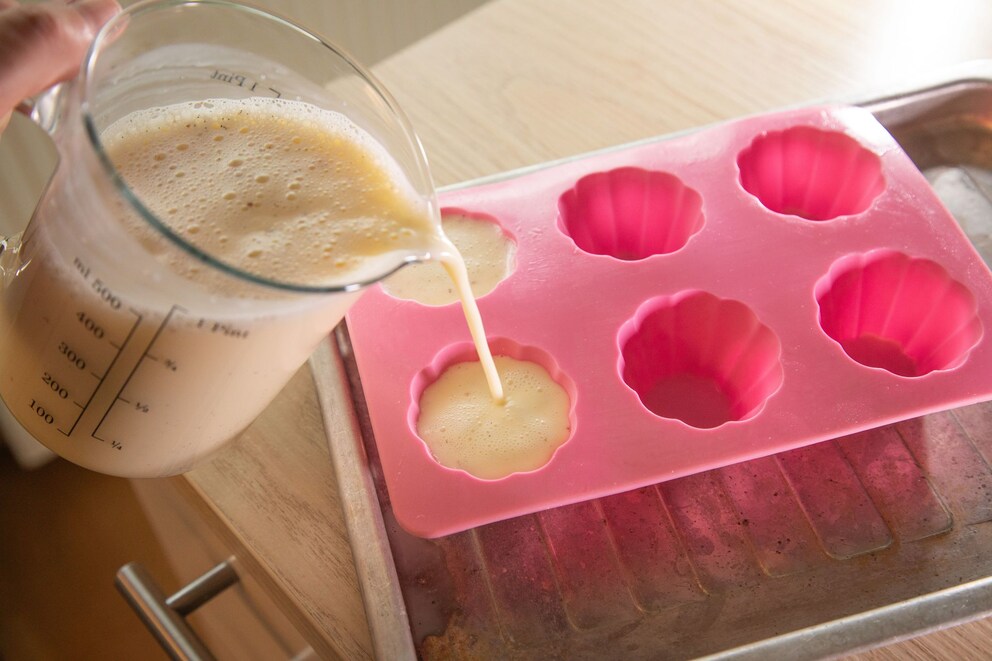
The finished Panna Cotta mixture can be poured into beautiful glasses or metal molds. “Then let the dessert cool completely at room temperature and refrigerate for at least four hours,” says Neitemeier. If it’s not chilled long enough, the mixture often remains liquid.
Recipe for Mango Sticky Rice from Thailand

3 Tricks to Perfect Belgian Waffles
7. How to Remove the Panna Cotta From the Mold
The Panna Cotta should be inverted onto a dessert plate and decorated with fruit. It won’t come out of the mold? “You can brush the molds with a little neutral-tasting cooking oil before filling them with the Panna Cotta mixture,” says Ulrich. This helps the mixture slide out of the molds more easily later.
Another option: “Run hot tap water into a pot or bowl and briefly dip the molds or glasses with Panna Cotta into this water,” says Neitemeier. Then run a knife between the edge of the mold and the mixture to loosen it. Afterward, briefly dip the molds or glasses into the hot water again—then the dessert usually inverts without a problem.
Recipe for Panna Cotta
Ingredients for four glasses
- 400 ml heavy cream
- 50 g sugar
- 1 vanilla bean
For the agar-agar version:
- 1.5 g agar-agar
For the gelatin version:
- 3 g gelatin, equivalent to 2 sheets of gelatin
- 2 tbsp milk
To decorate:
- 50 g strawberries
- 1 tbsp sugar
- 2 passion fruits
Preparation
Prepare four glasses. You can use either smaller glasses, from which the Panna Cotta will later be inverted, or larger glasses, where the Panna Cotta remains and is decorated and served in the glass.
Preparation
With agar-agar:
- Mix cream with vanilla, sugar, and agar-agar and bring to a boil on the stove.
- Let it boil vigorously for about 2 minutes.
- Pour Panna Cotta into the glasses and chill for at least 6 hours, preferably overnight.
With gelatin:
- Mix gelatin with the 2 tbsp milk and let it soak or swell.
- Mix cream with vanilla and sugar, and bring to a boil on the stove.
- Remove from heat and let cool briefly until the cream is about 40 degrees Celsius.
- Then add the soaked gelatin-milk mixture. Pour into glasses and chill for at least 6 hours, preferably overnight.
For serving:
- For the strawberry sauce, clean the strawberries and puree them finely with the sugar.
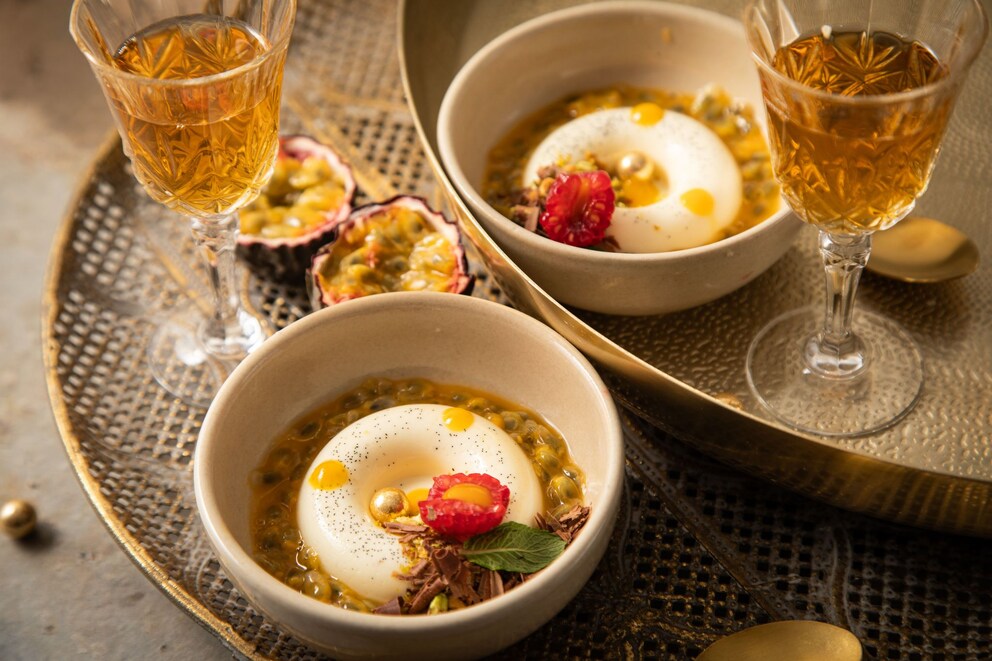
- Decorate the cold and set Panna Cotta in the glass with strawberry sauce and the pulp of half a passion fruit.
- Alternatively, briefly place the glasses in a warm water bath and invert the Panna Cotta onto a serving plate, then decorate with strawberry sauce and passion fruit.
With material from dpa