

December 3, 2025, 6:11 am | Read time: 4 minutes
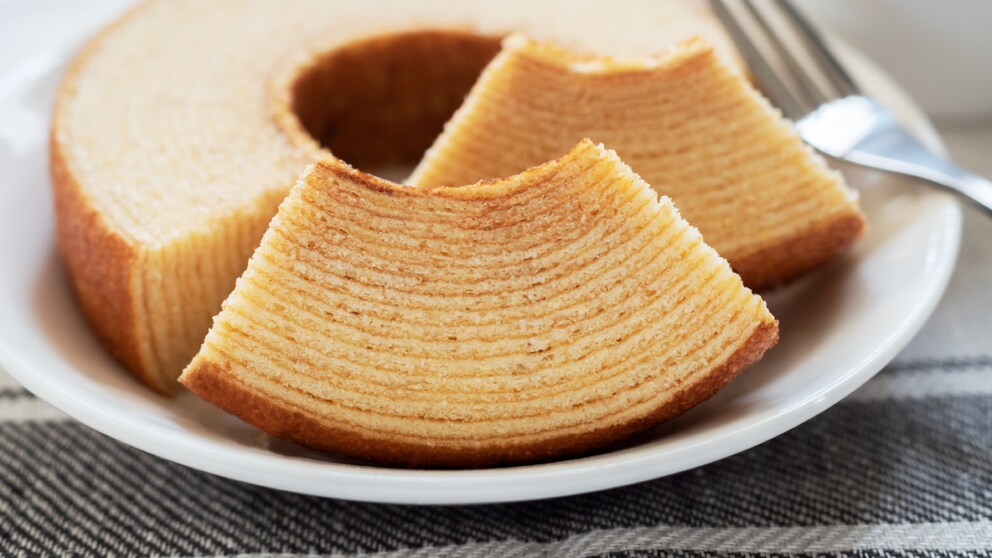
Sushi, ramen, matcha and more: Japanese foods and drinks have become a sheer craze in Germany. But the reverse is also true, as some German culinary cultural assets have won over the Japanese–one in particular: the good old Baumkuchen. There, it’s so popular as “Baumukuhen” that it’s now considered a local specialty. How did this come about?
During the Christmas season in Germany, cookies, stollen, and other classic holiday pastries are in high demand. Baumkuchen is traditionally part of this lineup. In Japan, however, its enjoyment is not limited to winter. It’s said that Baumkuchen is even more popular there than here and is practically “ubiquitous,” according to the platform Reddit. You can find it, individually wrapped, in every konbini, or mini-market. Users also report a large department store in Tokyo that even operates its own open Baumkuchen bakery, where visitors can watch the pastry being made layer by layer.
How Baumkuchen Came to Japan
There were reportedly pastries in medieval Italy that resembled today’s Baumkuchen in their layering technique. However, the modern, popular form of this fine pastry is generally believed to have first emerged in Germany–specifically in Salzwedel. According to the website of the traditional bakery Königlicher Salzwedeler Baumkuchen, the innkeeper Luise Lentz first served the delicious “Baumkuchen” at an inn in 1843.
A few years later, the “king of cakes,” as it is often called, was introduced to Japan “by a German World War I prisoner of war who happened to be a baker,” reports a user on Reddit. This refers to Karl Joseph Wilhelm Juchheim. The confectioner from Rhenish Hesse went to Qingdao, China, in 1909 to work in German businesses. When World War I broke out, he was interned and brought to the Bandō POW camp in Japan.
Why This Rice Is the Most Expensive in the World
Make Mochi Yourself with Ease!
POW Exhibition Made the Pastry Known
During his internment, Juchheim, like other prisoners of war, participated in a large exhibition in Tokushima. There, he made Baumkuchen in front of an audience. This is the first documented public presentation of the pastry in Japan and is recorded in the exhibition catalog of the Bandō POW Museum.
After Karl Juchheim was released from internment, he and his wife founded a bakery in Yokohama in 1921–right in one of the cities that would be struck by the Great Kantō Earthquake just two years later. The natural disaster, one of the most devastating in modern Japanese history, destroyed the newly established Juchheim business. They left Yokohama and started anew with a bakery in Kobe. Baumkuchen remained a staple in their offerings–it became the flagship product of the business and increasingly popular.
After Karl Juchheim’s death, his wife took over the management. This was in 1945, at the end of World War II–a time when Western sweets were becoming increasingly popular in Japan, as food historian Katarzyna Cwiertka writes in her book “Modern Japanese Cuisine.” They were considered modern and high-quality and were often given as exclusive gifts. The Juchheim bakery benefited from this trend, and soon other bakeries specializing in Baumkuchen opened in Japan. Over the years, it has become firmly established.
Japanese Baumkuchen Compared to German
While several traditional bakeries in Germany, especially in Salzwedel, still prepare Baumkuchen according to the original recipe, Japan is more experimental. There, the pastry comes in a variety of flavors and can even be found in ice cream cups, for example.
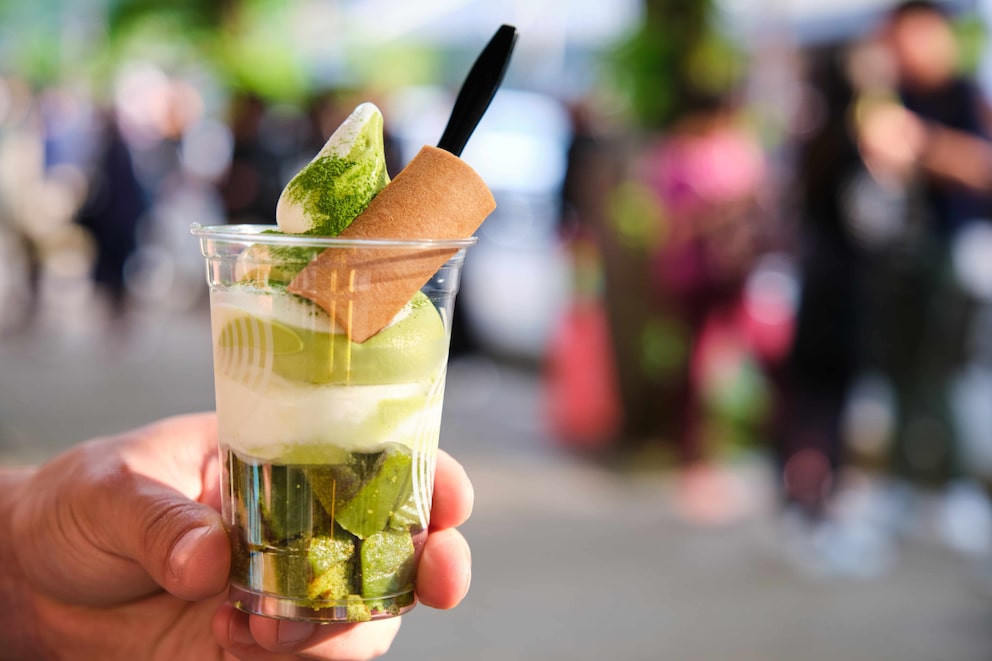
A user on Reddit notes that the texture of Japanese Baumkuchen differs from that of the “real” German version: It’s “moister and fluffier.” While some find it less sweet, others consider it significantly sweeter. It’s likely that there are many different interpretations, which also shows how much the pastry is adapted and appreciated across borders.