

September 10, 2026, 2:57 pm | Read time: 7 minutes
No question, you can eat really well in Italy! Most of the time, Italian cuisine is very down-to-earth and traditional. And then there are dishes that, at least from our perspective, seem quite unusual. TRAVELBOOK has gathered specialties from various regions–and we bet you’ll find only a few of them immediately appetizing.
Tastes vary, and there are several reasons for this. On one hand, we are indeed born with a certain preference for specific flavors: The number of our taste receptors and how sensitively they react to certain aromas differ from person to person. Equally important, however, are upbringing and habituation. What we know from a young age and eat regularly, we usually find familiar and appetizing. Unfamiliar tastes or textures, on the other hand, can seem strange or even repulsive.
Last but not least, our ideas of what is considered a delicacy are culturally shaped. What is a regional specialty for some may be an acquired taste for others. In some regions of Italy, for example, there are dishes that are part of the culinary heritage but might not make it to our plates.
Pajata (Lazio)
Pajata (or “Pagliata”) is a traditional specialty from Rome and is considered a delicacy there. You are most likely to encounter it as a rich sauce with rigatoni, and at first glance, nothing about it seems unusual.
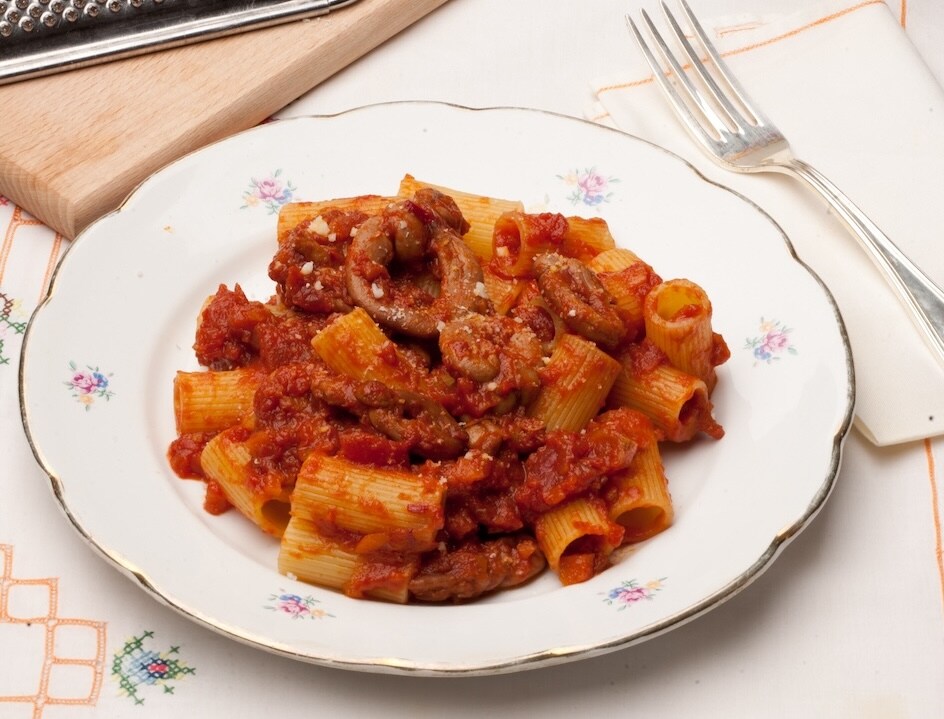
However, one should know that Pajata uses the intestines of an unweaned calf. Before preparation, it is thoroughly cleaned from the outside–but not from the inside, and this is intentional. This way, the milk mixture inside–technically a partially digested blend of milk and enzymes–is preserved during cooking. More about this “most controversial Roman dish” can be found on the website “In Rome cooking.”
Pani câ meusa and Frittula (Sicily)
Eating a panino in Italy is nothing unusual. But here, it’s worth taking a closer look between the sesame bun halves. The street food Pani câ meusa, extremely popular in Palermo, is filled with veal spleen and lung, which are first boiled or steamed and then fried in lard. Depending on the variant, lemon juice or cheeses such as ricotta or caciocavallo are added.
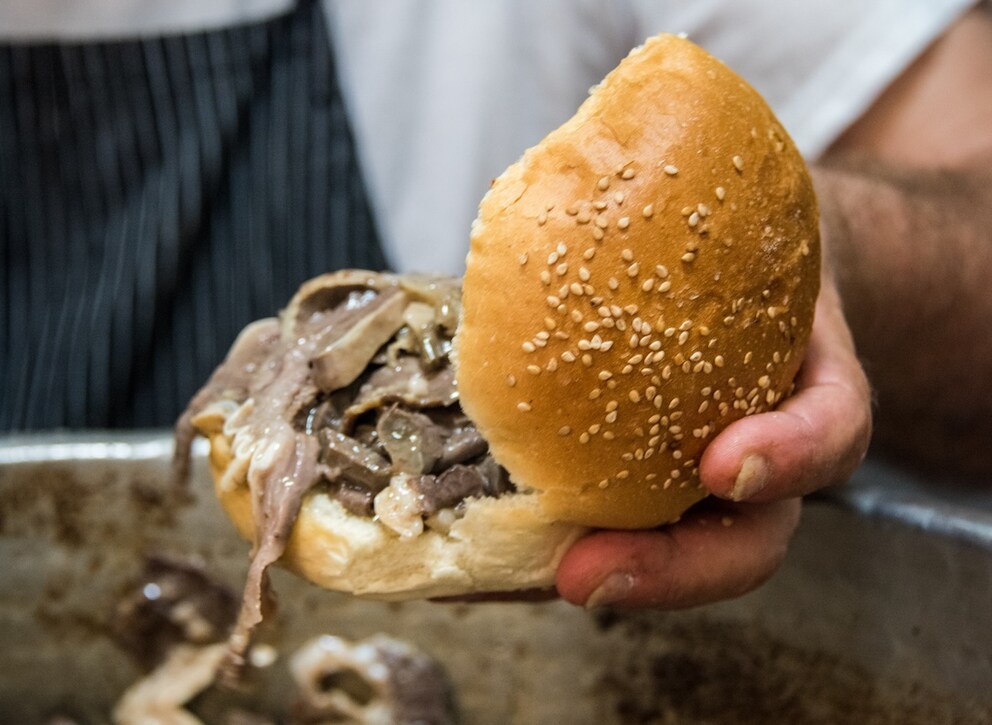
Closely related to Pani câ meusa is Frittula. For this, small pieces of meat and scraps from the calf are fried crispy in hot fat. One might also say: slaughter waste is used, or at least less desired parts of the animal, including fatty tissue. Frittula is traditionally served hot at street stalls and markets in Palermo.
Also interesting: Facts about Italian cuisine you didn’t know
Lampredotto (Tuscany)
Offal can also be enjoyed in other Italian regions. The Tuscan counterpart to Pani câ meusa and Frittula is Lampredotto. In this case, it is the abomasum–an organ found in the digestive tract of ruminants–and specifically from cattle. The meat is cooked for many hours and then traditionally served with salsa verde (Italy’s version of a green herb sauce) in a sandwich.
Latte dolce fritto (Liguria)
Fritto misto–literally “mixed fried”–is known primarily as a hearty mix of fried seafood, supplemented with vegetables depending on the region. In Liguria, however, much more is added to the plate. In Fritto misto alla ligure, in addition to seasonal vegetables such as artichokes, carrots, cauliflower, mushrooms, zucchini blossoms, or sage, meat and offal are also fried–such as pieces of chicken, veal, or lamb, as well as liver or brain.
And what must not be missing is the Latte dolce fritta–the “fried sweet milk.” Yes, exactly: all served together. For this sweet component, a milk cream flavored with lemon peel is cooked, cut into pieces, breaded, and also placed in hot oil.
Sanguinaccio Dolce
And while we’re on the subject of sweet. In many parts of Italy, but more so in Campania, there is a dessert made from dark chocolate and animal blood. “A cup of cow or pig blood is part of the recipe, which yields six servings,” writes a tester on “Reddit.” The blood is not tasted–its addition mainly serves the creamy and smooth texture. Another “Reddit” user appreciates the unusual ingredient for desserts: Normally, he is not a fan of chocolate, but he found this dish delicious.
’O pere e ’o musso (Campania)
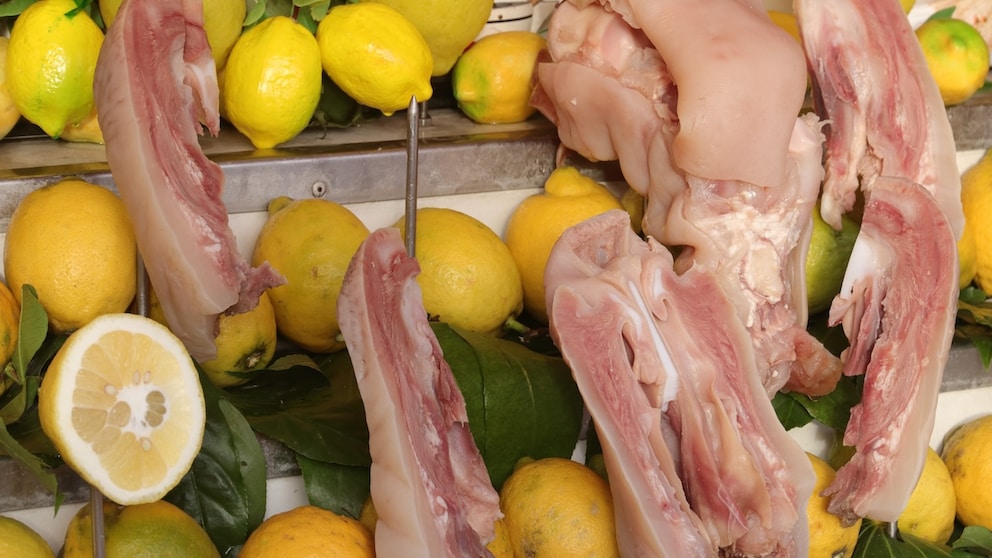
You probably associate Naples with the world-famous Neapolitan pizza. But the region is also known for ’O pere e ’o musso: pig’s feet and calf’s snout (see also the large photo above).
The preparation is quite simple: The mentioned parts are boiled–done. Accordingly, they also look like pig’s feet and calf’s snout. Those unfamiliar with this specialty and encountering it at a street food stand might initially be reminded of a butcher’s display. In fact, it is ready-to-eat food, usually drizzled with lemon juice and simply wrapped in paper. The snack is traditionally eaten with fingers.
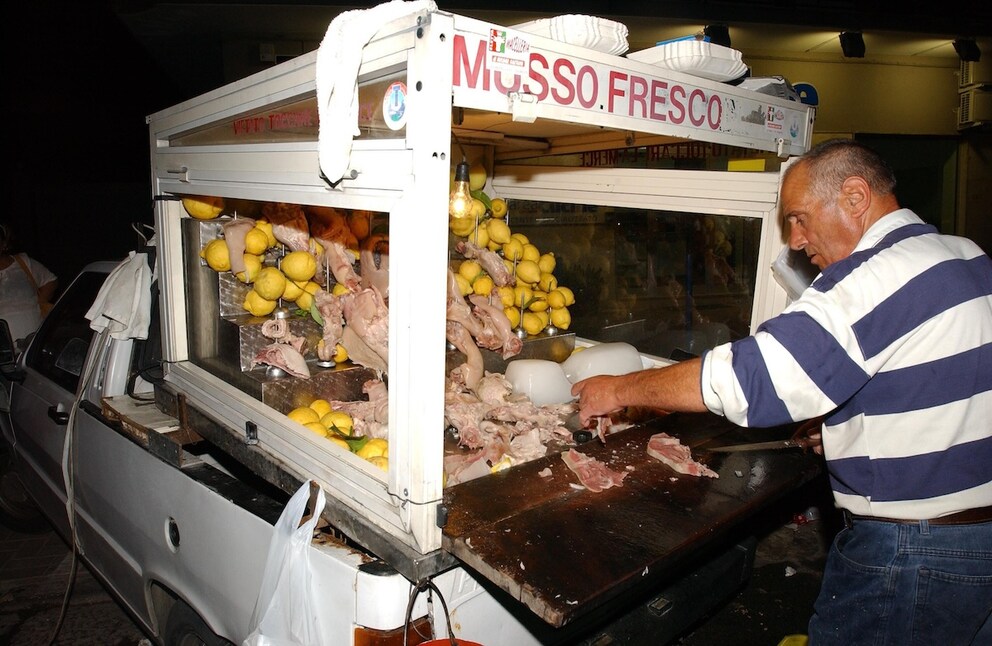
It should also be emphasized that this is a sustainable form of utilization. This applies to ’O pere e ’o musso as well as the offal dishes mentioned above.
The most unpopular European cheeses according to ‘Taste Atlas’

Facts About Italian Cuisine You Didn’t Know
Casu marzu (Sardinia)
You probably won’t find this dish on a restaurant menu. Nevertheless, it is a regional specialty that should not be missing from this collection. In Sardinia, Casu marzu is still traditionally made and sometimes offered, albeit outside official sales channels. It is often referred to as the “world’s most dangerous cheese.”
It is a sheep’s cheese infested by the “cheese fly” Piophila, whose larvae develop inside the cheese. Through their digestion, the originally firm interior becomes soft and creamy and gains its characteristically intense flavor. And now hold on: The specialty is traditionally consumed along with the live larvae.
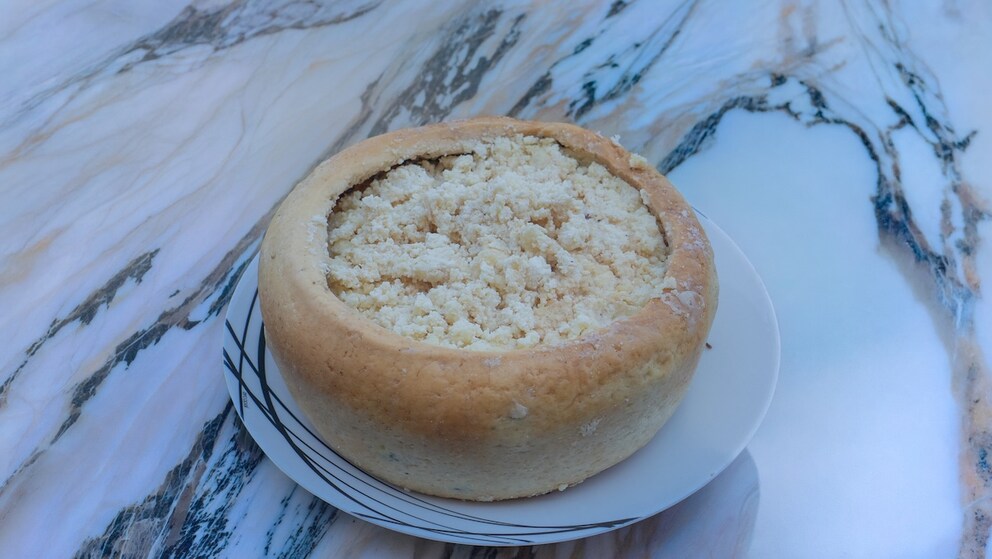
It not only sounds unpleasant (and looks that way), but consumption can require medical treatment. If larvae enter the human digestive tract alive, they can irritate and injure the intestines.
Germany also has “irritating” dishes
As explained at the beginning, tastes and culinary traditions vary. So before we criticize the mentioned Italian specialties, we should take a look at our own cookbooks. There are also things here that might initially seem unappetizing to people from other countries–from Labskaus to Mettigel to Milbenkäse.
And what Italians might think of our Toast Hawaii, which even exists here as a “Pizza Hawaii,” we prefer not to delve into at this point.