

December 13, 2025, 5:51 am | Read time: 5 minutes
The Lichtenstein Cave near the Lower Saxon town of Osterode is the birthplace of an archaeological sensation. Bone finds from the cave proved that Germany is home to the world’s oldest genetically verified family tree. This unique story can be explored today at the Cave Experience Center in Bad Grund.
While recently hiking through the beautiful South Harz, I unexpectedly stumbled upon something journalists particularly love. Not just a story, but a genuine sensation. I was on a leisurely walk with a few locals, winding down my tour after 200 kilometers. Suddenly, one of my companions pointed to an inconspicuous rock crevice and said, “That’s the entrance to the Lichtenstein Cave. You can’t enter it today, but in the ’80s, bones were found there that allowed the reconstruction of the world’s oldest genetically verified family tree.” Naturally, I had to find out more upon my return.
As noted on the website of the Institute for Historical Anthropology and Human Ecology at the University of Göttingen, the Lichtenstein Cave near Osterode was discovered rather accidentally in 1972. The search was actually for a lost escape tunnel from a castle that once stood on the 261-meter-high Lichtenstein. It wasn’t until eight years later that it was revealed that numerous other chambers extended beyond the cave entrance. In these five cave chambers, countless bone remains of both humans and animals were found, unusually well-preserved by the climate and a layer of gypsum sinter. Excavations from 1993 to 2013 eventually unearthed 4,323 human bones or bone fragments.
Archaeological Sensation
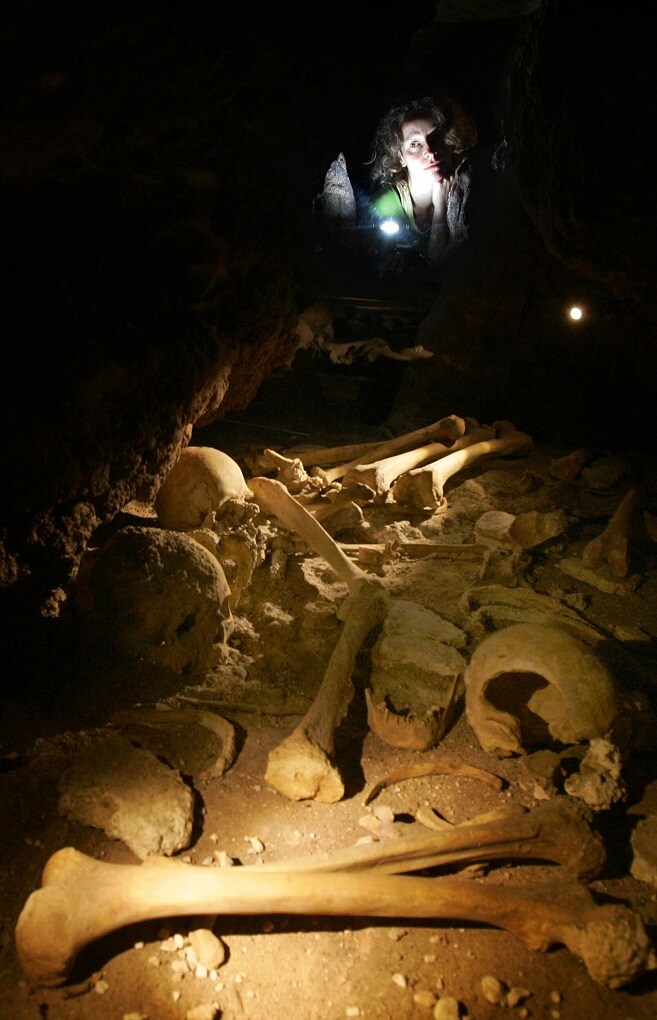
Initially thought to be a ritual sacrifice site, the presence of items like jewelry soon led to the theory of a Bronze Age burial cave. A total of 62 individuals were buried here. Dr. Brigitte Moritz heads the Cave Experience Center (HEZ) in Bad Grund, which opened in 2008 and displays parts of the finds, including a faithful reconstruction of the burial cave. In an interview with TRAVELBOOK, she says, “Due to the low temperature and high humidity in the cave, the bones were very well preserved. This made it possible to extract usable DNA samples from them. These showed that 57 of the people buried here were related.”
In this way, it was even possible to reconstruct the hair and eye color of these people. Further scientific methods revealed their height and diet. The real sensation, however, came in 2007. Researchers led by Dr. Susanne Hummel from the University of Göttingen and district archaeologist Dr. Stefan Flint called for volunteers to provide a DNA sample via a saliva test through a newspaper ad. They aimed to find out if living descendants of the people from the Lichtenstein Cave could still be found in the area. The comparison with samples from 300 volunteers indeed resulted in an archaeological sensation.

These 5 Long-Distance Hiking Trails in the Harz Are Especially Worthwhile
The Oldest Trees in the World
Over 3,000 Years in the Same Place
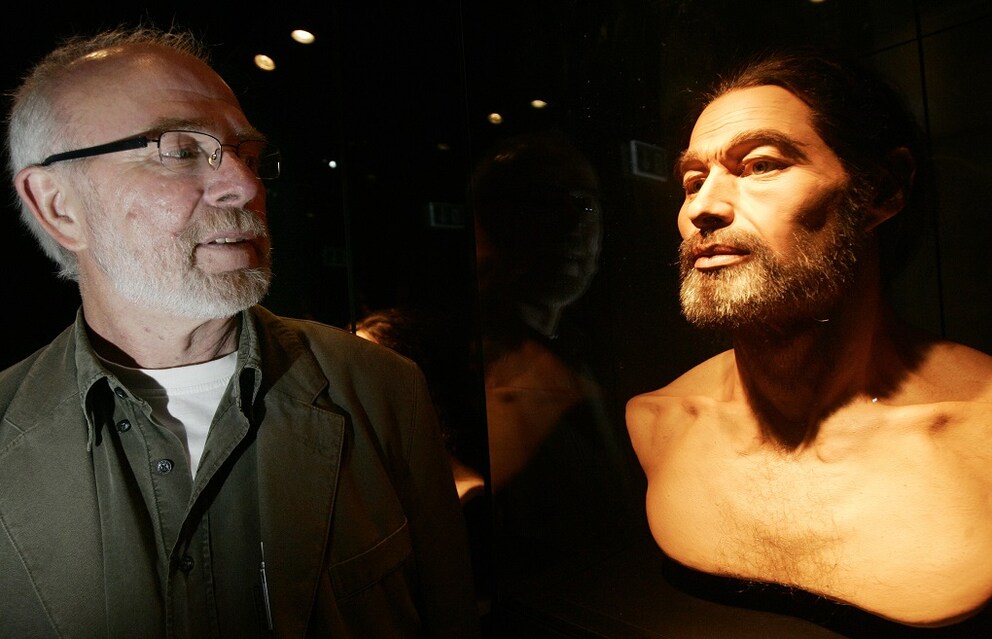
Indeed, very rare matching patterns on Y-chromosomes identified two men who are almost certainly direct descendants of the deceased from the Lichtenstein Cave. For another 50 volunteers, it is very likely that they are directly related to the so-called “Lichtensteiners.” What was found here is nothing less than the world’s oldest genetically verified family tree, a traceable lineage over 3,000 years or 120 generations. “These DNA analyses and their astonishing results can be accessed interactively at our Cave Experience Center,” says Moritz.
Also interesting: The Beauty of the Little-Known Okertal in the Harz
The people whose kinship was proven received letters from the district administrator. “It’s quite amazing. This proved that at least parts of the same family have remained in our region for over 3,000 years.” Visitors to the Cave Experience Center in Bad Grund also find this very exciting. Remarkably, in 2021, researchers from the University of Vienna managed to reconstruct the oldest known family tree in a Stone Age burial site in Britain. This involved relatives from five generations who lived up to 5,700 years ago. However, the oldest genetically verified family tree remains the one from the Lichtenstein Cave.
Victims of Grave Robbers

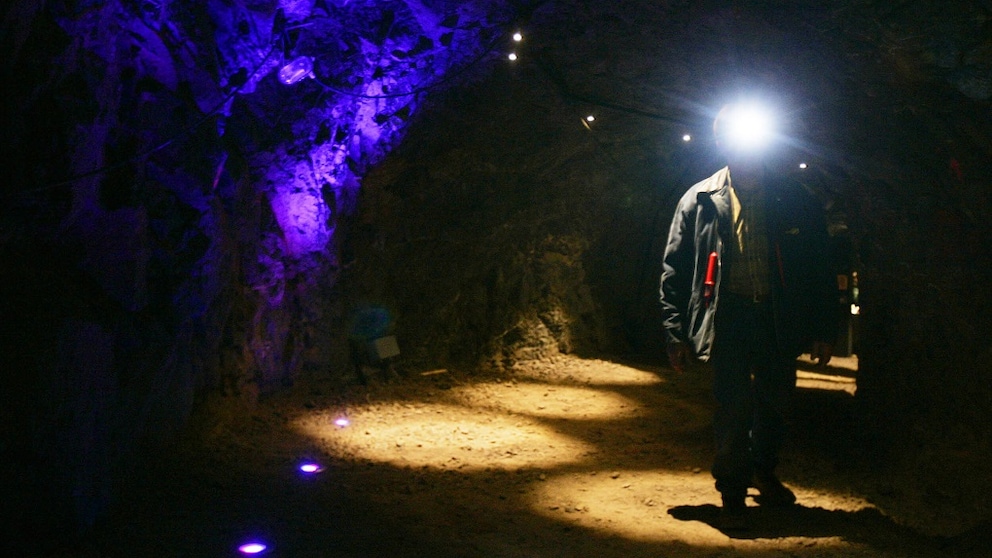
Visitors to the Cave Experience Center today can also explore another wonder: the Iberg Dripstone Cave, a tourist attraction since 1874, deep within Bad Grund’s home mountain, which was once a coral reef in prehistoric times. A tour here is included in the HEZ admission price, currently 10 euros per adult. The facility is open Tuesday to Sunday and on holidays from 10 a.m. to 5 p.m., with the last tour starting at 4 p.m. For more information, please visit the official website.
The actual Lichtenstein Cave is no longer accessible to the public. This is partly due to the fact that in 1992, grave robbers broke in, searching for valuable Bronze Age burial items, causing massive surface damage. “When I was little, we used to go into the cave for birthday parties,” one of my companions recalled with a laugh during my tour. Today, everyone can experience the magic of the place where the world’s oldest genetically verified family tree was found at the HEZ in Bad Grund.