

March 10, 2026, 11:43 am | Read time: 4 minutes
An ancient shipwreck from the 4th century is being salvaged off the coast of Mallorca. All the details about this sensational find here at TRAVELBOOK.
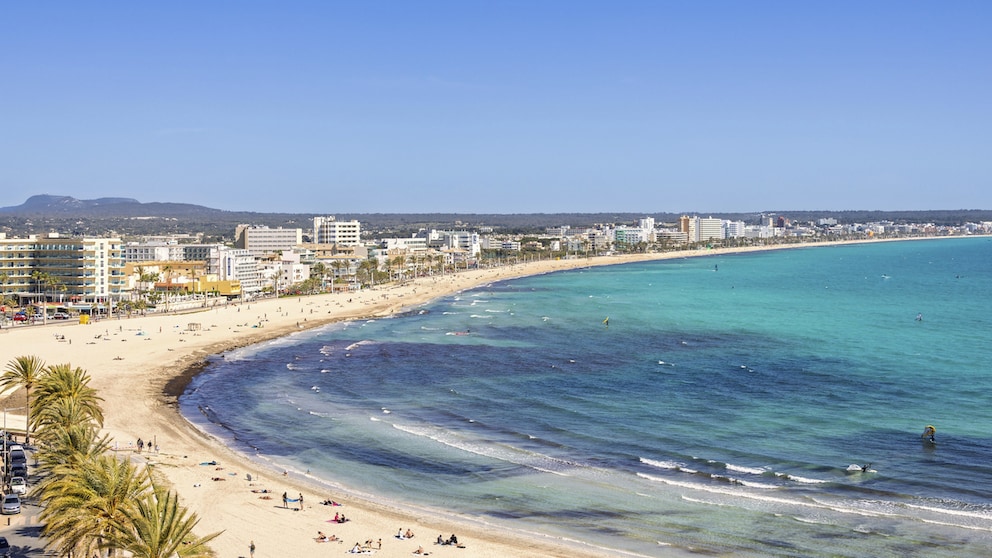
It has been seven years since a local diver discovered the Ses Fontanelles shipwreck, and today (March 10, 2026), the salvage operations begin off Mallorca. The wreck is believed to have been lying here, about 65 meters off the Mallorcan coast near Can Pastilla, at a depth of approximately two and a half meters, for over 1,700 years. In an elaborate operation, the Roman merchant ship will be brought piece by piece ashore over the coming months and eventually restored.
Shipwreck Well Preserved
The approximately twelve-meter-long and six-meter-wide shipwreck is, according to the online platform Viator Imperi, not only “one of the most extraordinary finds in European underwater archaeology,” but it is also remarkably well preserved for its roughly 1,700-year history underwater. Its structure is said to be almost entirely intact. Viator Imperi attributes this to the “oxygen-poor, sandy seabed that protected it for centuries.”
After its accidental discovery in 2019, various archaeological investigations were conducted on the shipwreck off Mallorca, coordinated by the project “Arqueomallornauta.” This is a joint project of the Consell de Mallorca and the universities of the Balearic Islands, Barcelona, and Cádiz.

Researchers Discover More Than 30 Shipwrecks in Lake Constance!

6 Places Worldwide Where Treasures Are Still Said to Be Hidden
Ses Fontanelles Wreck Was a Roman Merchant Ship
According to current research, the Ses Fontanelles shipwreck was part of the Roman Empire’s trade network, “connecting the Spanish provincial markets with the major urban centers of western Rome,” as the cultural platform writes. It originally came from the region of Carthago Spartaria, today’s Cartagena. According to the platform, the Ses Fontanelles shipwreck is the “first known Roman ship with cargo from this region (…) to have sunk in the Mediterranean.”
During previous investigations of the shipwreck off Mallorca, researchers found, among other things, a Roman coin from Siscia (today Sisak in Croatia), which they attribute to the emperors Constantine (circa 280 to 337) or Licinius I (circa 265 to 325). The coin suggests a dating of the shipwreck to around 320 A.D. However, the coin was not the only spectacular find. According to Viator Imperi, “a full load of amphorae with wine, oil, and fish sauces from southeastern Hispania” was also recovered. More than 300 of these special clay vessels were in the ship’s hull. Many of them were sealed and inscribed with information about their origin and the trading practices of the 4th century A.D. In addition to the amphorae, two shoes, a bow drill, as well as ropes and plant remains, are among the finds.
Salvage in Parts
After extensive preparations and underwater investigations, the actual salvage of the wreck is now starting. Numerous divers, historians, and archaeologists are involved. According to “Mallorca Magazin,” the salvage operations could take up to four months, depending on the weather. Those visiting Mallorca during the summer holidays might discover a field camp for the experts on site. Additionally, signs are expected to guide interested parties to an information page via QR code. This page provides details about the events and includes a documentary film.
According to “Mallorca Magazin,” the ship will be salvaged in several parts. Originally, it was intended to be salvaged in one piece, but due to the missing keel, this proved too risky. Once the individual ship parts are on land, they will be transported to the Castillo de San Carlos near Portopí and stabilized in a desalination tank. After several months, the restoration of the shipwreck will follow. According to Viator Imperi, a later exhibition of the restored shipwreck in the Museum of Mallorca is planned. Other sources, such as “T-online,” indicate that the location where visitors will eventually see the Roman shipwreck has not yet been determined.