

May 26, 2026, 8:38 am | Read time: 8 minutes
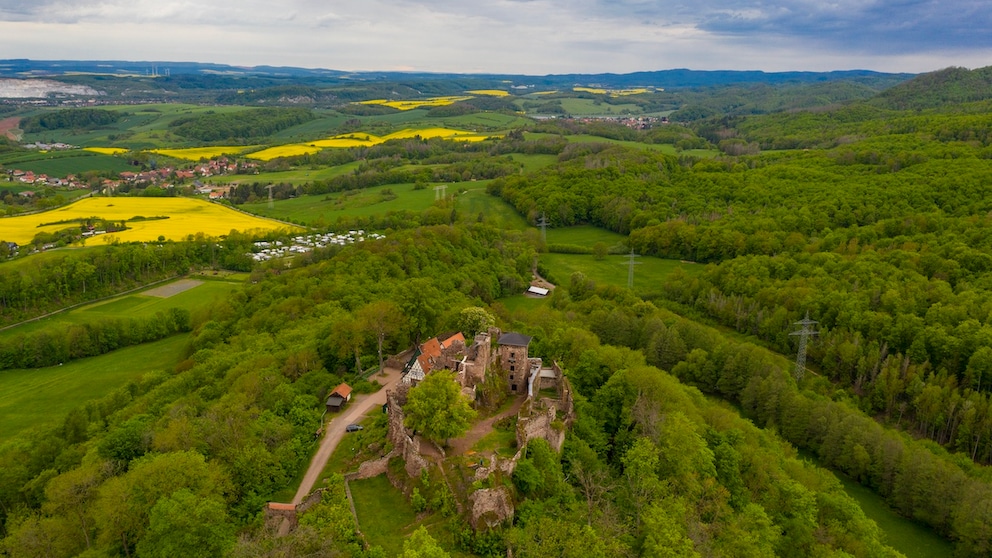
One castle was the scene of a spectacular escape by a noblewoman, another was saved by a local heritage society, and on yet another, one of the most important books of the German Middle Ages was written: The Harz region is full of amazing castles, fortresses, and their ruins. TRAVELBOOK author Robin Hartmann reveals where you can still “meet” real royals, follow in the footsteps of a legendary German king, and find the German castle equivalent of Angkor Wat.
It’s early morning, and I’ve fought and cursed my way up a steep hill from the coolness of the forest. Now, I stand alone at a place where a piece of the history of my favorite hiking region in the world, the Harz, was written. The rain from the previous night still drips from the trees, my breath is visible in the air, and I am exhausted yet happy. Once again, I have the privilege of getting to know one of the castles that wonderfully enrich the vast solitude of the Harz nature. In this case, I stand once more before long-decayed old walls, abandoned for centuries yet magically alive. Because history reveals itself to those who are willing to listen and look.
Even as a young boy, I was always fascinated by castles and palaces. The stories of kings, brave knights, and beautiful princesses captivated me, as they do most boys. At the same time, I am interested in history itself because it tells us where we come from. The Salian, Merovingian, and Ottonian dynasties once shaped the course of centuries. And in the Harz, you can find many traces of their rule and influence. Some are long fallen into decay, others still shining testimonies of old splendor and glory. Over the years of my explorations through the Harz, I have seen quite a few of them.
Castle Unearthed by Hand
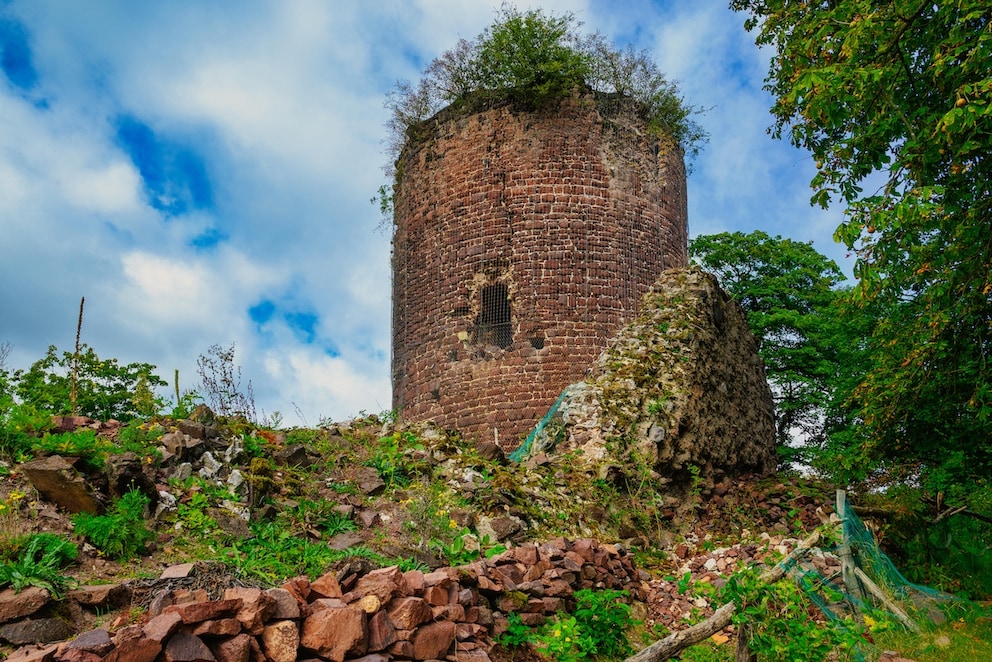
The scene described at the beginning took place at the ruins of Ebersburg near the small town of Neustadt, in the southern Harz. I had spent the night in a nearby shelter and now enjoyed the privilege of being the first to stand before the mighty walls that day. Like all castles and often palaces, I had to earn my visit with a short but steep climb. As strategic defensive structures, these venerable buildings are naturally located on heights, offering a better view of the surrounding area and potential enemies. Here, I am alone, able to breathe in history at my leisure. This is thanks to a dedicated local heritage society.
Ebersburg was built around 1180 by the Ludowingers, the then bailiffs of nearby Nordhausen. The 12.5-meter-high keep, with walls 4.5 meters thick, still stands today. In 1650, it was described as “desolate,” likely having been uninhabited for decades by that time. In 2006, the Nordhausen “Society for Living Middle Ages” awakened the ruin from its centuries-long slumber. With impressive dedication, its members unearthed large parts of the site by hand, using only rakes, shovels, and wheelbarrows, as stated on the society’s website. Even today, a volunteer visits daily for maintenance. Now, the site is open to the public, and events are sometimes held there.
Fantastic View
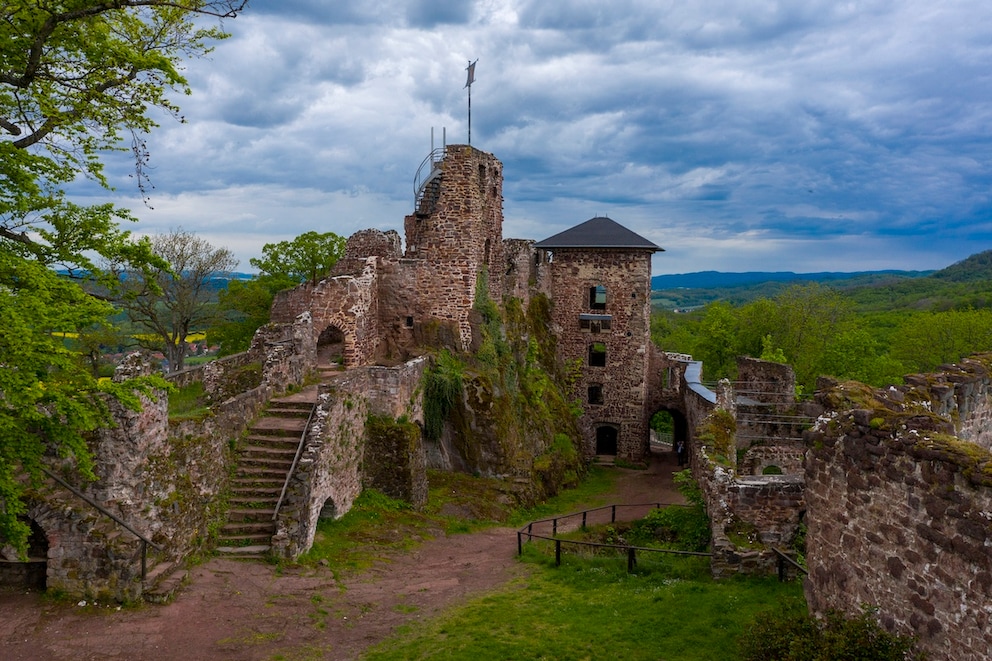
The day before my visit here, my hike had led me to another mountain. On it lie the ruins of Castle Hohnstein, accessible on foot from both Neustadt and Ilfeld. I came from the latter direction and had struggled along a path that seemed either long unused or completely abandoned. It was still on my map, so the climb became a proverbial journey over sticks and stones. I was all the more impressed when I entered the well-maintained and expansive site. The fortress Hohnstein was built around 1200 by Konrad von Sangerhausen, as information boards on site reveal. In 1627, it met a sad end, falling victim to arson during the Thirty Years’ War (1618 to 1648).
History enthusiasts will find much to enjoy here. This is because almost every part of the ruin is explained in detail on signs. One can almost imagine the splendor of the old castle in one’s mind. The highlight of any tour is certainly the short climb to the castle tower. From here, there is a fantastic view of the gentle hilly landscape of the southern Harz. In clear weather, you can see for miles, perhaps even spotting the Kyffhäuser on the horizon, the alleged resting place of the legendary King Frederick I “Barbarossa.” A similarly great view can be had from the terrace of the castle inn, where you can enjoy a hearty meal after your visit.
Drama and Fairy Tale Factor
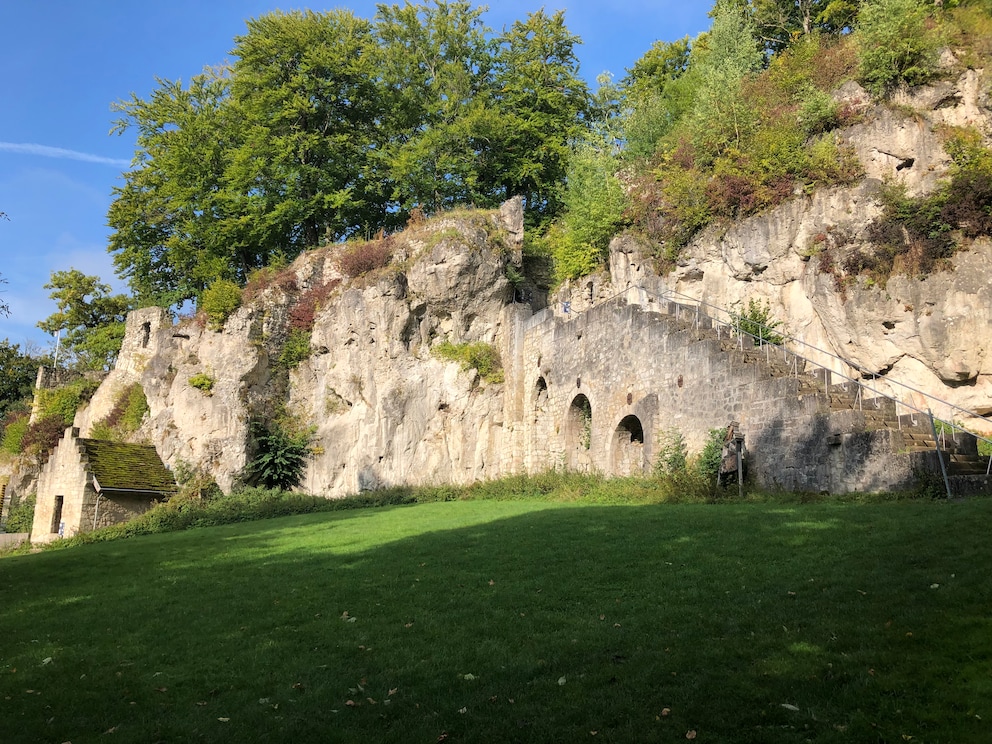
Also in the southern Harz, above the town of Scharzfeld, are the ruins of Castle Scharzfels. Naturally, it’s another steep climb that grants the right to visit the site, and so it was pleasantly empty during my early morning visit. Despite this, Scharzfels is truly spectacular and quite expansive. Unfortunately, due to the risk of collapse, parts of the area are currently closed to visitors, but this does not detract from its magic. Built in the 11th century, the castle was considered impregnable for centuries due to its strategic location. However, during military conflicts, it was first razed and then blown up by the French in 1776.
The ruins are still closely linked to the story of Eleonore von dem Knesebeck. A lady-in-waiting to a princess, she was held captive at Scharzfels for three years. She was privy to an affair between her mistress and a count and was to be silenced as a precaution. She wrote her poems and thoughts on the walls of her cell. You can still read them today at the site, which now houses the castle inn. Eleonore became famous mainly for her spectacular escape in 1697, aided by a young roofer. More drama and fairy tale factor is hardly possible.
The Most Important Book of the Middle Ages
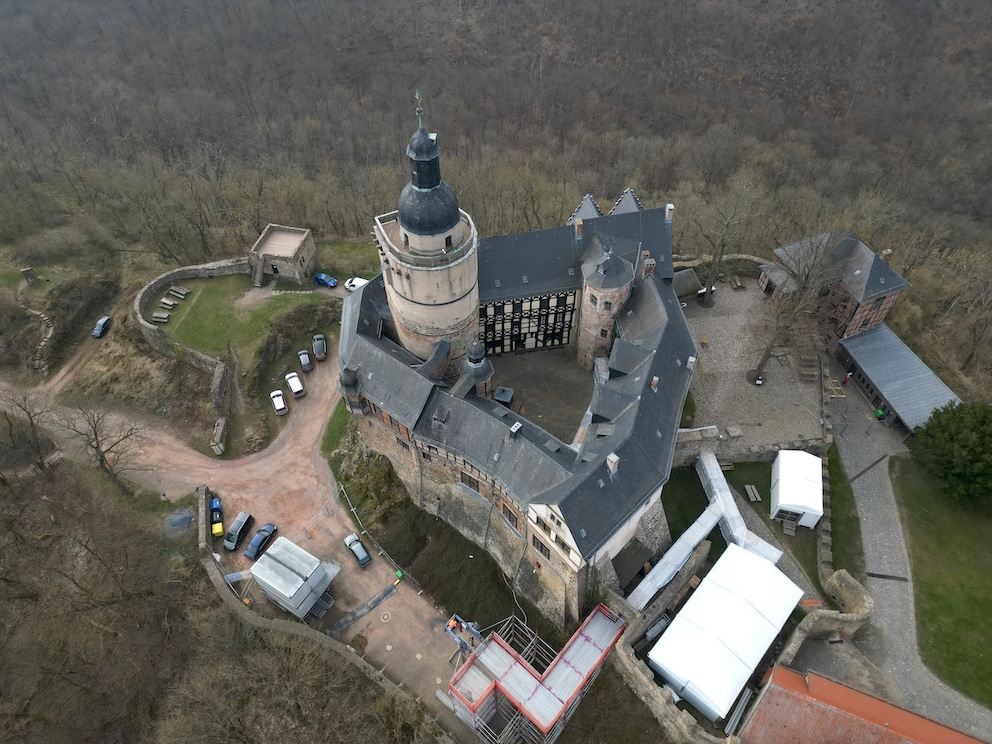
Probably the most famous of all Harz castles is Castle Falkenstein, perched high on a rock above the picturesque Selke Valley. I climbed it during a multi-day tour through the gentle lowlands, through which the beautiful and pristine Selke River flows. According to the “Harz Travel” website, the fortress was likely built in response to a violent crime. Egeno II of Konradsburg killed Adalbert II of Ballenstedt in a dispute, leading to the confiscation of his lands. Egeno’s son is said to have built Falkenstein from 1115 to 1120 as the new ancestral seat of the Konradsburg family.
Castle Falkenstein became legendary because one of the most important books of the German Middle Ages was created here. The scholar Eike von Repgow wrote the “Sachsenspiegel,” the most significant legal work of the era, at the fortress. With an impressive size of 90 by 310 meters, the stronghold has also been the filming location for numerous fairy tale films. You can climb the keep, although I was unfortunately unable to do so during my visit as I arrived outside the official “opening hours” and found the site closed. The view from the outside impressed me so much that I can still recognize Falkenstein immediately in pictures today.

These 5 Long-Distance Hiking Trails in the Harz Are Especially Worthwhile

The Most Beautiful and Unusual Inns in the Harz
Here Rests a Royal
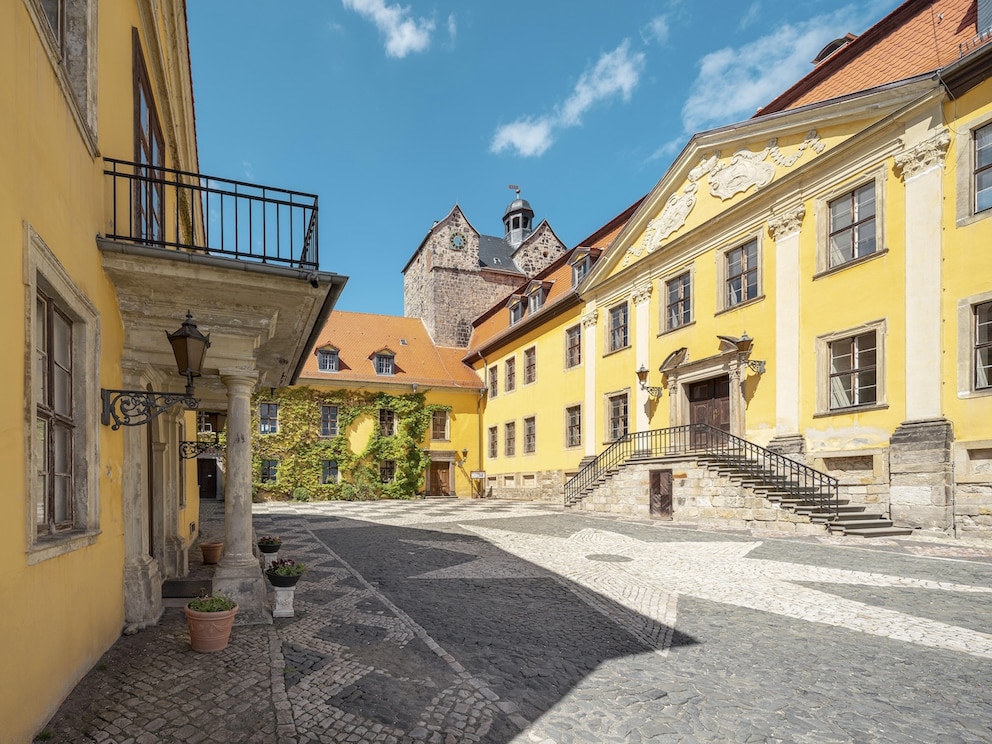
Castles have a different kind of splendor than palaces, and I particularly remember my visit to Castle Ballenstedt. Nearby is one of the most legendary places in the entire Harz, the Devil’s Wall. A truly archaic rock formation that stretches 30 kilometers through the landscape. But here, the focus is on the castle. An adult ticket costs from five euros, allowing you to visit the permanent exhibition, the castle church, and the castle tower. The highlight is undoubtedly the old church with the tomb of Albrecht the Bear, a powerful ruler from the House of Ascania.
The three-winged baroque-style complex was built in the 18th century and also features a spacious, well-maintained landscape park. It once served as the residence of the Princes of Anhalt-Bernburg and the summer residence of the Dukes of Anhalt. The history of Castle Ballenstedt dates back to the 11th century when a castle of the Ascania family and later a Benedictine monastery stood on the same site. This was destroyed in the Peasants’ War of 1525 and eventually converted into a hunting lodge. The complex received its current appearance from 1748 onwards. The small town of Ballenstedt is also worth a visit and can serve as the starting point for a multi-day tour through the Selke Valley.
One of the Largest Castles in the Harz
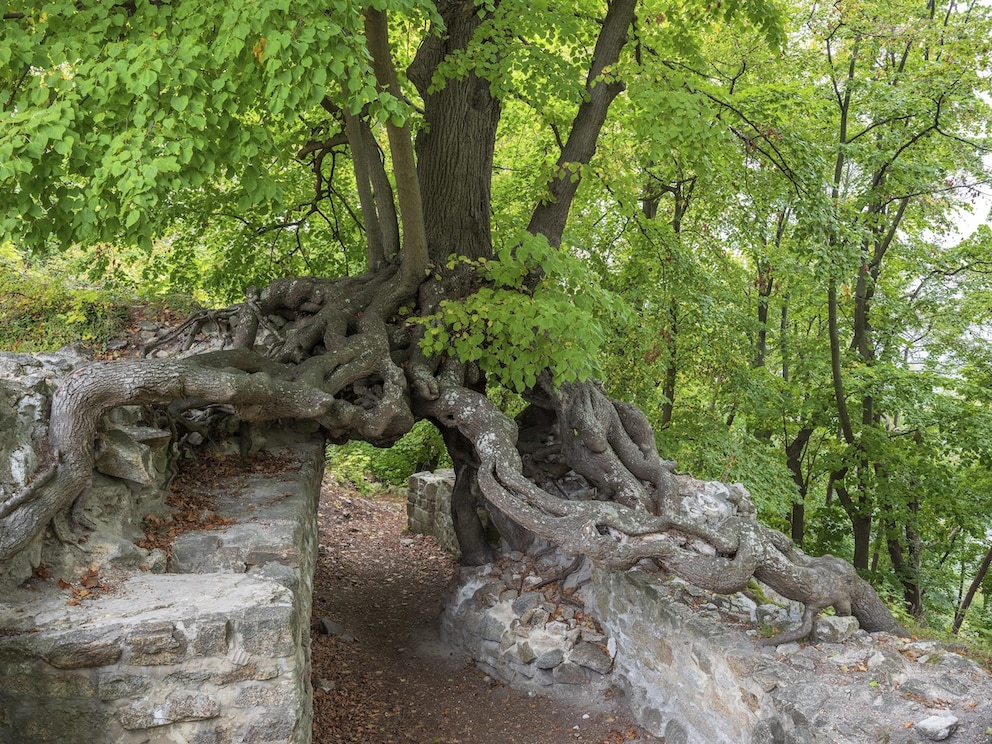
Near Thale, where the famous Bodetal is also located, lies the last of the castles and palaces on this list. Those who hike towards Bad Suderode, mentioned as a spa as early as the 17th century, will find the ruins of Lauenburg in the middle of the forest, from whose tower there is a spectacular view of the land. The highlight here for nature lovers is an old linden tree that grows directly from the ancient masonry, much like the famous images of the Angkor Wat temple, with its mighty roots extending like buttresses in all directions. First documented in 1164, the castle was intended to protect the town of Quedlinburg and important imperial roads. At 350 meters long, it was one of the most powerful complexes in the entire Harz.