

October 10, 2025, 1:03 pm | Read time: 5 minutes
Between mystical rocks, gentle hills, and dense forests, the Teutoburg Forest unfolds—a landscape that uniquely combines history and nature. Here, where the Germanic leader Arminius once defeated the Romans, visitors can now hike along quiet paths, enjoy breathtaking views, and discover ancient sites—from the legendary Externsteine to the imposing Hermannsdenkmal. TRAVELBOOK takes a closer look at the diverse Teutoburg Forest.
The Teutoburg Forest is a real eye-catcher—considered one of the most beautiful low mountain ranges in Germany. As noted on the official website of Teutoburg Forest Tourism, it stretches about 150 kilometers through Lower Saxony and North Rhine-Westphalia. “Teutoburg” roughly translates to “People’s Castle.” Today, two large nature parks share the area: one is the Egge Mountains, extending between Bielefeld and the Diemel Valley. From Osnabrück or Bückeburg, the Nature and Geopark “TERRA.vita” stretches, which has been part of the UNESCO Global Geoparks since 2015.
The poet Christian Dietrich Grabbe once wrote: “My heart is green with forest.” This sentiment is hard to describe more aptly—as many visitors find themselves enchanted by the forest-rich Ravensberger Land.
Sights and Highlights in the Teutoburg Forest
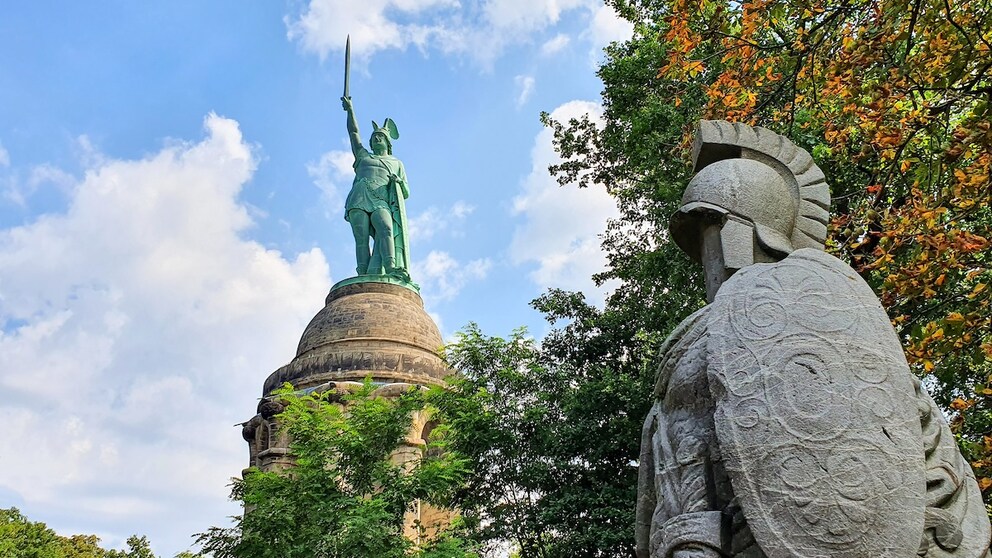
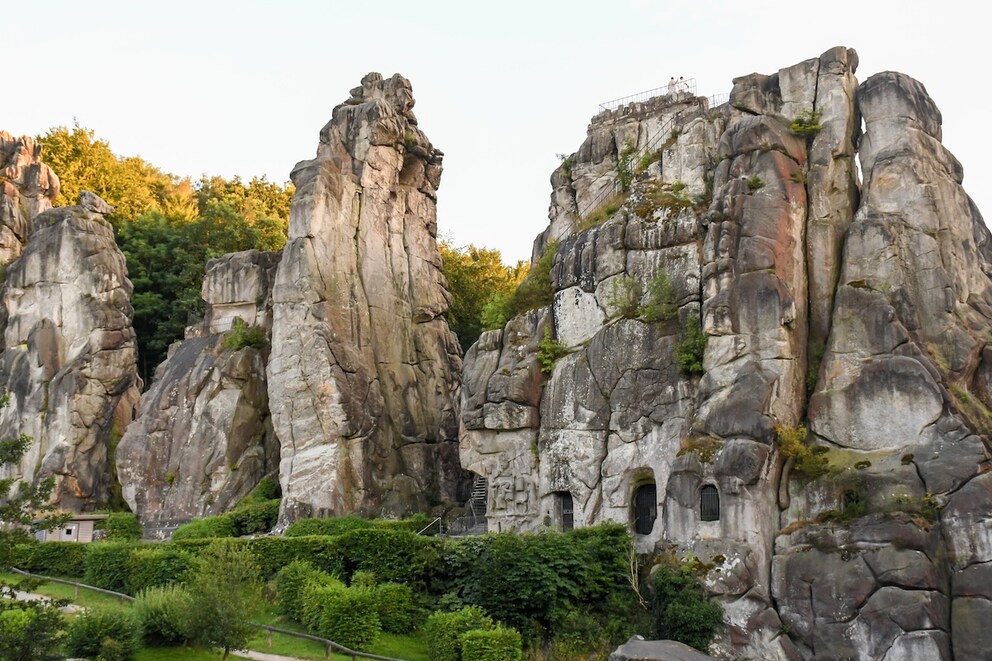
Whether history, nature, or culture—the Teutoburg Forest is full of fascinating places. High above Detmold stands the Hermannsdenkmal, erected in 1875 to commemorate the prince Arminius of the Cherusci. Not far away are the Externsteine near Horn-Bad Meinberg—impressive sandstone rocks that rank among Germany’s most extraordinary natural monuments. Their origin still puzzles researchers today, but the special play of light during the summer solstice attracts numerous visitors each year.
Even beyond these well-known landmarks, exploration is worthwhile. In cities like Bad Salzuflen, Lemgo, or Blomberg, charming half-timbered houses shape the old towns. Schloss Detmold, the Wewelsburg near Paderborn, and Schloss Brake in Lemgo also tell of the region’s noble past.
Those looking to combine culture and relaxation will find ideal conditions in Bad Salzuflen. The city once grew wealthy through the salt trade and has now become a popular spot for wellness enthusiasts. And, of course, the culinary delights should not be missed: Typical regional dishes include potato soup or the so-called Lippische Palme, a dish of kale with sausage, served in cozy inns or beer gardens along the hiking trails.
Also interesting: 6 hiking trails in the Bavarian Forest that are still real insider tips
The Battle of the Teutoburg Forest – Myth and History
Few events have shaped German identity as much as the Battle of the Teutoburg Forest. According to Varusschlacht in the Osnabrücker Land, Germania, under the leadership of Arminius, defeated the Roman legions of General Publius Varus in 9 AD. The battle is one of the most significant military confrontations of antiquity. Around 15,000 Roman soldiers lost their lives. The Roman Emperor Augustus is said to have desperately exclaimed: “Varus, give me back my legions!”
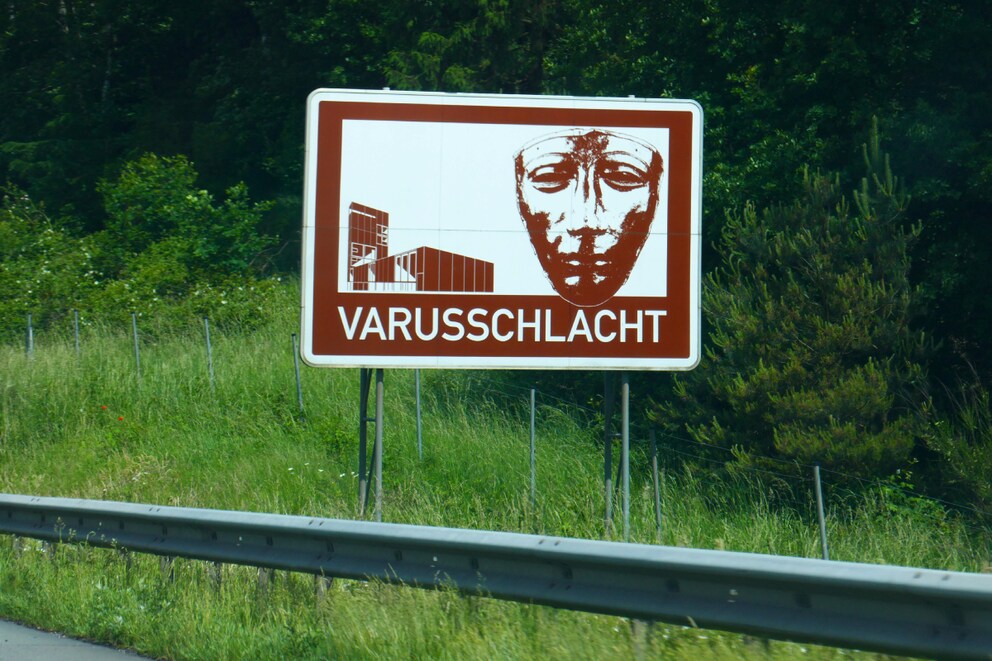
The exact location of the battle remains unclear to this day. More than 700 theories circulate, but most evidence points to Kalkriese near Osnabrück. There, archaeologists found Roman weapons, coins, animal bones, and remnants of ramparts—traces of a fierce battle. Arminius himself was previously an officer in Roman service and used Varus’s trust to lure him into an ambush.
Myths and open questions continue to surround this event. How could the numerically inferior Germans defeat the militarily superior Romans? And what role did Arminius actually play in planning the battle? What is certain is that as the “Liberator of Germania,” Arminius served as a model in the fight against Napoleon in the 19th century, as an ideal of the patriotic hero in World War I—and later was appropriated by the Nazis as a “Germanic leader.” His Germanized name “Hermann” was given to Arminius in the 16th century by Martin Luther as a symbol of German resistance—hence the Hermannsdenkmal still commemorates him today.

Beer Hiking Trails in Germany

6 Idyllic Places to Enjoy the Golden Autumn in Peace
Hiking in the Teutoburg Forest
Beyond history and culture, the Teutoburg Forest is above all a paradise for hikers. Over 2,000 kilometers of marked trails lead through the nature parks, past rocks, ridges, lakes, and historical sites.
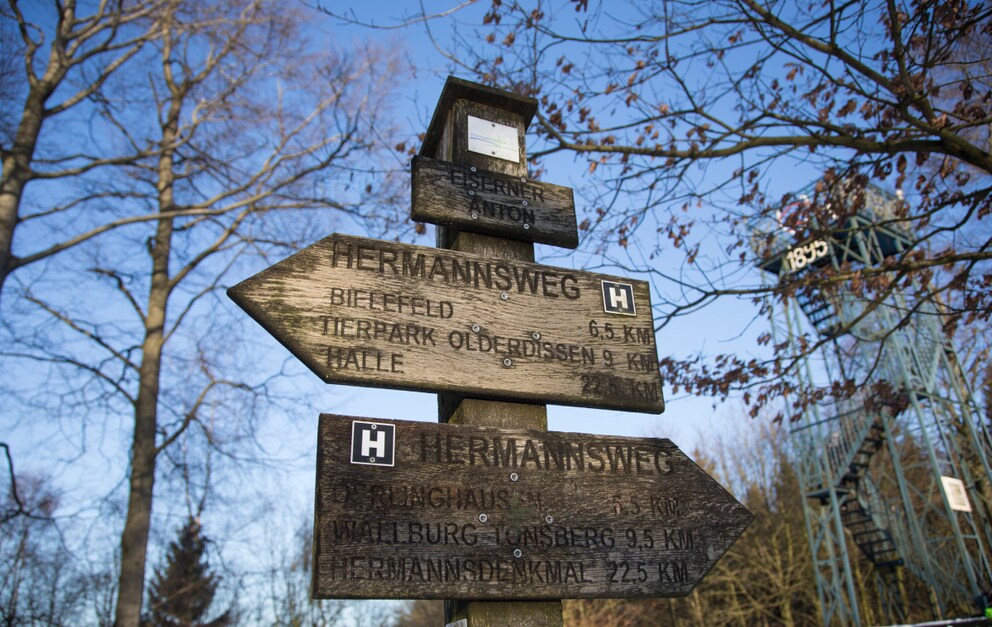
The most famous path is the Hermannsweg, named after Arminius the Cherusci. It stretches 156 kilometers from Rheine to the Lippische Velmerstot and is one of Germany’s most beautiful ridge trails. Those who don’t want to walk the entire route can enjoy individual sections as day hikes. Together with the Eggeweg, it forms the so-called Hermannshöhen, which regularly rank among the country’s most popular long-distance hiking trails.
Additionally, numerous shorter routes invite exploration: The Hansaweg leads about 75 kilometers from Herford to Hameln, while the Viaduct Hiking Trail near Altenbeken surprises with impressive panoramic views and historic railway bridges. For geology fans, a tour through the UNESCO Geopark TERRA.vita is worthwhile, where themed paths tell fascinating stories about earth history and fossils.
Cyclists, mountain bikers, and riders also find ideal conditions—well-developed paths, varied landscapes, and ever-new perspectives on the region. And for those who prefer to take to the skies: Oerlinghausen is home to one of Europe’s largest glider airfields, where national and international competitions are regularly held.
Between Myth and Nature
Whether at sunrise on the highest mountain of the Egge Mountains Velmerstot, a stroll through the spa park of Bad Pyrmont, or a visit to the Externsteine by full moon—the Teutoburg Forest offers magical moments in every season. For families, there are animal parks, open-air museums, and climbing gardens. On rainy days, visits to museums, glassworks, or small breweries, where you can sample a regional beer, are worthwhile.
Anyone traveling here quickly discovers: The Teutoburg Forest is more than just a place—it’s a landscape full of stories that continue to live between its hills, rocks, and forests.