


May 12, 2026, 10:31 am | Read time: 12 minutes
Paradisiacal parks, enchanting castles, or majestic mountains–we showcase 16 excursion highlights, one from each state. Spring, when you enjoy the first warm rays of sunshine and the plants and trees bloom, is the perfect time to explore these by foot or bike.
Germany offers a variety of outdoor experiences, including castles, mystical landscapes, lakes, and viewpoints that are perfect for a day trip. TRAVELBOOK provides an overview of great excursion destinations in Germany–one for each state.
The 16 Best Excursion Destinations in Germany
- 1. High Ropes Course and Lichtenstein Castle, Baden-Württemberg
- 2. Eibsee, Bavaria
- 3. Beelitz Sanatoriums, Brandenburg
- 4. Peacock Island, Berlin
- 5. Hude Monastery, Bremen
- 6. Altes Land, Hamburg
- 7. Draisine Riding in the Odenwald, Hesse
- 8. Wandering Dune Klein Schmölen, Mecklenburg-Vorpommern
- 9. Herrenhausen Gardens, Lower Saxony
- 10. Externsteine, North Rhine-Westphalia
- 11. Bürresheim Castle, Rhineland-Palatinate
- 12. Treetop Walk Saarschleife, Saarland
- 13. Ore Mountains, Saxony
- 14. Suspension Bridge at the Rappbode Dam, Saxony-Anhalt
- 15. Red Cliff, Schleswig-Holstein
- 16. Hainich National Park, Thuringia
1. High Ropes Course and Lichtenstein Castle, Baden-Württemberg
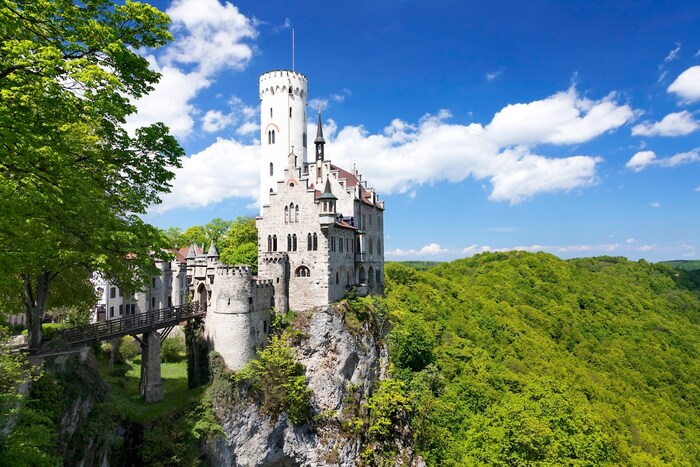
Our first destination for a day trip in Germany is located in the Swabian Alps. Experience adrenaline and a fairytale world in and around Lichtenstein Castle. You can visit the fairytale castle as part of a guided tour. Among other things, you’ll learn that the castle was built in 1840. It is particularly impressive because it was constructed at an altitude of 817 meters above the treetops of the Swabian Alps. The perfect photo is practically guaranteed.
After visiting the castle, you can enjoy the adjacent climbing park. You can climb one of eight courses starting at age eight. For those who want even more activity, you can also hike to the castle. It takes about 1.5 to 2 hours from the town of Sonnenbühl.
Also interesting: The most beautiful castles and fortresses in Germany
2. Eibsee, Bavaria
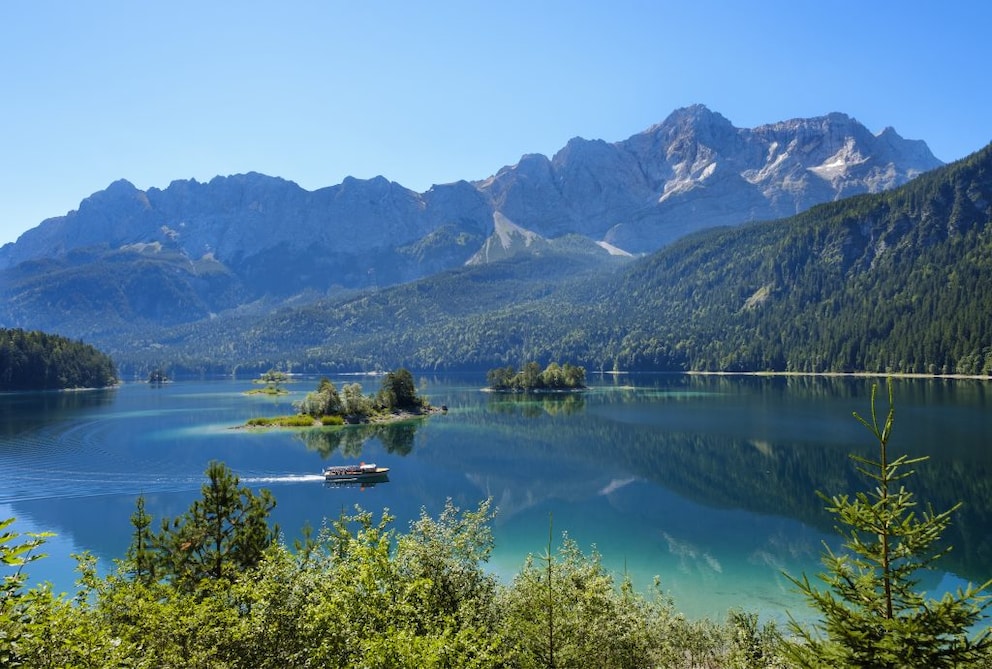
Caribbean in Germany with the Zugspitze massif in the background: that’s what vacationers find at this excursion destination in Bavaria. Eibsee stands out with its green shimmering, crystal-clear water. You can either hike around it or take a boat through the middle. The lake is located at nearly 1,000 meters above sea level and is surrounded by the Wetterstein Mountains.
BILD Travel: Discover the best hotels in the Bavarian Alps now!
By the way, the mountain lake is actually two! It is divided into Untersee and Eibsee. A bridge connects the two swimming lakes. The Eibsee Cable Car takes visitors up to the Zugspitze. A height difference of 2,000 meters is covered in just one cable car section–a world record!
Also interesting: The 25 most beautiful swimming lakes in Germany
3. Beelitz Sanatoriums, Brandenburg
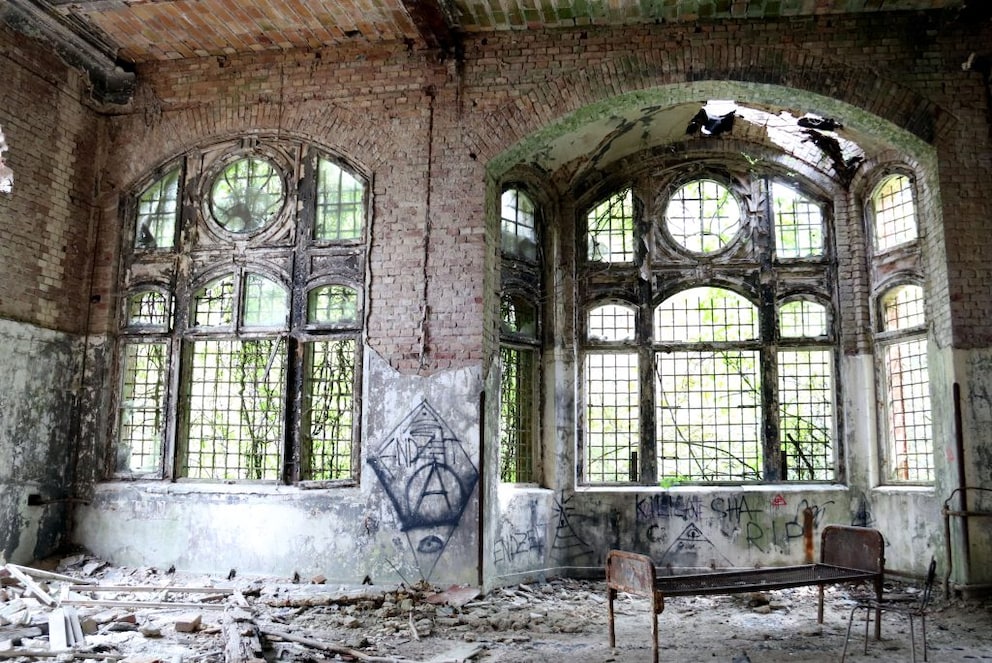
Beware, it gets spooky: countless people once died in the vast hospital complex because there were no effective medications for them. The Beelitz Sanatoriums were used as lung sanatoriums and tuberculosis hospitals at the beginning of the 20th century. Later, the 60 buildings became the backdrop for several horror films.
During the world wars, the sanatoriums were used as a military hospital, with Adolf Hitler being the most famous patient, and Erich Honecker was also treated here. Additionally, the largest Russian military hospital abroad was operated here until 1994. Large parts of the building are now in ruins. Tours are offered through the abandoned sanatoriums. There is also a treetop path that leads over the grounds.
Also interesting: The Beelitz Sanatoriums–Germany’s creepiest clinic
4. Peacock Island, Berlin
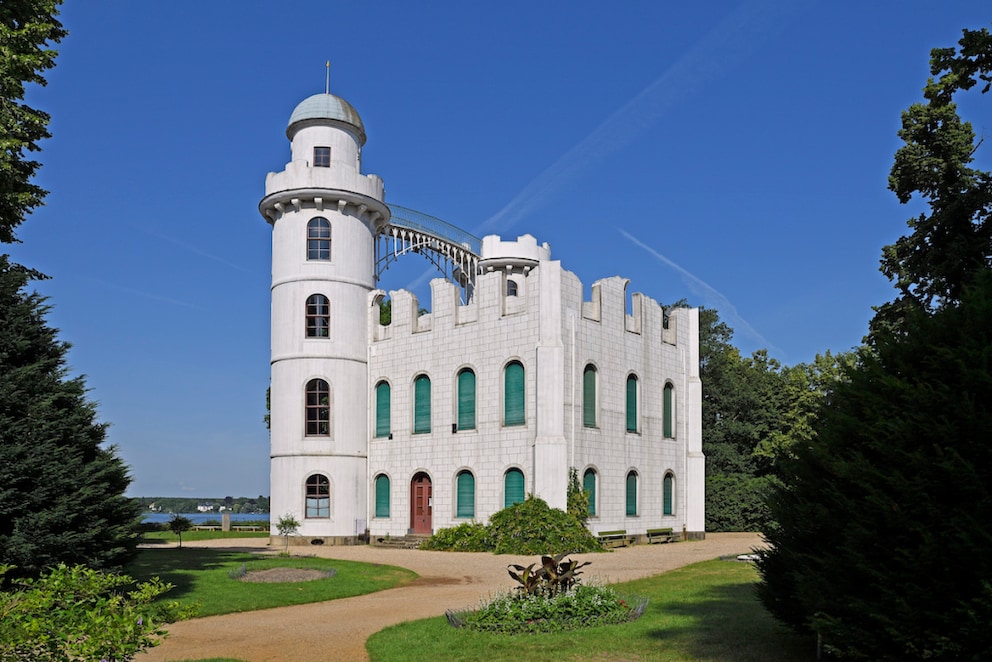
The name is fitting on Berlin’s Peacock Island. Peacocks actually roam freely here. You can also see the occasional water buffalo here, serving as natural lawnmowers. The island was declared a UNESCO World Heritage Site and offers a white castle, a rose garden, and the “Luisen Temple.” If you want to learn more about the places, you can get more information at five marked audio stations.
It’s hard to get lost, as the island is only about 1.5 kilometers long and 500 meters wide. A large loop around the island takes about 2.5 hours, and a ferry will take you back to the mainland. There is no other access.
Also interesting: Quiz: How well do you know Germany’s neighboring countries?
5. Hude Monastery, Bremen
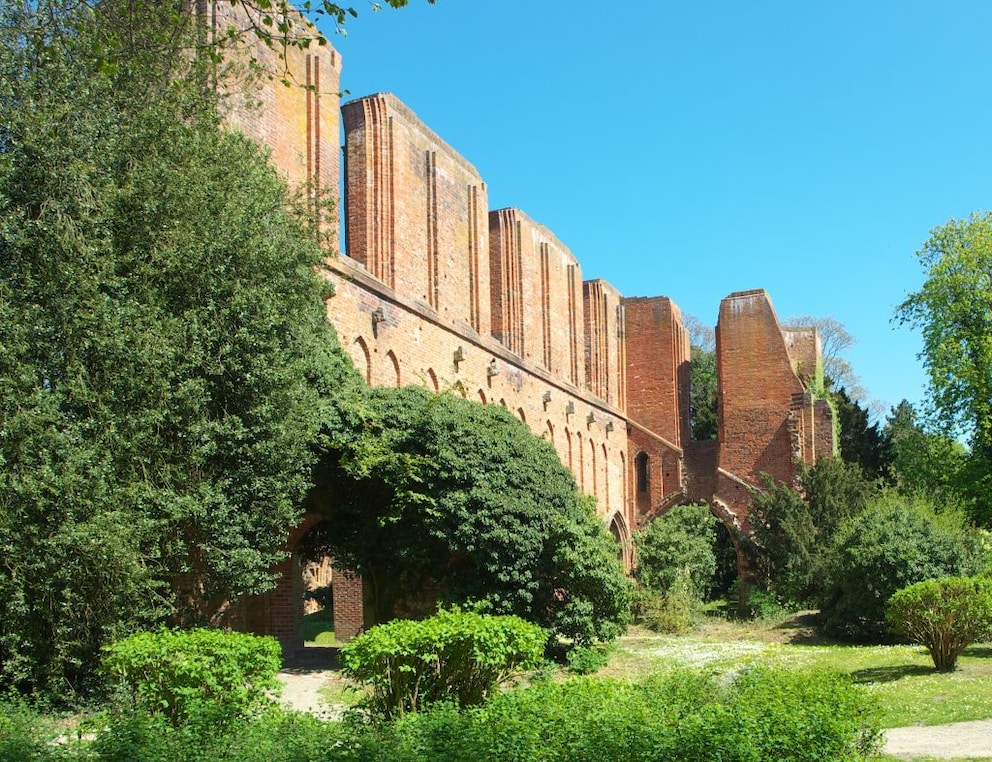
The town of Hude is located between Bremen and Oldenburg and attracts visitors with several sights. The complex of the former Cistercian monastery on the edge of the town is particularly worth seeing and a beautiful excursion destination. It was founded in 1232 and is still partially in use today.
The old monastery is surrounded by an English landscape park. For those who enjoy hiking, the six-kilometer-long Planetary Trail to Wüsting offers a journey through our solar system.
Also interesting: Former Franciscan monastery in Berlin is the setting for a dark legend
6. Altes Land, Hamburg
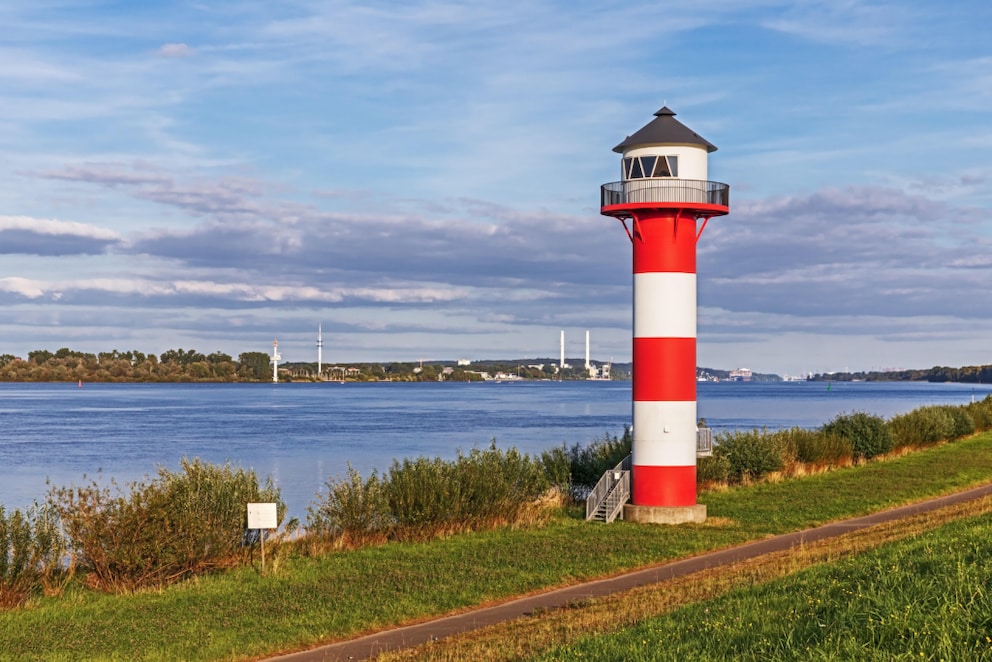
An excursion to Altes Land is especially worthwhile during the blossom and harvest seasons. Strawberries, cherries, and apples are harvested here from June. With more than ten million apple, cherry, pear, and plum trees, Altes Land is the largest contiguous fruit-growing area in Germany. Every third apple in Germany comes from this region. Many farms offer tastings from spring to fall.
The longest bike path that passes through here is the North Sea Coast Path, and that should be reason enough not to leave your bike at home.
7. Draisine Riding in the Odenwald, Hesse

In southern Hesse lies the Odenwald, home to the world’s first solar draisines. They run on a disused track of the Überwaldbahn between Mörlenbach and Wald-Michelbach. You can pedal for ten kilometers and power the draisine with an electric motor. The ride through the Odenwald takes you over three viaducts and through two railway tunnels.
In the Bergstraße-Odenwald region, there is also much to discover on foot or by bike. For example, the Lorsch Monastery, a UNESCO World Heritage Site, or the Eberstadt Stalactite Cave. You can relax at the Odenwald-Therme.
Also interesting: The best thermal baths in Germany, Austria, and Switzerland
8. Wandering Dune Klein Schmölen, Mecklenburg-Vorpommern

Europe’s largest inland dune is located between Hamburg and Berlin and is definitely worth a visit. The dune is part of the UNESCO World Heritage Biosphere Reserve Elbe River Landscape. If you drive along the Elbe River Road, you can see it from afar.
Once at the dune, a nature trail leads through the area, which reaches a height of 40 meters at its highest point. A viewpoint offers a view over the Elbe Valley, known for its impressive nature. It is especially good to explore by bike. The wandering dune has also developed a great variety of plants. During a visit, you might encounter a stork or crane.
Also interesting: The largest wandering dunes in Europe
9. Herrenhausen Gardens, Lower Saxony

One of the most beautiful garden complexes in Europe is located in the middle of Hanover, where kings of the 17th century once strolled. It was laid out in 1638 as a vegetable garden. The centerpiece of the grounds is the Baroque “Great Garden,” which is modeled after the French Versailles.
In the fifty-hectare garden, there is even a labyrinth. Next to it, the Georgengarten resembles an English landscape park. Also worth seeing is the Berggarten, one of the oldest botanical gardens in Germany, which is sure to delight nature and plant lovers.
10. Externsteine, North Rhine-Westphalia
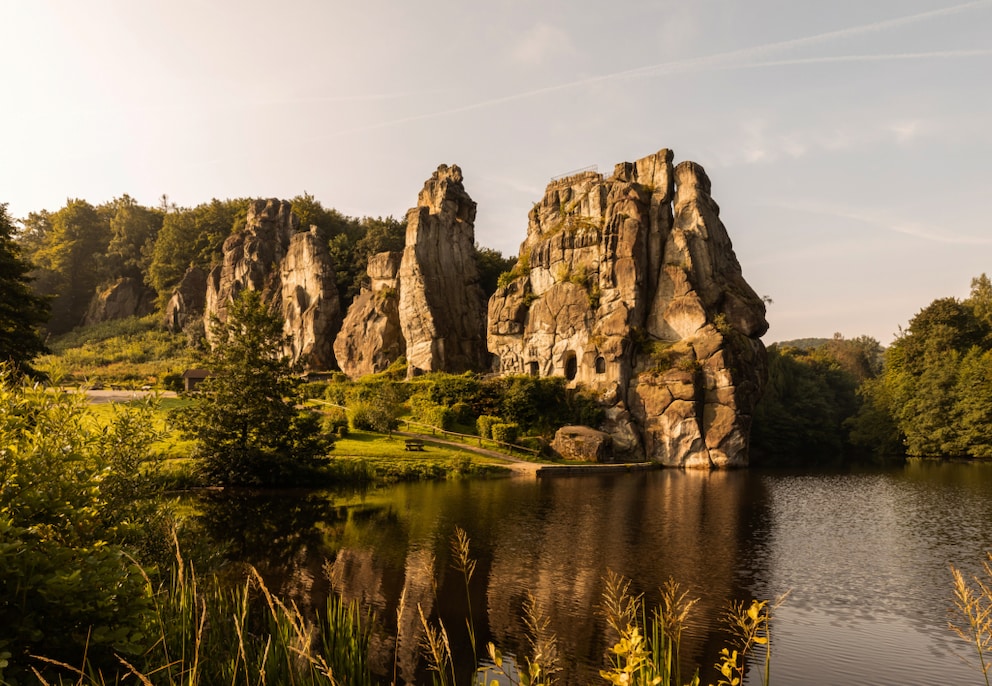
The “Stonehenge of the Teutoburg Forest” is what these mystical stones are sometimes called. It is believed that the rocks were known to prehistoric humans. The 13 jagged stones are up to 35 meters high and attract not only esotericists but also self-proclaimed witches.
The Externsteine provide material for numerous legends. Some even claim they have magical powers. Their impressive shape was likely formed by enormous masses of water that surrounded them during the Ice Age.
For a fee, you can climb the stones or continue hiking on the Hermannshöhen trail, which passes directly by the formation. The adjacent lake offers a unique photo opportunity, reflecting the Externsteine. The surrounding Teutoburg Forest is best photographed from the viewing platform on the stones. A place definitely worth a visit!
Also interesting: Pömmelte–the German Stonehenge
11. Bürresheim Castle, Rhineland-Palatinate
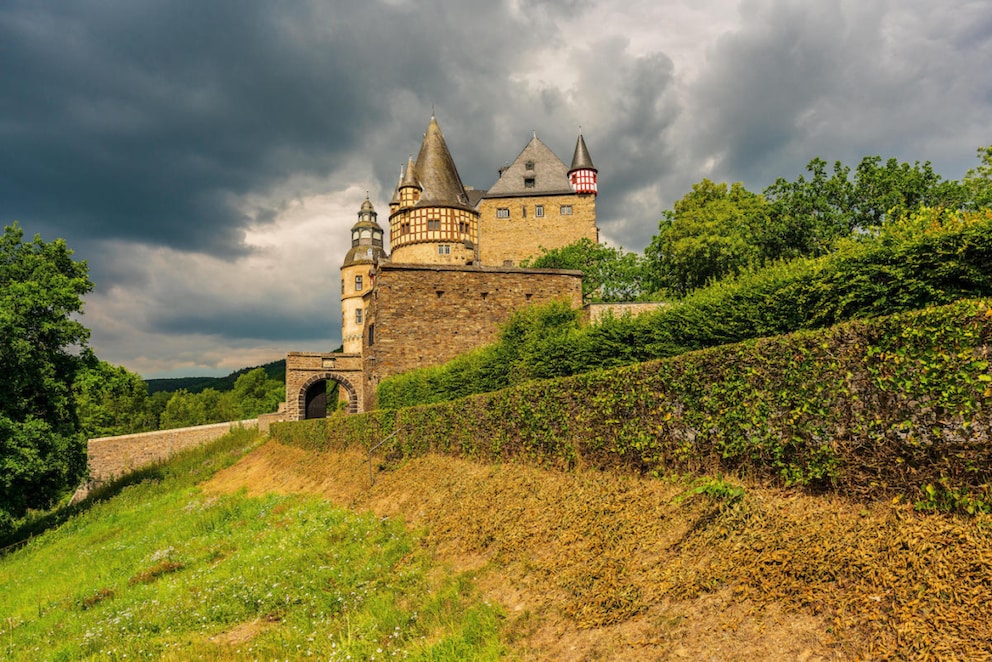
This is what a real fairytale castle looks like: northwest of the city of Mayen, Bürresheim Castle is hidden in the middle of nature. The castle has already served as a film set several times, including in “Indiana Jones and the Last Crusade” and the WDR fairy tale film “Rumpelstiltskin.”
The castle complex was never conquered or devastated. Unlike some other castles in the area, it was spared from military conflicts and was inhabited until 1921. The name of the castle comes from the family that owned it in the 14th century.
Admission is only possible with a guided tour. After the visit, the area around the castle is ideal for hiking and walking.
Also interesting: Germany’s smallest town has only 300 inhabitants
12. Treetop Walk Saarschleife, Saarland
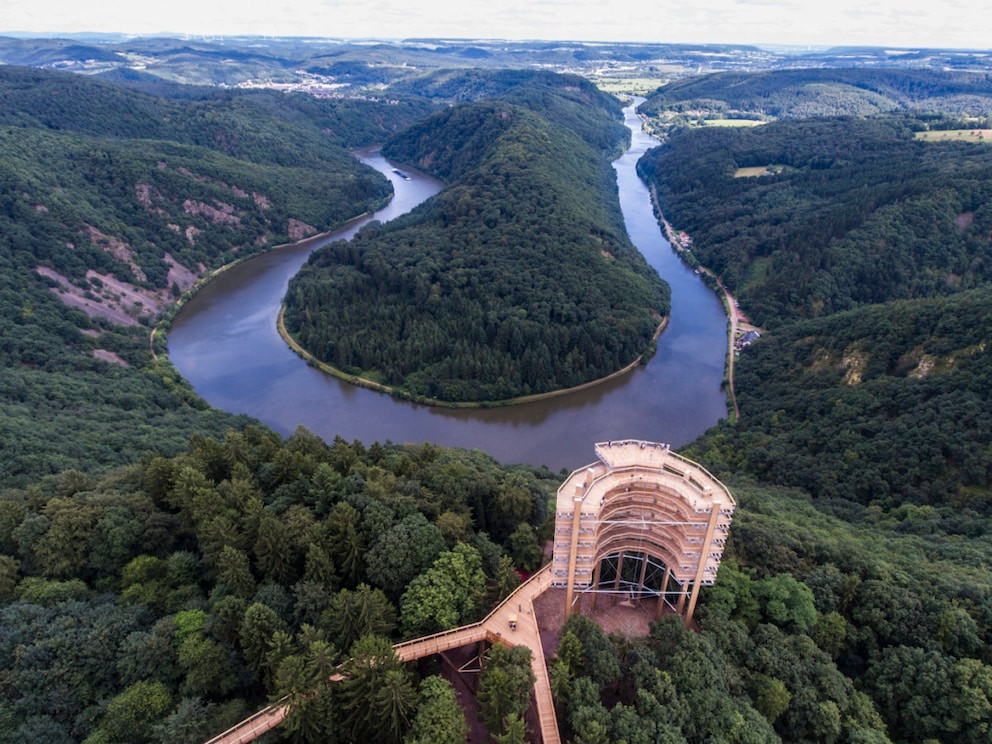
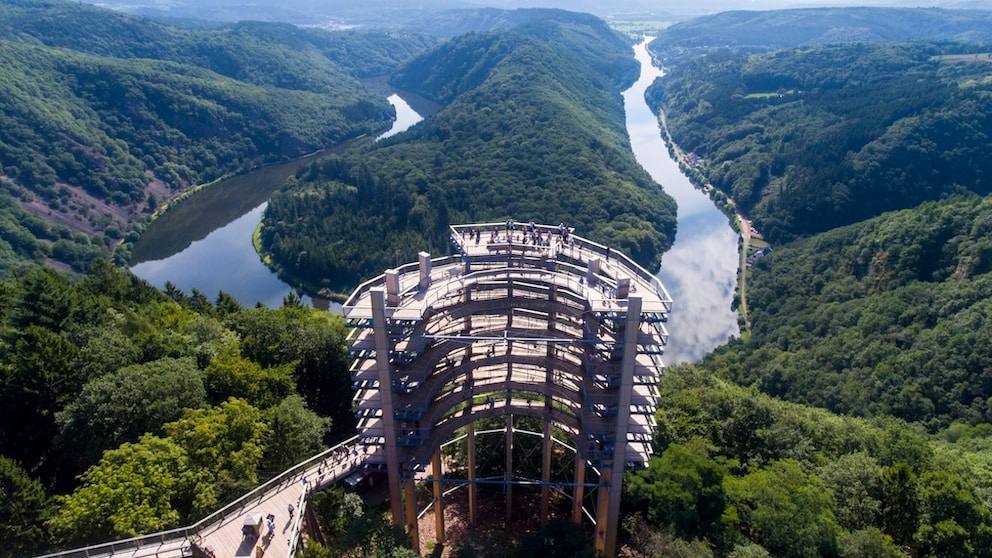
The Treetop Walk Saarschleife has a total length of 1,250 meters and offers a great view of the famous Saarschleife. The 42-meter-high observation tower stands out with its unique shape among the trees and allows a view of the wonderful green hills of the Saar-Hunsrück Nature Park.
In addition to the treetop walk and the ascent to the treetop walk, the area offers a great opportunity for hikes around the Saarschleife.
Also interesting: The new attractions in Germany’s most popular amusement parks
13. Ore Mountains, Saxony
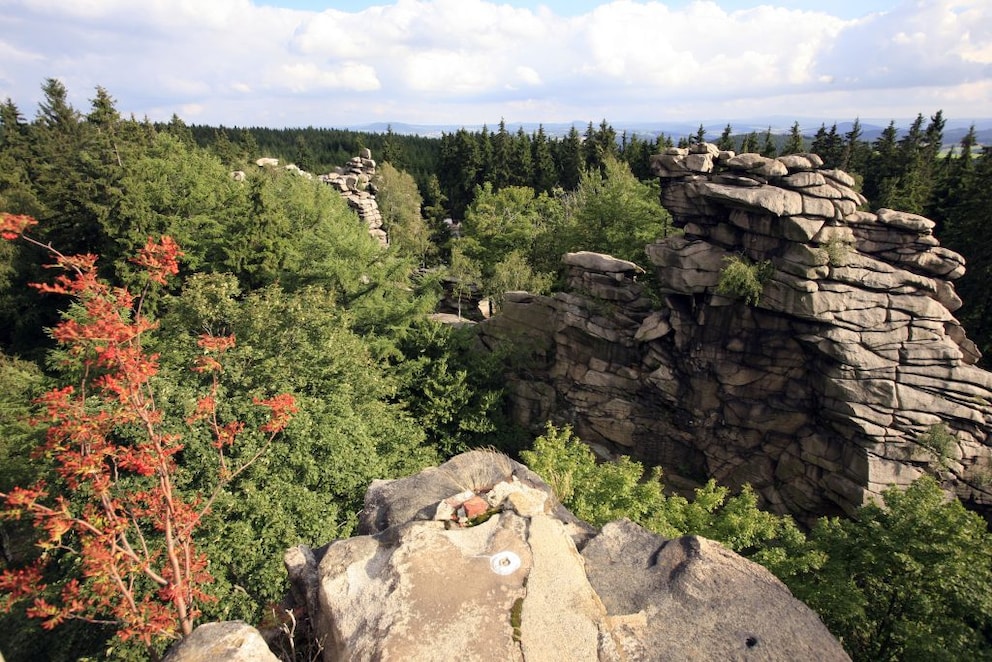
The Ore Mountains have much to offer–including the Greifensteine, seven granite rocks that form a natural theater where plays are performed in the summer. Outside the theater season, the rocks can be climbed by professional climbers. The high plateau also offers a view over the Upper Ore Mountains.
The Blauenthal Waterfall near the village of Blauenthal is also worth seeing. With a drop height of 30 meters, it is the largest waterfall in Saxony. In winter, you can even try ice climbing here.
The Wolkensteiner Schweiz also offers a rocky idyll. The town of Wolkenstein is a good starting point for a hike in the region. The Wolkensteiner Schweiz offers viewpoints, hiking trails, and five via ferratas.
Also interesting: What you must see in the Elbe Sandstone Mountains
14. Suspension Bridge at the Rappbode Dam, Saxony-Anhalt
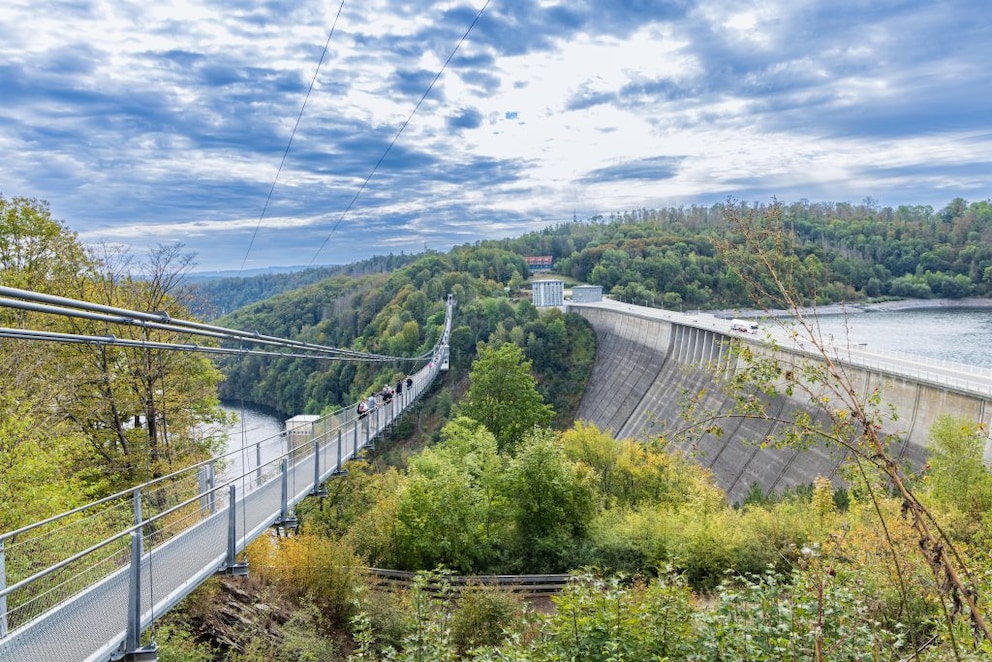
For this day trip destination in Germany, you need to be free from vertigo. The longest pedestrian suspension bridge in Germany is also called “Titan RT” and boasts a 458-meter free-hanging section. The bridge runs parallel to the dam wall of the Rappbode Dam and is only 50 meters from the concrete barrier.
If you can overcome your fear and step onto the suspension bridge, you will be rewarded with an impressive mountain panorama after just a few meters. There’s no need to worry about being late, as the bridge is illuminated after dark.
Also interesting: Tested! What it’s like on the world’s longest pedestrian suspension bridge
The 10 Most Popular Family Destinations in Brandenburg

Teutoburg Forest: The Most Beautiful Hikes and Best Tips
15. Red Cliff, Schleswig-Holstein
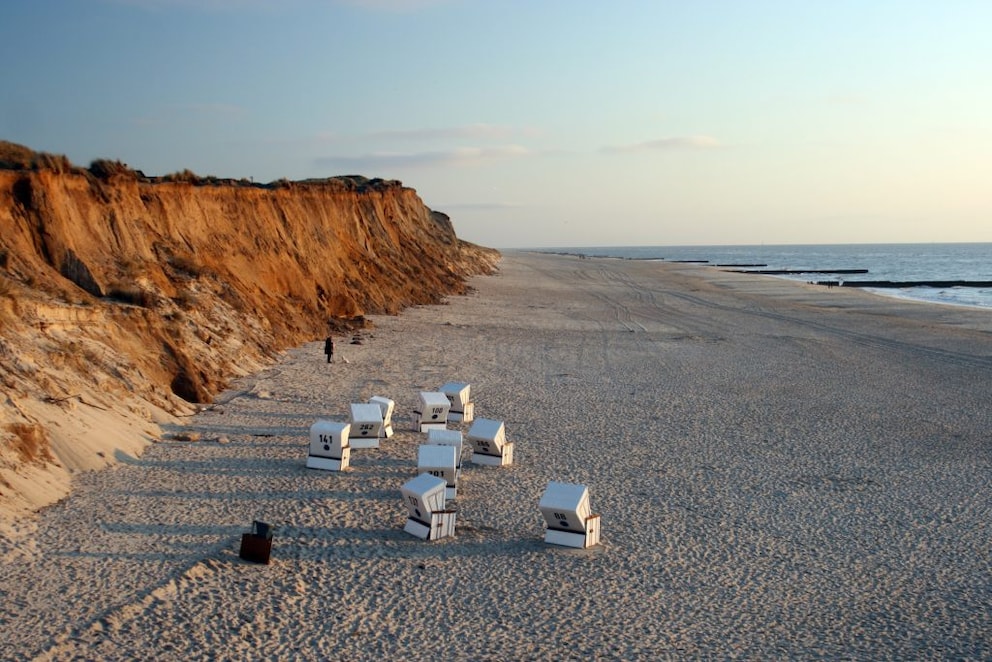
The Red Cliff on Sylt is a steep edge about 30 meters high. It stretches over four kilometers from Wenningstedt to Kampen. The cliff once served as a landmark for seafarers, as the escarpment was formed during the Ice Age. Today, the area is under nature protection.
The path to the cliff is easy, and a visit is especially worthwhile at sunset when the limonite sandstone of the cliff glows. For a perfect evening, pack a bottle of wine and rent a beach chair, but be sure to arrive early, as the beach chairs are in high demand. Nearby is also the Uwe Dune, Sylt’s highest elevation at 50 meters. 110 steps will take you to the viewing platform.
Also interesting: Why you can’t build sandcastles on Sylt
16. Hainich National Park, Thuringia
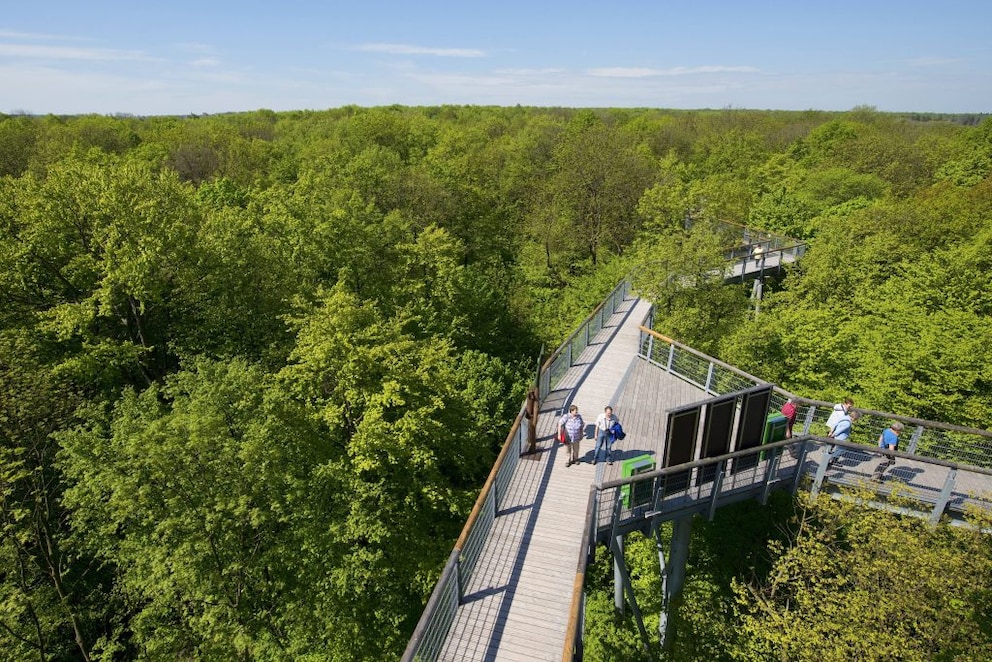
The Hainich National Park is one of 13 national parks in Germany and the only one in Thuringia. It developed undisturbed for years on the site of a former military restricted area. Since 2011, it has been part of the UNESCO World Natural Heritage. The highlight is the treetop path, where you can walk and overlook the beech forest from 40 meters high.
Want to stay on the ground? Of course, you can also explore the park on hiking trails on the ground. The area, which offers 120 kilometers of hiking trails, is left to nature. A primeval forest in Germany. The national park also has a rare resident: the wildcat. In the Wildcat Village Hütscheroda, you can observe the cats in an enclosure.