

September 27, 2024, 8:47 am | Read time: 11 minutes
There are places in the world whose names alone make us dream: of vacations, paradise beaches, exotic spices. Zanzibar is such a place. The island belongs to Tanzania in East Africa. Nuno Alves was there for TRAVELBOOK and reveals what you must see and what travelers should consider regarding entry, vaccinations, and safety.
Zanzibar has always been a place of longing. This is hardly surprising given the paradise settings offered by this archipelago, consisting of the islands of Unguja and Pemba. But is it worth the long journey of about eleven flight hours? TRAVELBOOK visited Zanzibar and summarizes the most important information: from the best travel time to the most beautiful beaches and sights of the island to entry, safety, and vaccinations.
Overview
- Profile
- Where exactly is Zanzibar?
- Travel and Flight Duration
- Best Travel Time for a Vacation in Zanzibar
- The Most Beautiful Beaches of Zanzibar at a Glance
- The Sights in Stone Town
- The Unique Cuisine of Zanzibar
- The Rock – Possibly the Coolest Bar in the World
- Zanzibar – An Alternative to the Maldives
- Weather and Climate in Zanzibar
- Safety in Zanzibar
- Do EU Travelers Need a Visa for Zanzibar?
- What Vaccinations Do Travelers from Germany Need for Zanzibar?
- Do Travelers from Germany Need Travel Insurance for Zanzibar?
Profile
| Region | East Africa |
| Capital | Zanzibar City |
| Time Difference | Plus 2 h; UTC+3 |
| Area | 2,460 km² |
| Population | 1.89 million |
| Languages | Swahili |
| Currency | Tanzanian Shilling (TZS) |
| Visa & Entry | Business: Visa required Tourist: E-visa required (apply in advance or upon entry) |
Where exactly is Zanzibar?
The place of longing, Zanzibar, spelled “Zanzibar” in English, is located on the east coast of Africa. Only a narrow strip of ocean separates the island from the mainland. The distance is about 40 kilometers, so you can take a ferry from the Tanzanian coastal city of Dar es Salaam to Zanzibar in about two hours.

Travel and Flight Duration
Currently, there are no direct flights from Germany to Zanzibar. The fastest way to get to the island is with Condor: The flight from Frankfurt takes about 11 hours and makes a stopover in Mombasa, Kenya, before landing at Abeid Amani Karume International Airport in Zanzibar.
Best Travel Time for a Vacation in Zanzibar
The dream island offers year-round temperatures around 30 degrees Celsius. The water is also pleasantly warm all year, ranging from about 25 degrees in our summer months of July, August, and September to 28 degrees in our autumn and winter months. It rains the most in our spring months of March, April, and May, as well as in November and December. The number of rainy days then fluctuates between twelve and 17. It rains the least on average in January and February, as well as between June and October.
Also interesting: The “Domino Tower” is set to become the new highlight in Zanzibar
The Most Beautiful Beaches of Zanzibar at a Glance
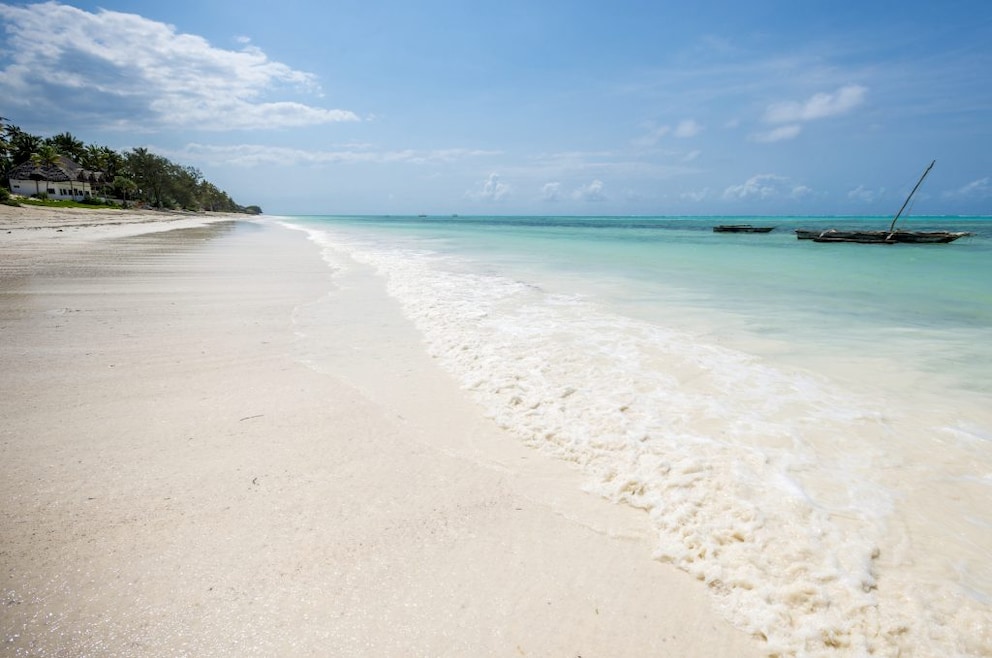
Finest white sand, turquoise sea, coconut palms that can’t decide whether to lie down or stretch straight toward the sun and therefore linger somewhere in between–in Zanzibar, almost every cliché of a dream beach is fulfilled. Here you will find some of the most beautiful beaches in Africa.
- Nungwi Beach
- Kendwa Beach
- Bwejuu Beach
- Kizimkazi Beach
- Mtende Beach
- Nakupenda
- Matemwe Beach
- Paje
- Uroa Beach
- Kiwengwa Beach
- Muyuni Beach
- Jambiani Beach
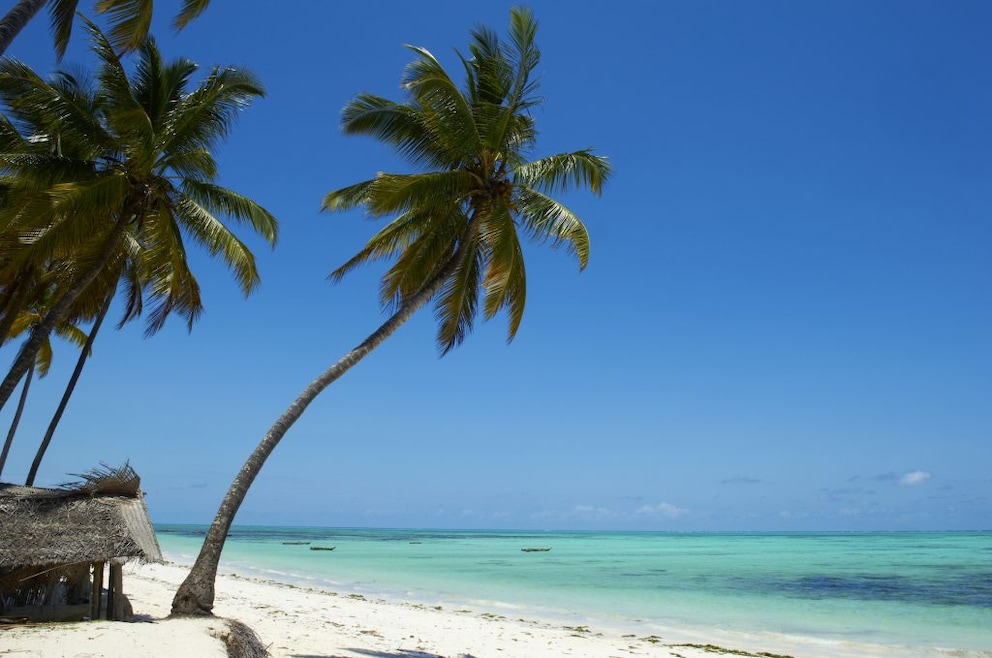
Many coastal sections are still hardly developed for tourism. Sometimes you walk for kilometers and only encounter children looking for shells and women burying coconuts in the sand or digging them up again after three months when they have become so soft from the seawater that their fibers can be used. Fishermen sail their dhows (traditional boats) over the water.
In Bwejuu, slightly north of Paje, you can see women walking hundreds of meters into the shallow sea at low tide in search of seaweed, up to the offshore reef.
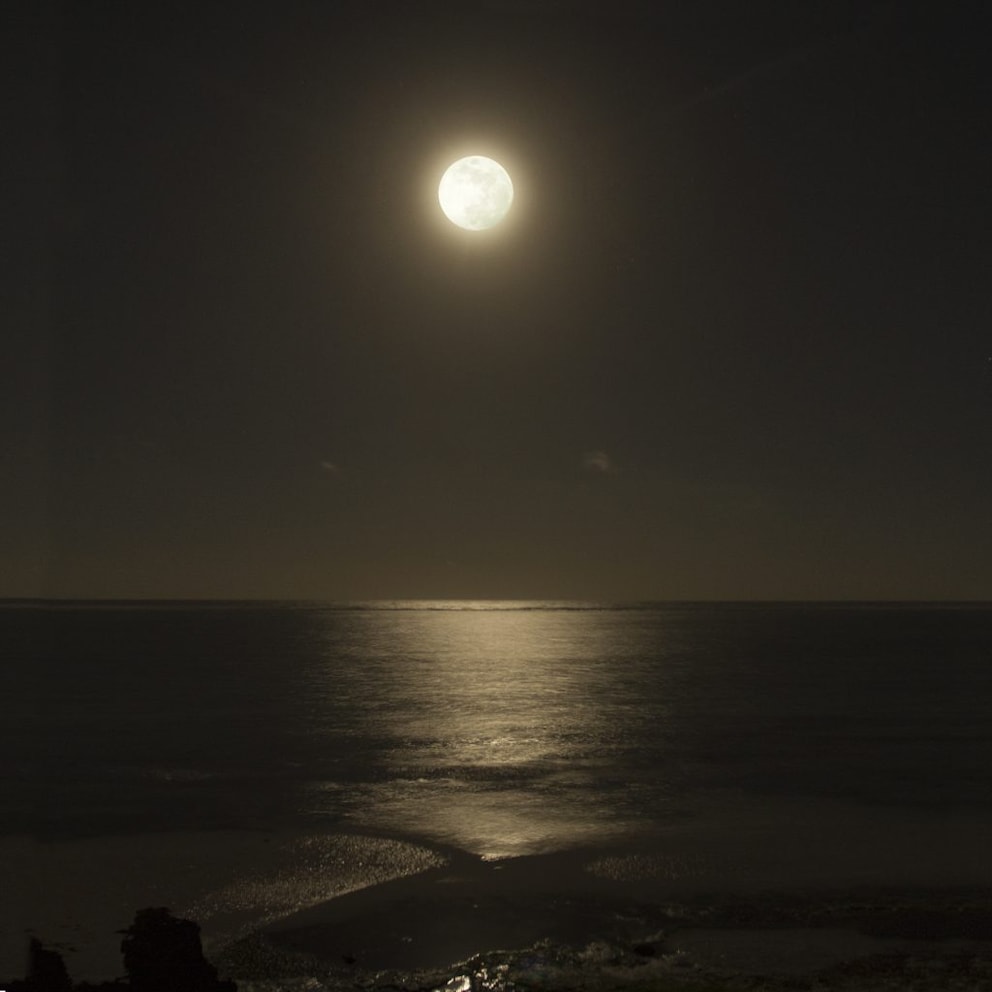
There are only a few resorts here, mostly built in a traditional style but quite luxurious. Mainly wealthier tourists come here, where on some nights a unique setting is offered. Instead of a sunset, there are regular moonrises to admire. Like a giant ball, you can see it rising on the horizon and illuminating the sea.
The Sights in Stone Town
Stone Town is, as it sounds: unpolished, full of contrasts. Since 2000, the old town of Zanzibar City, whose houses are mostly made of coral stone, has been a UNESCO World Heritage Site. But those expecting elaborately restored houses and streets will be disappointed. Such measures are often lacking funds, and when they are, it is often private investors who occasionally restore historic buildings. Otherwise, Stone Town remains original.
During the day, you quickly get lost in the narrow alleys, with shops selling African crafts, spices, and colorful fabrics (Kangas for women, Kikoys for men) lining both sides. Eventually, you almost inevitably end up at the Darajani Market, where fruits and vegetables, as well as fresh fish and meat, are sold. For some tourists, the sight and smell can take some getting used to.
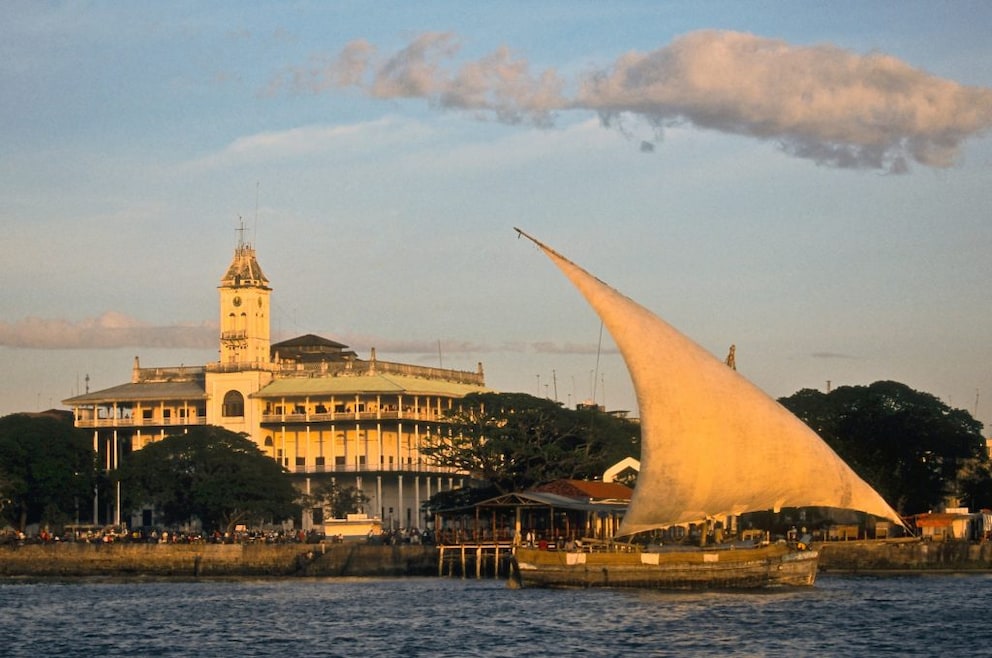
There are some sights in Stone Town, including the House of Wonders, a sultan’s palace built at the end of the 19th century. It was the first building in Zanzibar to have electricity and running water, which is why it was considered the House of Wonders.
In close proximity to the House of Wonders is the Old Fort, which you must not miss during your vacation in Zanzibar. It was built between 1698 and 1701, right after the Portuguese, who had ruled here for 200 years, disappeared.
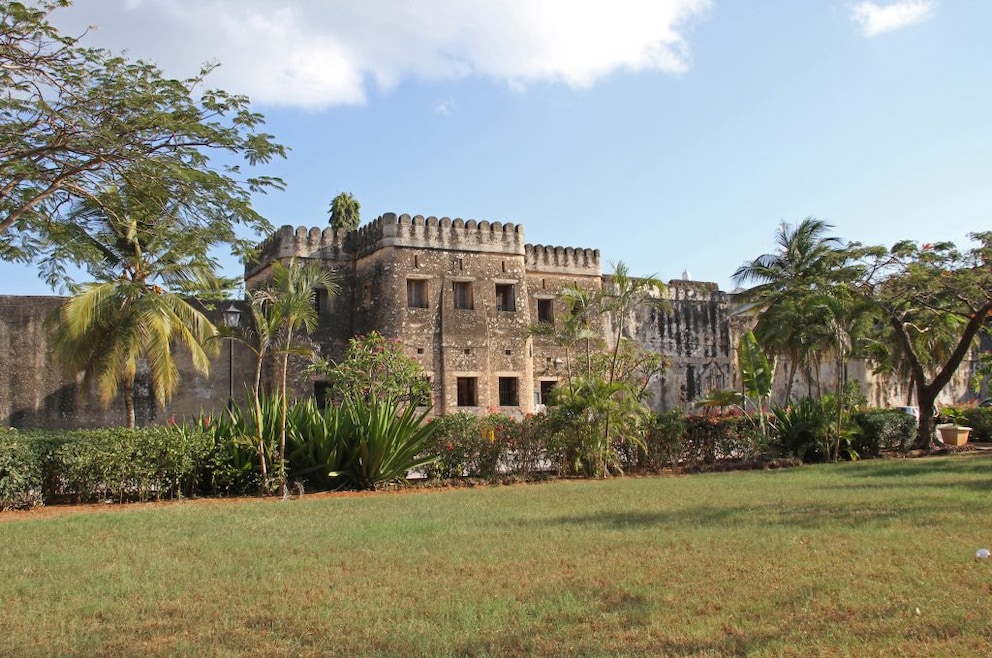
Today, the space within the fort is used for concerts and the sale of souvenirs. The tourist office has also set up shop here.
At night, the old town is relatively dark, with only a few bars, which is because more than 90 percent of the population is Muslim, and alcohol–if at all–is usually consumed behind closed doors. There are no restrictions for tourists in this regard, but most prefer the bars of the hotels for partying, where the nightlife takes place anyway. Accordingly, the alleys are empty; occasionally, you see Zanzibaris sitting in front of houses, chatting, and playing Bao: an African board game.
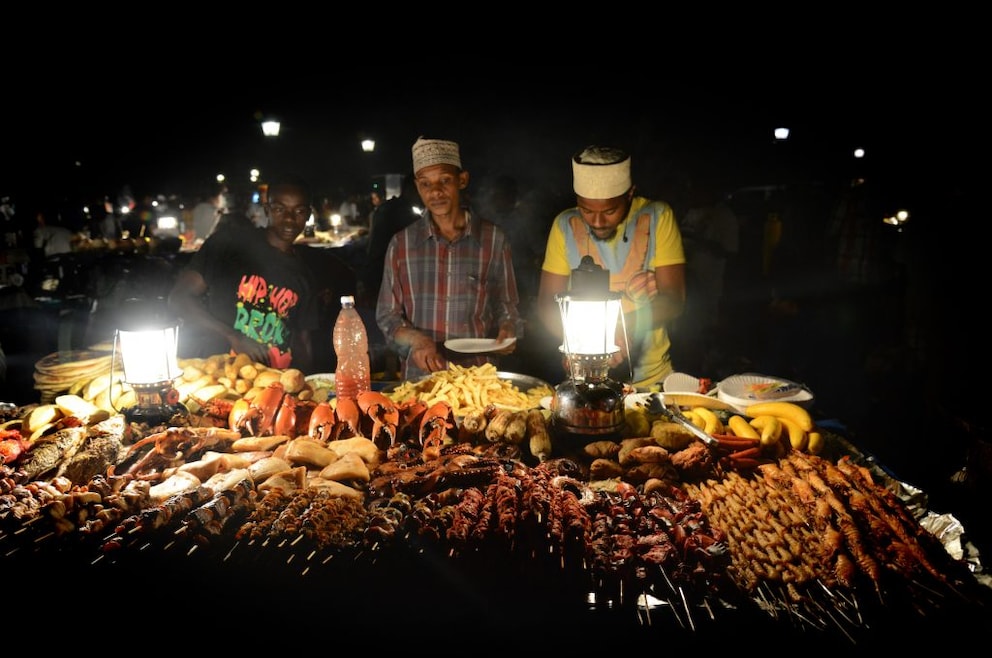
It is livelier in the evenings at the Forodhani Food Market by the water. It smells of grilled fish, spices, and seawater. Locals also like to come to eat the famous Zanzibar pizza–a kind of calzone.
The Unique Cuisine of Zanzibar
Arabs, Indians, Europeans: The now predominantly Muslim Zanzibar has experienced many influences throughout its history, including the dark chapter of the slave trade, which are reflected in its cuisine today. Stews, curries, rice dishes like pilau, and fish in all conceivable variations–enhanced with the spices that are so abundant on the island. Cardamom is almost always added to dishes–including coffee–sometimes cloves or cinnamon. However, the spice never takes center stage and always gives the taste the right note.
In any case, you should definitely visit one of the farms in Zanzibar, where nutmeg, pepper, cloves, cardamom, cinnamon, ginger, vanilla, and much more are grown, some of which were brought by traders over the centuries and thrive so well here. The spices are still exported worldwide today and used by Zanzibaris as natural medicine: cinnamon roots for respiratory problems, cloves for toothaches or gum bleeding, cardamom for calming, nutmeg as an aphrodisiac.

The Rock – Possibly the Coolest Bar in the World
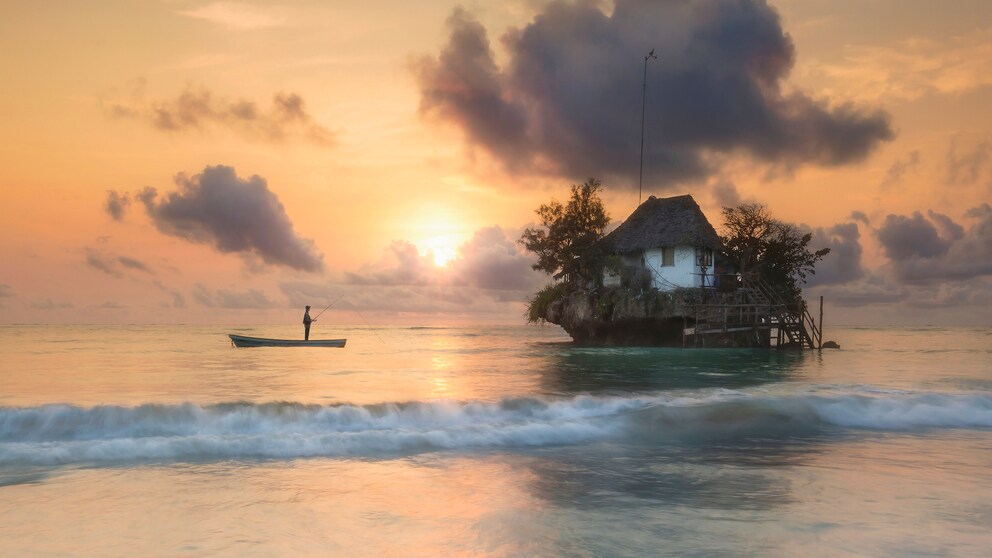
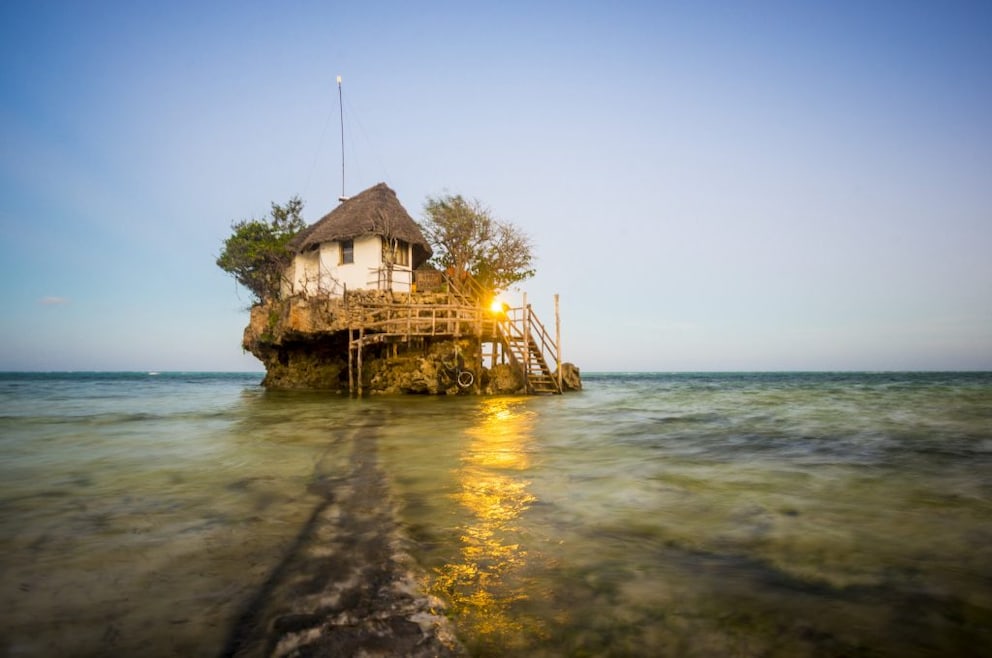
If you continue north from Bwejuu, you will reach a restaurant–or bar, depending on the time of day–about five kilometers away that many already know from Facebook or elsewhere: The Rock. Built on a rock in the middle of the sea, a boat takes guests over at high tide. Several improvised, waterproof cables provide Wi-Fi, electricity, and water. Inside, it is quite spartanly furnished, but the feeling of sitting on a small stone island while eating and drinking is priceless.
Zanzibar – An Alternative to the Maldives
In recent years, numerous new resorts and hotels have opened on Zanzibar. More and more travelers, especially couples, are discovering the island as an alternative to the Maldives. Compared to the Maldives, Zanzibar has a much more pronounced local life. Everyday life here does not revolve solely around tourism, which also means that travelers must often expect a less developed infrastructure in many places. At the same time, this is part of the charm: that of an imperfect paradise that still offers places waiting to be discovered.
Also interesting: 9 Reasons Why You Should Definitely Travel to the Seychelles
Weather and Climate in Zanzibar

Safety in Zanzibar
The Federal Foreign Office states on its page with travel and safety advice for Tanzania that the political situation in semi-autonomous Zanzibar is currently stable. It further states that one should generally be “particularly vigilant” during their vacation in Tanzania “in public places as well as when visiting tourist attractions and religious sites” “in Zanzibar, especially when visiting the Greater Stone Town area.”
Are There Currently Travel Warnings for Tanzania?
Homosexuality is Punishable
Despite its image as a vacation paradise, travelers should be aware before traveling to the predominantly Muslim island that people here can face severe penalties of up to several years in prison due to their sexual orientation. Corresponding laws were even tightened in 2004. Unfortunately, homophobia is widespread among the population. Tanzania, to which semi-autonomous Zanzibar belongs, ranks among the lowest in the Spartacus Gay Travel Index. Same-sex couples should be aware of this and be discreet if they choose to vacation on the island.

The Difficult Relationship of Zanzibaris with Freddie Mercury
“When I took a guided tour of Stone Town, I was very surprised when the guide casually pointed to a house about 50 meters away and said, ‘That’s where Freddie Mercury, the singer of Queen, lived. Today it’s a museum.’ That was it. And the program continued. The almost unworthy mention of Zanzibar’s most famous son also showed the difficult relationship of the residents with homosexuality. Same-sex couples are not allowed to show their love publicly–if caught, they face prison. This is not only a shame but a disgrace, given Freddie Mercury’s not only musical legacy.”
Crime
The Federal Foreign Office speaks of relatively high crime throughout the country and recommends avoiding cycling and walking after dark. You should also avoid minibuses or “unknown taxi drivers.”
Also interesting: Safety on Travel–How to Avoid Dangers
Health
“Since October 2023, there have been increasing cases of malaria in Zanzibar,” according to the Federal Foreign Office. To avoid infection, you should consistently protect yourself from mosquito bites throughout the day, regularly use mosquito repellent, and wear appropriate clothing. At night, the use of bed nets is recommended.
Do EU Travelers Need a Visa for Zanzibar?
EU citizens traveling to Zanzibar require a visa. This can be obtained in advance as an e-visa through the Tanzanian embassy or upon arrival at the airport or some border crossings. The cost is about 50 U.S. dollars. Although the option of a visa upon arrival exists, it can lead to delays. It is therefore recommended to apply for the visa before traveling to avoid waiting times.

How Safe Are Trips to Tanzania Right Now?

Which Vaccinations and Preventive Measures Are Important Before Vacation
What Vaccinations Do Travelers from Germany Need for Zanzibar?
Travelers from Germany do not need any specific mandatory vaccinations to enter Zanzibar, provided they arrive directly and have not made a stopover in a yellow fever endemic area in the six days prior. Important note: Those traveling to the Tanzanian mainland and subsequently to Zanzibar are often asked for proof of yellow fever vaccination, which is recommended anyway.
The Federal Foreign Office recommends the following vaccinations for a vacation in Zanzibar:
- Hepatitis A and B
- Dengue fever
- Yellow fever
- Typhoid
- Rabies
- Meningococcal disease (ACWY)
Do Travelers from Germany Need Travel Insurance for Zanzibar?
Yes, travelers will soon need not only a visa for trips to Zanzibar but also mandatory travel insurance. This new regulation applies from October 1, 2024. The insurance costs 44 U.S. dollars per person. It can only be purchased from the Zanzibar Insurance Corporation, according to the tourism portal of the regional government “visitzanzibar.go.tz.” The policy can be purchased there as well. Once purchased, it is valid for 92 days.
According to the crisis warning service A3M, the new mandatory insurance covers not only health services but also lost luggage, accidents, emergency evacuations, loss of passports and documents, and repatriation in the event of death.
Other international travel insurance policies are not accepted, writes the Federal Foreign Office in its travel advice for Tanzania. Entry may be denied if the correct insurance is not proven.
With material from dpa