

November 27, 2025, 2:43 pm | Read time: 3 minutes
An unusual request from U.S. Transportation Secretary Sean Duffy is currently causing a stir: Air travelers are being asked to forgo pajamas and slippers in the future. What initially sounds like a quirky demand is part of a broad “courtesy campaign” aimed at improving interactions during air travel. TRAVELBOOK explains the background.
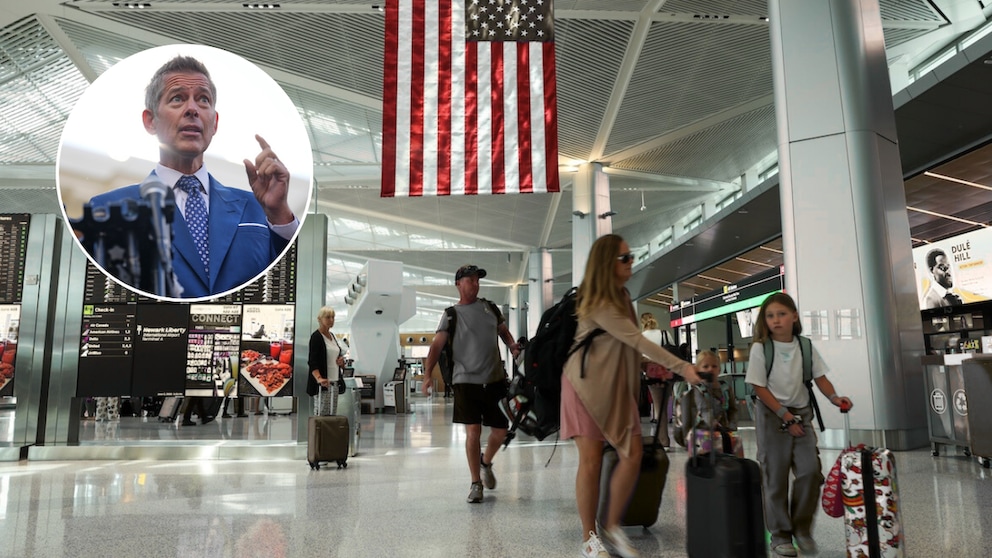
At an event at Newark Airport in New Jersey, the transportation secretary noted a “decline in courtesy”—especially during the high passenger volume of the holiday season. The issue is serious: Since the pandemic, the behavior of many passengers has dramatically worsened, and incidents on board are increasing. Now, the choice of clothing is intended to contribute to a more relaxed atmosphere.
From Clothing to Courtesy– What the Campaign Includes
According to “Fox News,” U.S. Transportation Secretary Sean Duffy directly addressed travelers: “I want to encourage people to dress a little better. It also encourages us to behave better.” His specific request: At least jeans and a decent shirt—slippers and pajamas have no place at the airport.
But the “courtesy campaign” involves more than just clothing. The secretary also urged saying “please” and “thank you” to pilots and flight attendants, and helping fellow travelers with stowing luggage. “Bringing back courtesy improves the travel experience for everyone,” Duffy told Fox Business.
The numbers back him up: According to data from the U.S. Federal Aviation Administration (FAA), the number of onboard disturbances has increased by 400 percent since 2019—from disruptive behavior to violence. Nearly one in five flight attendants experienced a physical assault in 2021. Even in 2024, reports of unruly passengers remain significantly above pre-pandemic levels.
Also interesting: These are the “happiest” flight routes in the world
Is It OK to Take Off Your Shoes on a Plane?

Eating on the Train: What’s Allowed and What’s Not?
Experts: Pajamas Belong in the Bedroom
Diane Gottsman, etiquette expert and founder of the Protocol School of Texas, supports the initiative. Speaking to “Fox News,” she emphasized that airport attire is not about fashion but about courtesy. “From an etiquette perspective, pajamas should be reserved for the privacy of one’s home or hotel room—not public spaces.”
Jacqueline Whitmore, former flight attendant and founder of the Protocol School of Palm Beach, agrees. She points to the psychological concept of “enclothed cognition”—the idea that our clothing influences how we behave and how others react to us. “When we dress consciously, it gives us more confidence and self-respect,” she explains. “Flip-flops and shorts may not be ideal either, but they’re still better than pajamas.”
The experts also speculate that celebrities have amplified the loungewear trend. Rihanna has been spotted multiple times in luxurious silk pajamas. Ed Sheeran wore pajama pants at the Los Angeles Airport as early as 2015. For many, the terminal is apparently no longer a taboo comfort zone. However, for children, a bit more leniency is warranted, especially on night flights.
Respect Instead of Dress Code– What It’s Really About
Ultimately, U.S. Transportation Secretary Duffy does not wish for a return to strict flight outfits. However, he calls for a return to a bit more respect—toward oneself, the crew, and fellow travelers.
The experts emphasize that it’s not about status or formality. “It has nothing to do with social status but with the respect we show ourselves and others,” Gottsman summarizes. Comfort and appropriate clothing do not have to be mutually exclusive. They recall the “Golden Age” of flying. Back then, many passengers dressed up and considered flying a special event. Even though those times are over, an awareness of appearance and courtesy could, according to Duffy, improve the travel experience for everyone.