

May 17, 2026, 12:10 pm | Read time: 5 minutes
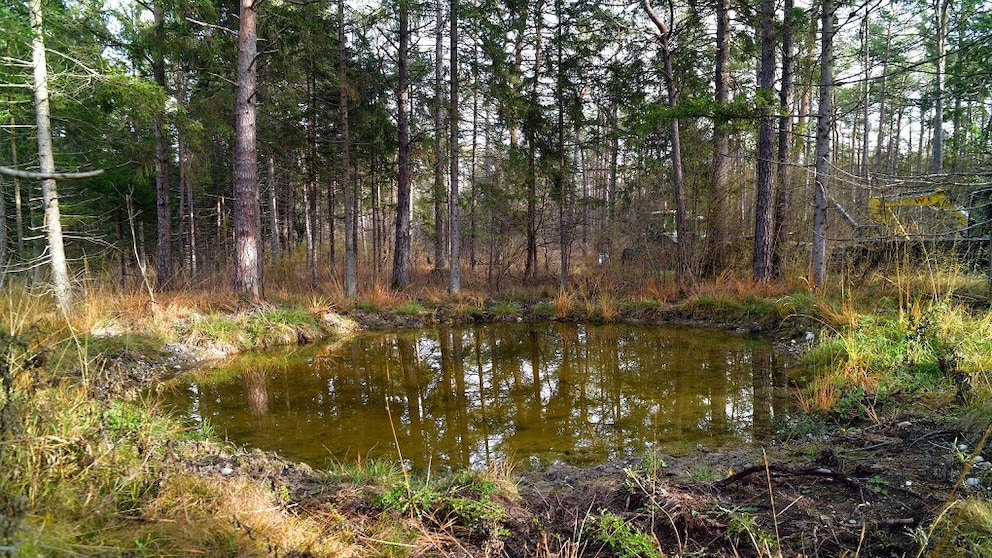
In the Bavarian city of Augsburg, the city forest hosts several small ponds called Himmelsweiher, created in 2011 and now valuable biotopes for amphibians and insects. The unusual aspect: These are actually craters formed during the bombing of the city in World War II. And then there’s the sad story behind the name Siebentischwald.
If you want to witness a true natural wonder firsthand, you should visit the Siebentischwald in Augsburg. The city forest of this Bavarian metropolis, covering about 660 hectares, is the green lung of Augsburg and is popular with both locals and tourists. In the middle of this recreational paradise lies a series of small ponds known as Himmelsweiher. These ponds, which today serve as valuable biotopes for amphibians and insects, were created in 2011 in a most unusual way. They are actually former bomb craters.
It was the night of February 25 to 26, 1944, when the apocalypse descended upon Augsburg. In the last year of World War II, the city was heavily bombed. According to Atlas Obscura, the target of the attack was the factory halls of Messerschmidt AG, a German manufacturer of fighter planes. However, many bombs missed their target and instead hit the Siebentischwald, leaving deep craters in the ground. At that time, no one could have imagined that these wounds in the earth would one day become the Himmelsweiher.
Today Important Biotopes
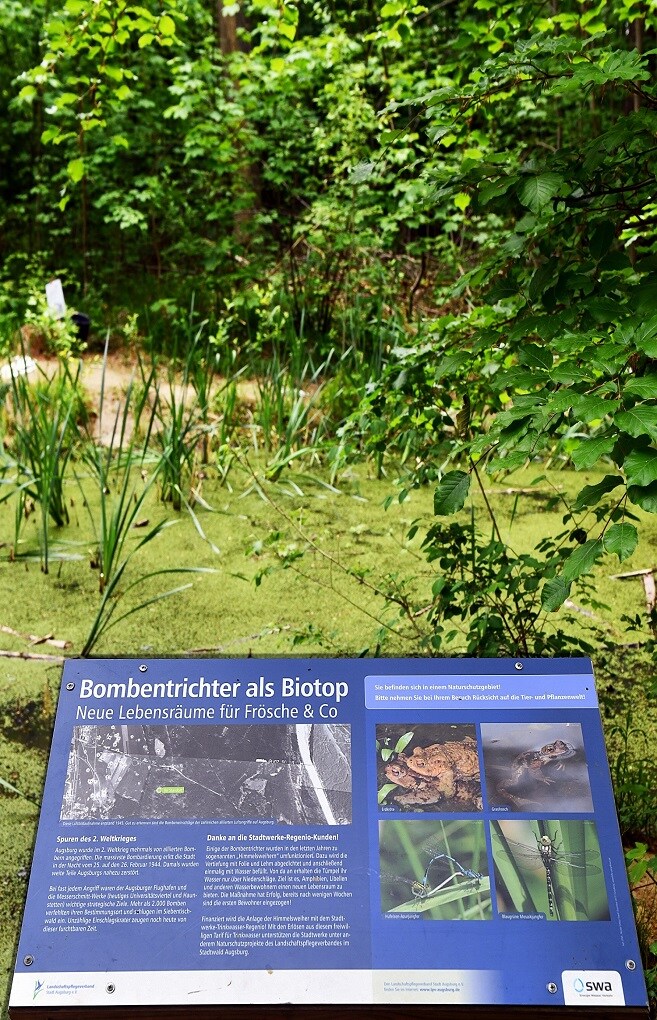
In 2011, the Landscape Conservation Association of the City of Augsburg (LPVA), with the support of swa Trinkwasser Regenio (SWA = Stadtwerke Augsburg), began creating these special ponds. They didn’t have to dig the pits themselves but simply used the bomb craters. These were sealed with clay and then filled with water. Nature took care of the rest, and soon the first animal inhabitants moved into the Himmelsweiher, created in such an unusual way. In the first year, common toads and grass frogs used them as spawning biotopes.
Also interesting: The tragic story of the Sögel tank cemetery
Dragonflies and other insect species quickly settled in the wetland biotopes, making them an important habitat for numerous species in the Augsburg Siebentischwald today. In 2021, goldfish were even detected here for the first time. They are called Himmelsweiher because they are now fed solely by rainwater–from the sky. If you want to visit the ponds yourself, you can follow the route of the “Stadtwald Augsburg” experience trail.

People Live in These Quirky Cube Houses

Why St. Mary’s in Lübeck Is Known as the “Devil’s Church”
The Himmelsweiher Are Funded by the Public Utilities
New Himmelsweiher are still being created today, as a spokesperson for the Augsburg public utilities said in response to a TRAVELBOOK inquiry: “We are currently in the process of creating a series of new ponds. The public utilities are funding the project.” And this is through a visionary business model. Customers can order the swa Trinkwasser Regenio package for a small surcharge. The public utilities then use this additional revenue to fund various projects, such as the creation of these aquatic habitats. “We also regularly invite our customers to tours and lectures. This way, they can see what happens with their money. The model is very well received.”
Also interesting: Is Germany’s largest cave hidden beneath this lake?
But where does the Augsburg recreational area’s unusual name, Siebentischwald, come from? According to the newspaper Augsburger Allgemeine, it dates back to a popular tavern that existed here as early as 1602. The city’s wood warden operated a tavern here, which, according to legend, had seven tables. Since he was allowed to serve beer, the establishment in the forest was very popular with the people of Augsburg. In 1809, the area was sold to a private individual, and in 1907, the city acquired it.
Natural Wonder Siebentischwald

A grand reopening followed in 1909, and the tavern now included a children’s playground. The destination was so popular that by 1920 it was even connected to the local streetcar network. The “Siebentisch” stop became something of a pilgrimage site for the people of Augsburg. But 19 years later, after the start of World War II, operations here ceased. Permanently, as it turned out, because the tavern also fell victim to the bombing raids on that February night in 1944, resulting in injuries and even fatalities.
Also interesting: Bunker Valentin: Germany’s largest World War II memorial
Today, the Siebentischwald is popular with walkers, joggers, and hikers. And certainly not least because of the Himmelsweiher. Another special biotope here is the orchard meadows, where 300 apple trees of partly old and rare varieties thrive. Harvesting them can take up to three days, with up to 12 tons of apples collected in good years. Seven beekeepers also ensure that the bees in the forest are well cared for and produce honey diligently. If you wish, you can book a tour of the Siebentischwald through the Augsburg Forestry Administration or the Landscape Conservation Association of the City of Augsburg e.V.