

December 12, 2022, 3:14 am | Read time: 6 minutes
The Saxon Switzerland National Park offers hiking enthusiasts literally picturesque views–and these were precisely what inspired its namesakes. TRAVELBOOK author Robin Hartmann explains the name and reveals where you can still hike a bit off the beaten path in Saxon Switzerland today.
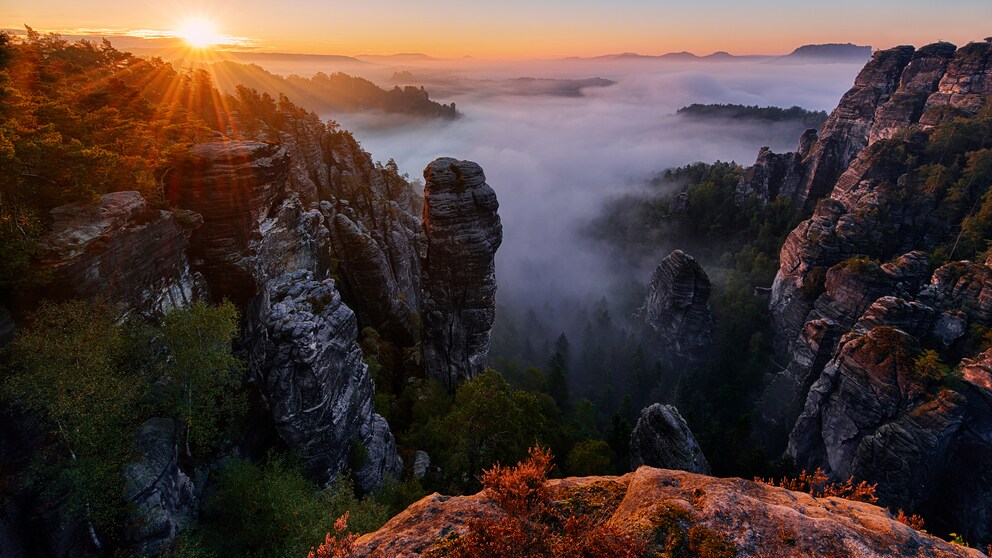
Just outside Dresden lies one of the largest and most beautiful natural wonders of our country: the Elbe Sandstone Mountains, also known as Saxon Switzerland. It is mainly famous for its table mountains and wild rock formations. Saxon Switzerland is a national park covering about 93 square kilometers, surrounded by a protected landscape area of about 287 square kilometers.
More tips and inspiration about Saxon Switzerland are provided by travel blogger Bambi in the following podcast episode of In 5 Minutes Around the World:
According to the site “Saxon Switzerland,” there are more than 400 kilometers of marked hiking trails in the national park alone. In addition, there are some daring climbing paths like the Häntzschelstiege. Overall, the network of trails covers more than 1,100 kilometers. The Saxon-Bohemian Switzerland National Park also includes an equally worth-seeing and hiking area on the Czech side. On some tours, you can cross the border between the two countries almost undisturbed.
Artists Gave Saxon Switzerland Its Name
Crisscrossed by the Elbe and smaller bodies of water like the Kirnitzsch River, the area is a unique habitat for numerous animal species. These include the otter, red deer, mouflon, and various bat species. The lynx has also resettled here after being considered extinct. The region, which formed about 100 million years ago, owes its name to Switzerland. Swiss painters Adrian Zingg and Anton Graff worked as teachers at the Dresden Academy in the mid-18th century. Together with their students, they were the first to capture the beauty of the area on canvas.
Also interesting: What You Must See in the Elbe Sandstone Mountains
Other artists like Caspar David Friedrich followed, and composers Richard Wagner and Carl Maria von Weber were also inspired by the landscape. The nobility at the Dresden court was so surprised and delighted by the paintings of Zingg and Graff that it became fashionable to take trips to Saxon Switzerland–thus, tourism in the region was somewhat invented. Today, moving off the beaten path here is difficult in non-COVID times, as Saxon Switzerland is one of the most popular travel destinations in Germany. It is also Germany’s only rock national park.
Away from the Crowds
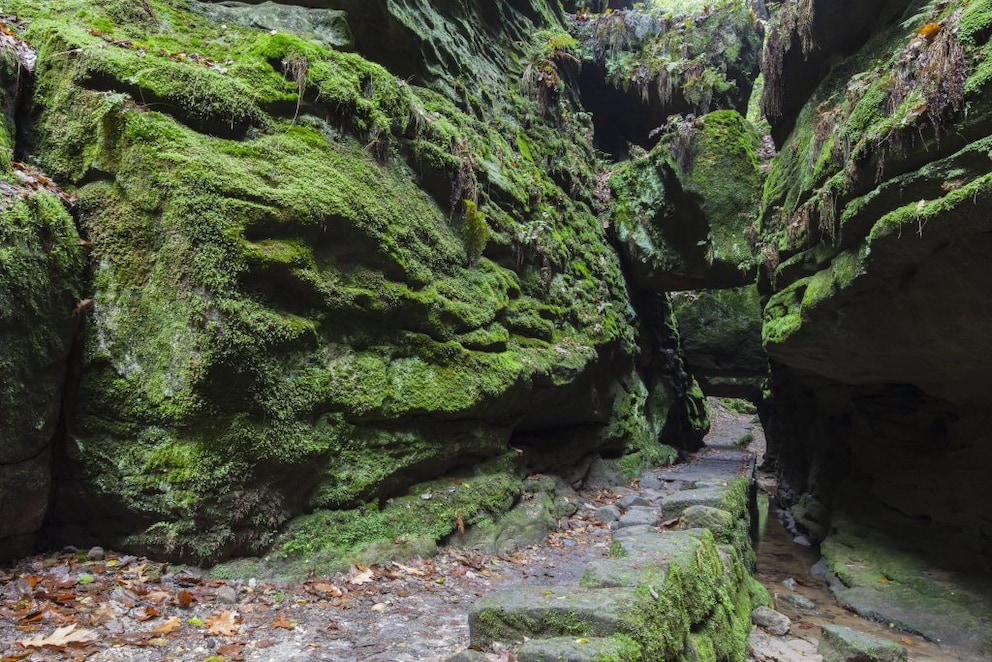
Of course, the region’s landmarks like the Königstein Fortress, the Bastei, and the Prebischtor are must-sees. But thanks to the excellent network of trails and comprehensive signage, you can also discover other destinations that are not as crowded. One such tour, which can even be done easily with a stroller or wheelchair, starts in the small, more than 700-year-old town of Wehlen. This town is worth seeing due to its old houses and its location in the shadow of the sandstone giants. From here, the path leads without inclines (a rarity) into the so-called Uttewalder Grund. It is a kind of gorge, where a large rock gate stands. The “Waldidylle” inn provides refreshments–or a cold beer on a hot day.
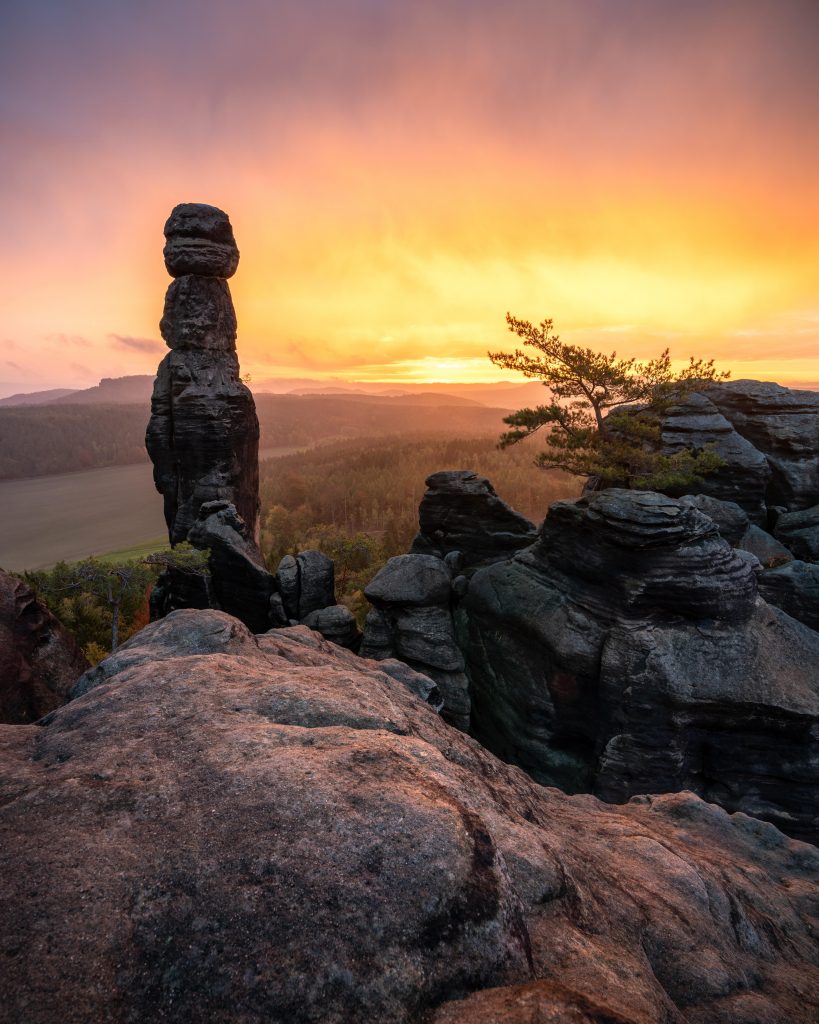
Another spectacular destination is the Pfaffenstein, a table mountain with almost 12 hectares of area, accessible via three possible ascents. One of them is a strenuous climbing path with 600 steps, likely only for those without a fear of heights. From Pfaffenstein, you can see the 43-meter-high Barbarine, one of the most famous rock needles in Saxon Switzerland. You can also stop for a meal here. If you wish, you can continue hiking to the nearby Papststein, which also offers a beautiful view. There, you’ll find the “Berggast” hut, where you can enjoy a delicious meal and sit cozily by the tiled stove in the evening and/or winter.
The Beauty of the “Painter’s Path” in the Elbe Sandstone Mountains
11 Spectacular Gorges and Ravines in Germany
Into the Heights and Caves

Hinterhermsdorf in the Kirnitzsch Valley was once voted Germany’s most beautiful village in 2001, and from here, you can start several lovely tours. The most impressive leads down into the Kirnitzsch Gorge, where you briefly switch to a boat steered by a gondolier. Then, you continue along the river, sometimes on high paths, sometimes directly by the water through untouched nature, past impressive rock formations like the Rabensteine.
Also interesting: 11 Spectacular Gorges in Germany
Also in the Kirnitzsch Valley is the Kleinstein Cave, which you can reach on a varied hike. It starts at the “Sonnenhof” hotel, where you can stay and dine excellently and affordably in non-COVID times. Then, you go over the local mountain, a short distance through the forest to Saupsdorf, framed by wide cornfields, like a splash of color in the landscape. From there, the path to the cave is seamlessly signposted and leads with a beautiful view of the village in the valley to the destination. The Kleinstein Cave offers a great view of the land, which rock climbers also enjoy during their exercises here.
Solidarity in Saxon Style
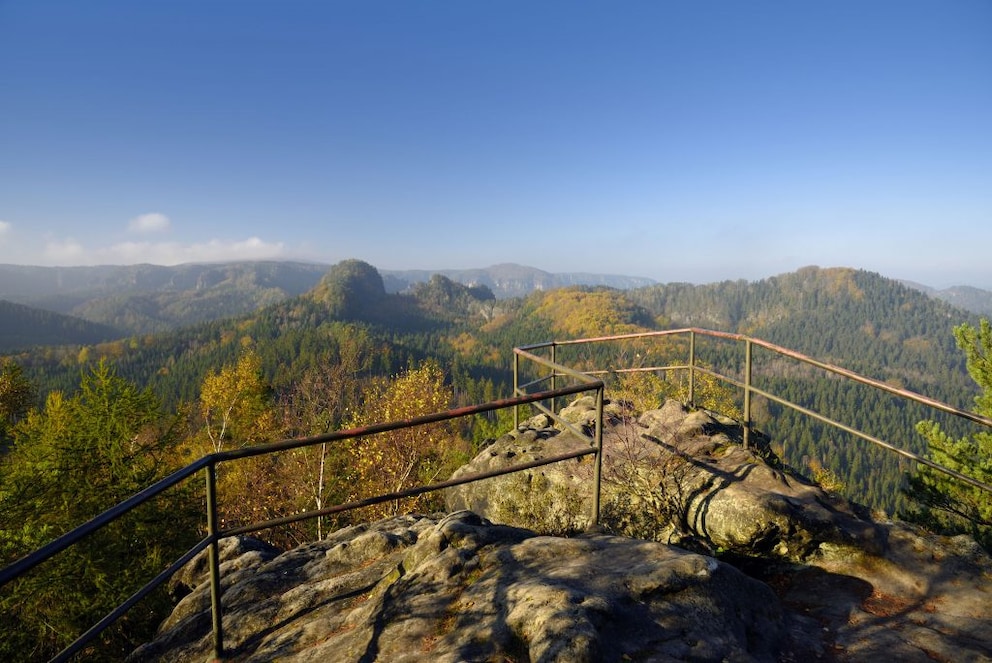
If you wish, you can combine this tour with a climb to the Kleine and/or Große Pohlshorn. First, you descend steeply from the cave to the road, following the signage for a short distance. Only to then climb back up just as steeply. Especially from the Große Pohlshorn, the view of the landscape is uniquely beautiful. However, in recent times, you can unfortunately also see the massive damage caused by the bark beetle in Saxon Switzerland. Entire sections of forest stand brown and dead amidst the otherwise dense greenery.
Ambitious hikers even have the opportunity to explore large parts of Saxon Switzerland on just one trip. This involves the 112-kilometer-long Malerweg, which follows the paths of old landscape artists along the most impressive natural sights. The trail begins in Pirna and ends there as well, covering a total of eight stages. Along the way, you can stay in one of the more than 70 inns that carry the “Hiker-Friendly on the Malerweg” certificate.