

July 29, 2026, 8:00 am | Read time: 9 minutes
With autumn comes the golden season. Thanks to the colorful leaves, walks and hikes in the woods are especially enjoyable. TRAVELBOOK author Robin Hartmann shares his favorite tours away from the crowds–and has real insider tips for fall in Germany.
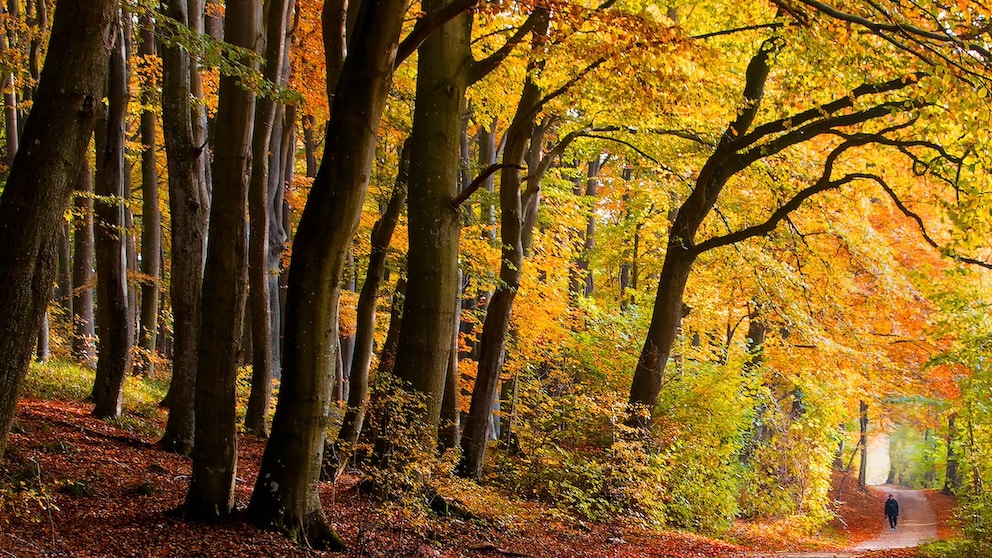
No matter where the rays of the still-warm autumn sun hit colorful leaves these days, you feel like you’re witnessing a magical event. A true riot of colors unfolds, almost as if the forest is on fire. A painting, drawn in real time by nature right outside our door. For those who, like me, can’t get enough of it, I’ve compiled some of my favorite fall insider tips in this article. Here, you’ll find a truly golden autumn–away from the crowds.
Overview
Blankenburg in the Harz
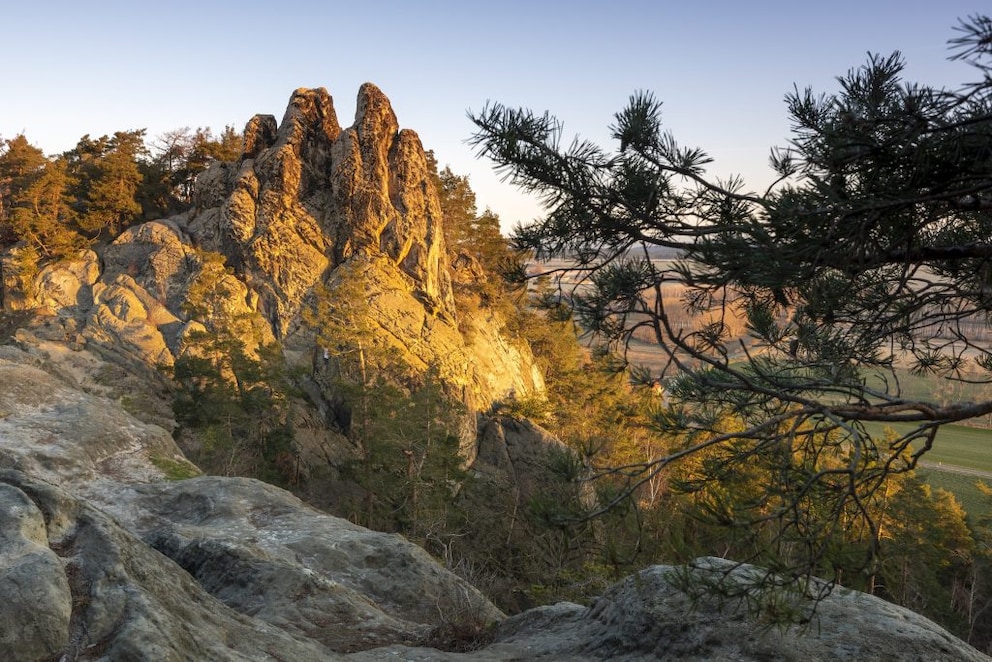
Always somewhat in the shadow of Wernigerode and especially the UNESCO World Heritage city of Quedlinburg, our first fall insider tip, Blankenburg, attracts far fewer visitors than the rest of the Harz. Yet the area around the city offers a truly spectacular range for hiking enthusiasts of all fitness levels. The most impressive is certainly the crossing of the so-called Devil’s Wall, which stretches about 30 kilometers from Blankenburg to Ballenstedt. The bizarre rock formation was once the floor of an ancient sea, uniquely layered into an area of rock masses and needles. From the Großvaterfelsen to the Hamburger Wappen, you walk along a ridge with a magnificent view of the vast land.
If you’re seeking even more solitude, a tour to the Volkmarskeller is a good choice. This is a cave first mentioned in the 9th century. The route is very varied, sometimes through the autumn forest, then over fields with a great view all the way to the Brocken, the highest mountain in the Harz. The last stretch of the path to the Michaelstein Monastery is lined by a cheerful babbling brook before you return to Blankenburg. The signage is impeccable, as it is almost everywhere in the Harz. Still, I would recommend bringing a map. The Harz here feels a bit like you’re discovering it for the first time.
Also interesting: Two of the most beautiful hikes in the Black Forest
More Great Tours
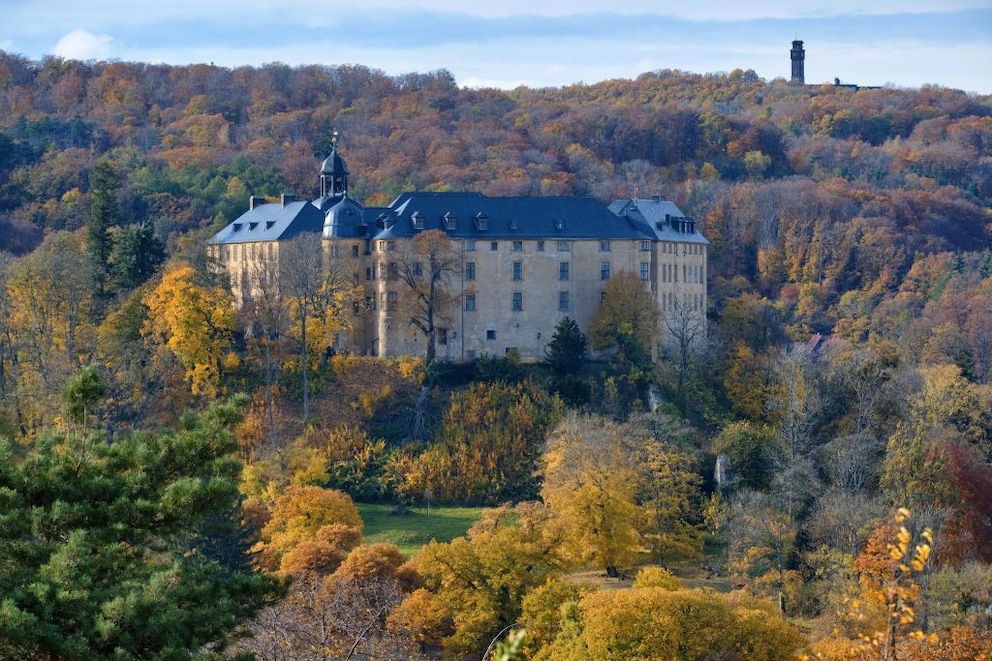
Around Blankenburg, there are countless other destinations worth visiting. Among them is the ruin of Regenstein Castle. High on a mountain, it offers probably the best panoramic view of the entire area. The “Sand Pits in the Heers,” a kind of mini-desert hidden in a forest, are bizarre. However, both destinations can get a bit crowded, especially in good weather. In contrast, you share the autumn landscape almost only with sheep and cows in the Ziegenberg Nature Reserve, which is more of an insider tip. Between the towns of Benzigerode and Heimburg, this lonely ridge offers breathtaking views. Over a little more than three kilometers, you can enjoy the truly untouched Harz here.
Feldberger Lake District
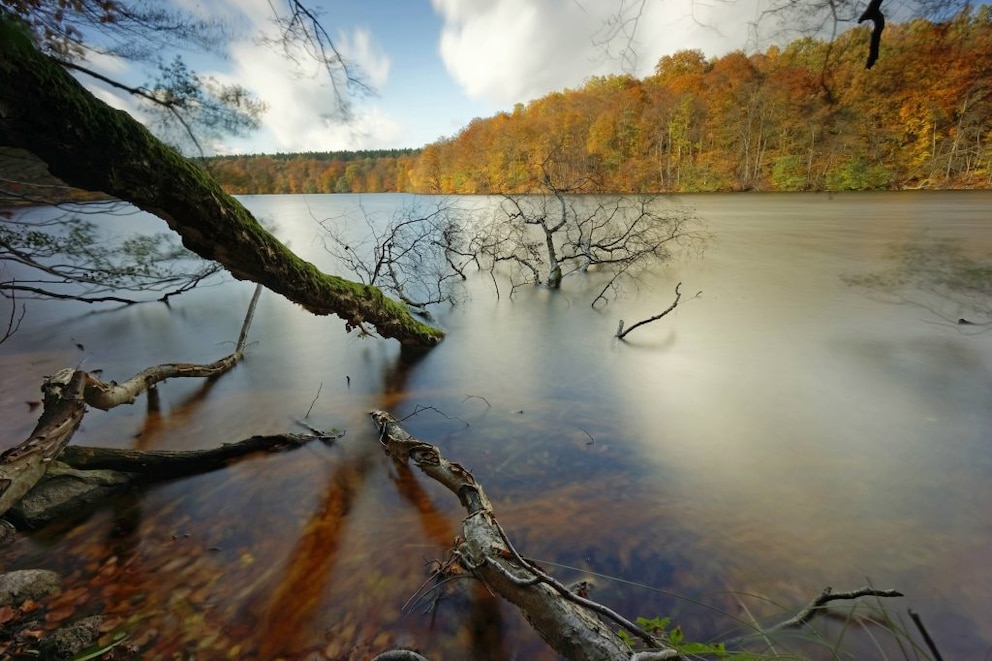
A true symphony of water and forest is the Feldberger Lake District in Mecklenburg-Vorpommern. Around the “capital” Feldberg, countless lakes stretch out in a landscape shaped by the last ice age. With the “Heiligen Hallen,” you find Germany’s oldest beech forest here, which puts on a true fireworks display of colors, especially in the golden autumn. It’s unique how the sunlight seems to dance on the light leaves of the mighty tree giants. A circular trail leads through this majestic refuge in about two hours.
The absolute star of the Feldberger Lake District is undoubtedly the “Schmale Luzin.” Just one of many lakes around Feldberg, its water glows in the sunlight in an almost otherworldly blue or turquoise. A normally very busy circular trail leads around the enchanted lake, but in autumn, it becomes quiet here too, and the trail becomes an insider tip. Halfway along, the small village of Carwitz awaits, greeting you from afar with its old mill. The return journey takes you through the Hauptmannsberg and Hullerbusch nature reserves. Downside: The romantic little ferry across the lake only operates until the end of October.
Time of Peace
Autumn in the Feldberger Lake District is also a time of peace. Most of the countless vacation rental providers close their operations at the beginning of October, and a wonderful relaxation sets in. However, you can still find small stands with honey, eggs, and/or homemade jams in front of many doors, with payment made via an honesty box. When dense fog settles over the valleys and hollows in the evening, and the summer crowds have long since disappeared, this natural gem is at its best.
Around the Laacher See
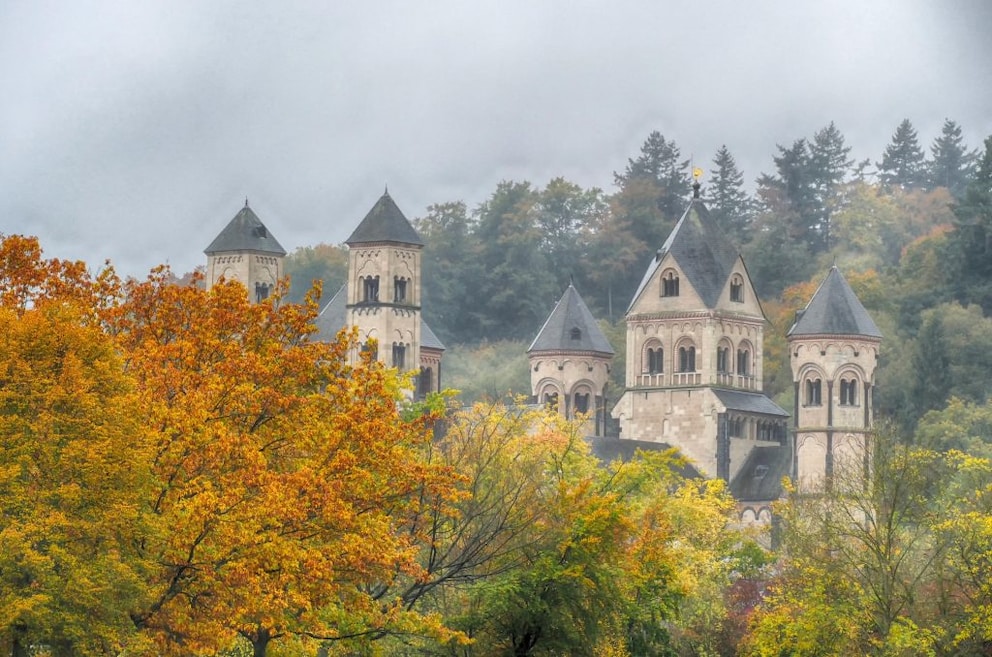
Sure, the Eifel itself and the Laacher See are not insider tips in autumn or any other time. But those who set out from here for hikes over the tree-covered ridges will still find solitude. The area, shaped by a massive volcanic eruption almost 13,000 years ago, is characterized by gentle hills and deep forests, mystical blue crater lakes, and sleepy villages. For example, Wassenach at the foot of Mount Veitskopf, where many houses and even the village church are made of volcanic stone. From here, the path leads through the quiet Wolfsschlucht to Burgbrohl, where the Romans once quarried soft tuff stone. Numerous caves still bear witness to this.
Also interesting: Hiking in the Allgäu: The best tours and inns
A great panoramic view over the autumn landscape of the Eifel is offered from the Lydiaturm, which can be reached after a short climb from the Laacher See. Here, the mighty Maria Laach Abbey has stood for almost 1,000 years, and it can also be visited. A special highlight is the ride on the “Vulkan-Express” steam train. Currently, the train runs only on weekdays on its 90-minute journey, and the exact schedules can be found on the website. The most impressive view of the land is enjoyed from the 460-meter-high mountain where Ohlbrück Castle stands.
Grumsiner Forest and Lower Oder Valley International Park
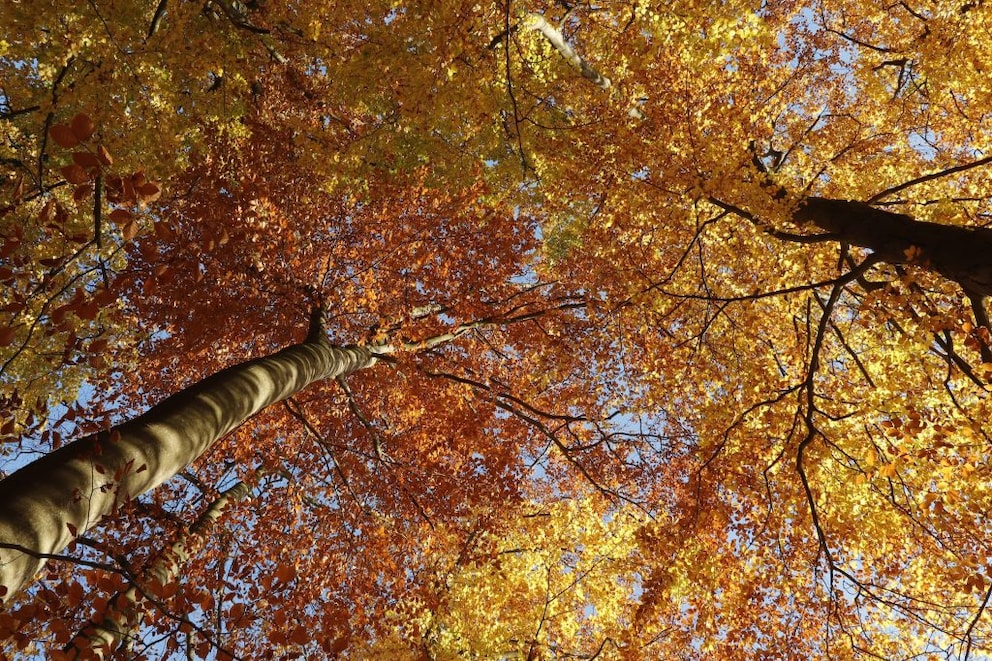
Just outside Berlin, near the town of Angermünde, two fantastic fall insider tips await. The Grumsiner Forest has been a UNESCO World Heritage site since 2011 and can be explored on four different trails. Composed almost entirely of beech trees, the forest unfolds a special magic in autumn. For 20 years, humans have not intervened here, and it is slowly transforming back into a true primeval forest. The varied trails lead past lakes, moors, and swamps, with flat and hilly terrain alternating in the ice age-shaped landscape.
Even less frequented is the path through the Lower Oder Valley International Park, which can be reached from Angermünde via the small village of Criewen. Along the namesake river, the landscape varies between forest, fields, and larger hills, also shaped by the last ice age. At the border between Germany and Poland, there is also a wide floodplain landscape where humans no longer intervene. The route is therefore called the “Path of Floodplain Views.” At Stützkow, you can switch riverbanks and have the option to hike back to Criewen on either the German or Polish side.
The best tips and routes for hiking in the Harz Mountains
The 12 Most Beautiful Places to Experience the Indian Summer in Germany
Northern Black Forest
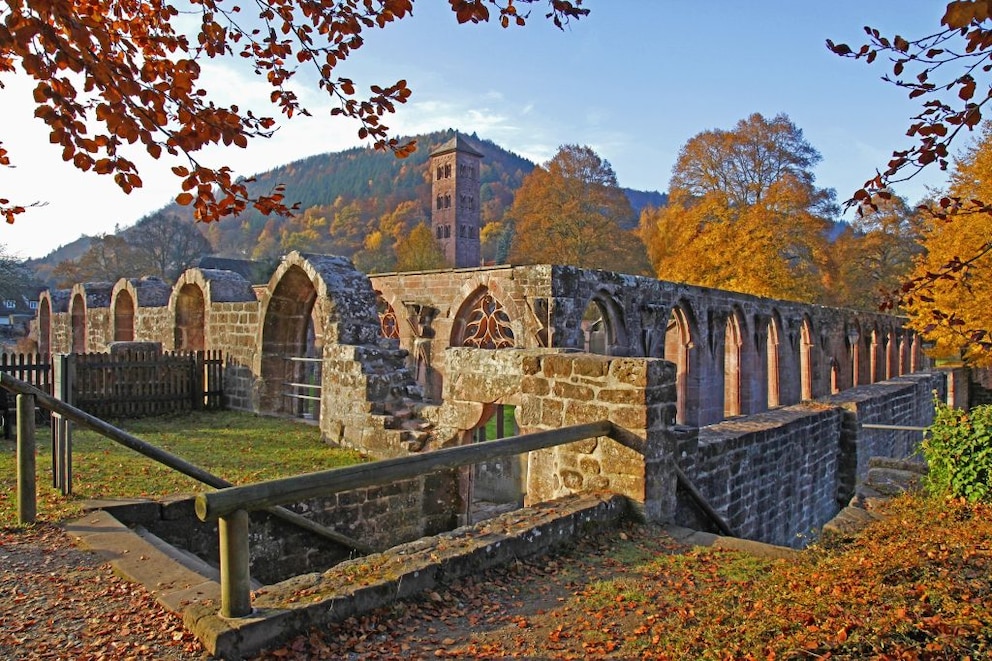
The northern Black Forest is much less crowded than its “cousin” in the south. Here, especially in autumn, you can enjoy many beautiful, undisturbed excursions. For example, through the Kaltenbronn Moor near Sprollenhaus. Visitors walk on boardwalks through the primeval moorland, and the coloring of the leaves adds a special charm. On the well-marked path toward Bad Wildbad, you discover bizarre, sometimes man-high ant hills. High above the town, a treetop path towers. If you wish, you can also take a gondola into the valley and enjoy the great views along the way.
Also interesting: The 6 best hiking trails in Germany
It becomes truly fairytale-like in the Schweinbach Valley, where the eponymous stream winds along the path over countless small and larger cascades. Nature has covered everything here with a thick layer of moss, which seems to glow in various shades of green. In autumn, the picturesque coloring of the old deciduous trees adds to the scene, which, like the entire valley, has been left to its own devices for some time. In the small town of Hirsau, you can then admire the ruins of the old monastery. If you want to see more of the region, you can embark on the 75-kilometer-long “Boot Journey” through the Northern Black Forest. The tour is designed for three days and is strenuous but very varied.
Allgäu around Sonthofen
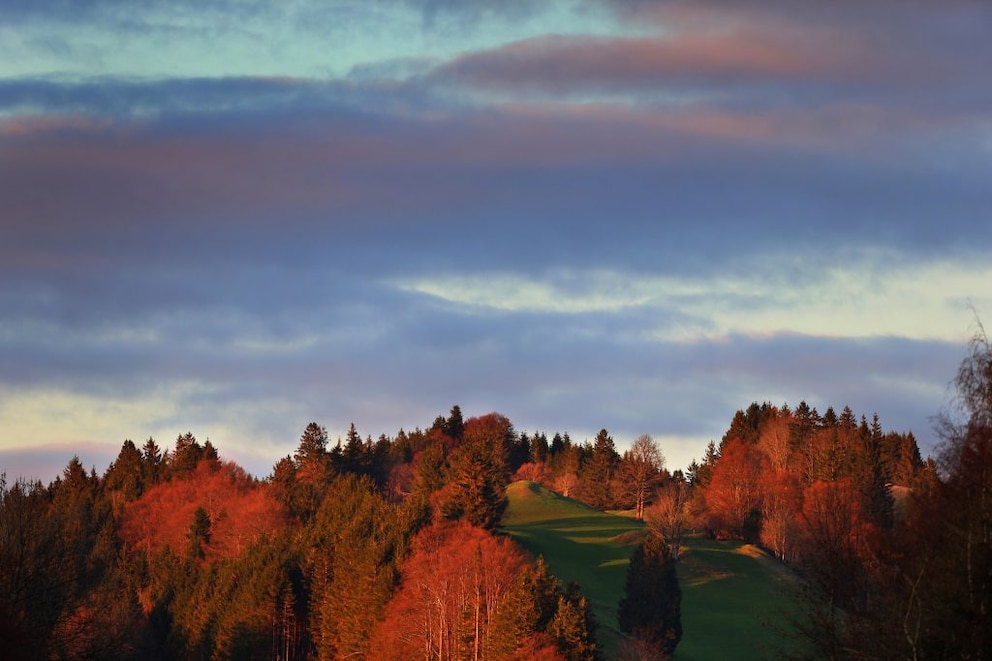
Around Sonthofen, Germany’s southernmost city, the Allgäu is still truly quiet. Tourists head toward Oberstdorf and Fischen, leaving places like Gunzesried, Agathazell, and Rettenberg for adventurers. The latter has only a few hundred inhabitants but boasts three breweries. From here, it’s a steep 300-meter climb to the nearly 1,000-meter-high Falkenstein, from where you have a truly majestic view of the vast land and the panorama of the Alps. The subsequent stop, for example at the “Adler-Post” inn, tastes twice as good.
If you wish, you can then hike from here over open fields past numerous farms to Agathazell. The colorful autumn landscape looks like a painting or a photo wallpaper. The view can relaxingly wander into the distance in all directions. This is also true from the Weinberghöhe, about 900 meters above Agathazell. In two to three hours, you walk from the village to the viewpoint and then back via the village of Burgberg and the Agathazeller Moor. If you want even more solitude, drive to “Buhl’s Alpe” by car. From there, you can hike to the Höllritzereck, almost 1,700 meters high.