

October 14, 2025, 12:42 pm | Read time: 5 minutes
Bingin Beach is one of Bali’s most popular surfing beaches. Currently, it’s a debris field. In July, the Balinese government demolished dozens of buildings there. More on the background at TRAVELBOOK.
Bingin Beach in Bali is one of the most popular surf beaches on the Indonesian vacation island. Perhaps even in the world. Since the 1970s, surfers from Australia and other countries have traveled here to try the seemingly perfect left-hand waves on the west of the Bukit Peninsula. However, those who visit Bingin now may be less focused on the perfect waves or those surfing them, and more on what has happened on the beach itself.
Overview
Demolition in July
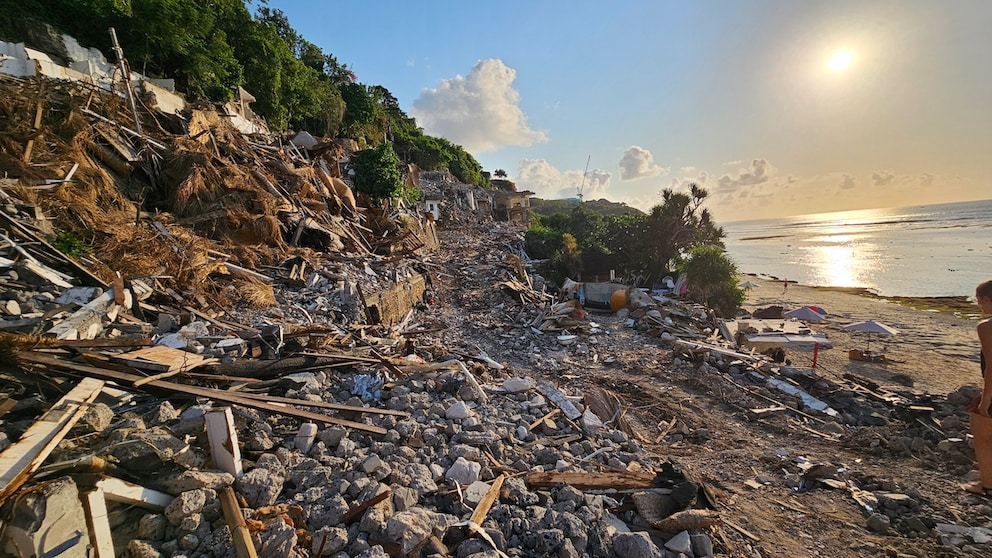
“We were at Bingin Beach today, and unfortunately, nothing is left of the beach’s surroundings. Just a debris field… The demolition bomb literally hit,” a former colleague recently wrote to the TRAVELBOOK editorial team.
In July 2025, 48 allegedly illegally constructed buildings at Pantai Bingin were demolished, as confirmed by Bali’s civil order police, the Satuan Polisi Pamong Praja Provinsi Bali, in a letter. The “illegal structures” built on the cliffs violated local zoning regulations, according to the order authority. They “stood in a green area and had no building permits.” In addition to Bali’s typical traditional warungs (small restaurants), private accommodations, villas, restaurants, other tourist accommodations, and other unspecified tourist construction projects were demolished. According to the authority, the owners of the buildings had been warned. As the “Bali Sun” writes, negotiations had taken place for weeks. However, the companies could not ultimately stop the demolition work at Bingin Beach.


“Miami of Indonesia” to Be Developed on Lombok

Illegal Construction Project at Popular Bali Photo Spot to Be Demolished
Unregulated Buildings and Mass Tourism
The question that arises for us, as well as for many Balinese, tourists, and other journalists, is why, and more importantly, for what purpose. Officially, the talk is of illegally constructed buildings that need to be removed. According to an article in the British daily “Guardian,” the clearance of Bingin is “part of a campaign by the re-elected Governor Wayan Koster aimed at enforcing land use regulations and eliminating unregulated buildings on protected state land.” In the future, such investigations of tourist permits are to take place all over the island. Not least, it is also about curbing mass tourism in Bali.
According to the “Guardian,” the owners argue today that the building standards they allegedly violated did not exist at the time. Instead, they adhered to customary law and informal village permissions.
More Buildings for More Tourists
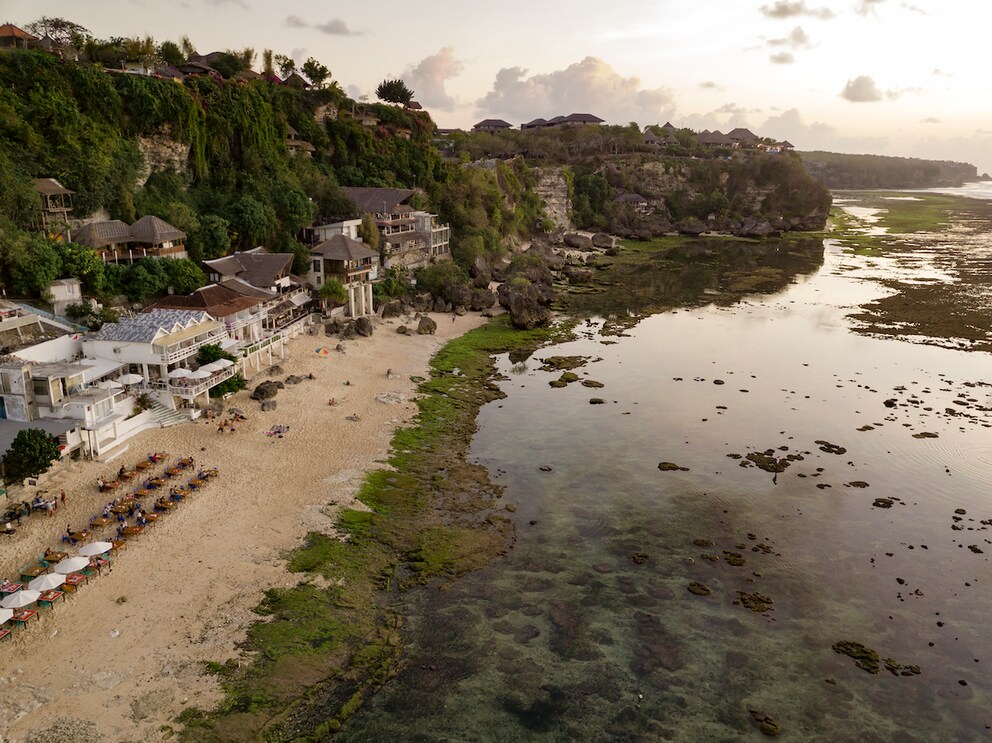
The tourist facilities in question were mainly built in the mid-1980s. After recognizing the potential Bingin and its neighboring beaches in the Uluwatu area offered due to their ideal waves for surfers, the Balinese often collaborated with foreign investors to develop facilities to boost tourism. It worked, as Bingin is, as mentioned, one of the island’s most popular surf beaches. However, the development of the coastal strip has apparently gotten out of hand, with small traditional family businesses being transformed into massive luxury properties. More space for increasingly affluent tourists.
Today, Bali is groaning under the weight of many tourists, with around 6.5 million vacationers expected this year alone–more than the approximately 4.3 million residents. The population has roughly doubled since the 1970s. Not least, many Europeans, Australians, and others regularly use various visas to stay longer or even settle there. I can think of eleven acquaintances off the top of my head who have lived in Bali for a while or are permanently there.
New Luxury Properties at Bingin Beach?
It’s long been clear that something must be done in Bali to curb rampant tourism. Stricter rules and controls also seem sometimes unavoidable, as other examples show (TRAVELBOOK reported). However, the how is crucial. Not least, many people are left with nothing or at least facing huge financial losses since the demolition work.
According to the “Guardian,” there is also the accusation of “selective enforcement.” Behind the obvious why, another, more secretive purpose is suspected–and this raises far more concerns than the demolitions of sprawling, unregulated construction projects, which are often met with understanding: the suspicion that the way is being cleared for new luxury projects.
The head of the Balinese order authority, I Dewa Nyoman Rai Darmadi, reportedly dismisses this claim according to the British newspaper. The assertion that the demolition is making way for luxury properties is nothing but false news. Instead, it’s about the safety of the coastal zone, where the facilities are crowded together. The land is protected, and there is no indication that it will be taken over by an investor.
But what will happen to Bingin Beach in the future? There seems to be uncertainty and concern about this. The waves at Bingin Beach remain as attractive as ever. And thanks to the demolition work, there is suddenly much more space–for new projects.