

November 12, 2026, 5:03 pm | Read time: 7 minutes
The Albanian Riviera, the Amalfi Coast, or Edinburgh in Scotland: This is just a small selection of popular vacation destinations that, according to the travel guide “Fodor’s,” should be avoided in 2027. Not because there are dangers lurking for tourists, but because these destinations are increasingly suffering from the effects of mass tourism. TRAVELBOOK explains the background and shows why the “No List” is indeed justified.
Increased waste production, water scarcity, damage to fragile ecosystems, or rising living costs for locals: Tourism, when it gets out of hand, brings with it a host of negative impacts. To raise awareness, “Fodor’s” publishes its “No List” annually. However, this is explicitly not a call to boycott the mentioned destinations. Rather, travelers should make more conscious decisions about when and how to visit a place. For example, those who opt for the off-season can still visit some of the mentioned destinations with a clear conscience.
European Destinations Not to Visit in 2027
Albanian Riviera
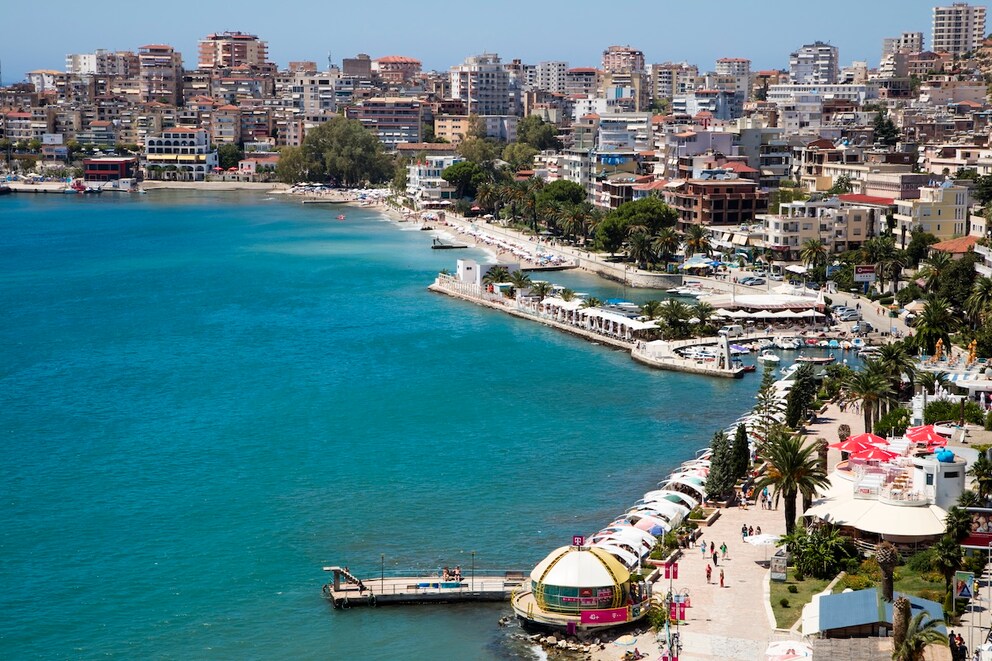
For a long time, Albania was considered an affordable and largely undiscovered alternative to Greece. Especially the Albanian Riviera in the southwest of the country attracts visitors with turquoise waters, white beaches, and relatively low prices. However, what was once a hidden gem has long become a sought-after vacation spot. According to Fodor’s, Albania recorded around 12.47 million visitors in 2025, and in the first eight months of 2026, the number increased by another 5.3 percent.
Especially in popular coastal towns like Ksamil and Dhërmi, more and more hotels and vacation apartments are being built. The problem: The infrastructure is not growing fast enough. There are particularly deficits in waste disposal and wastewater treatment. Additionally, prices are rising, and beaches are overcrowded during the peak season from June to September.
Fodor’s quotes Taulant Bino, the chairman of the Albanian Ornithological Society. He criticizes that formerly untouched coastal areas are increasingly being developed. Many of the new apartments are mainly used in the summer and remain empty for the rest of the year. New luxury resorts, which endanger valuable habitats of birds and marine animals, such as around the Vjosë-Nartë protected area near Vlorë, also concern the conservationist.
According to Fodor’s, travelers don’t have to completely avoid Albania. Away from the popular coastal towns, there are numerous alternatives, such as hiking in the Albanian Alps or excursions to the national park along the Vjosa River.
Our tip: The “Lake Garda of the Balkans” is still a real insider tip!
Amalfi Coast, Italy
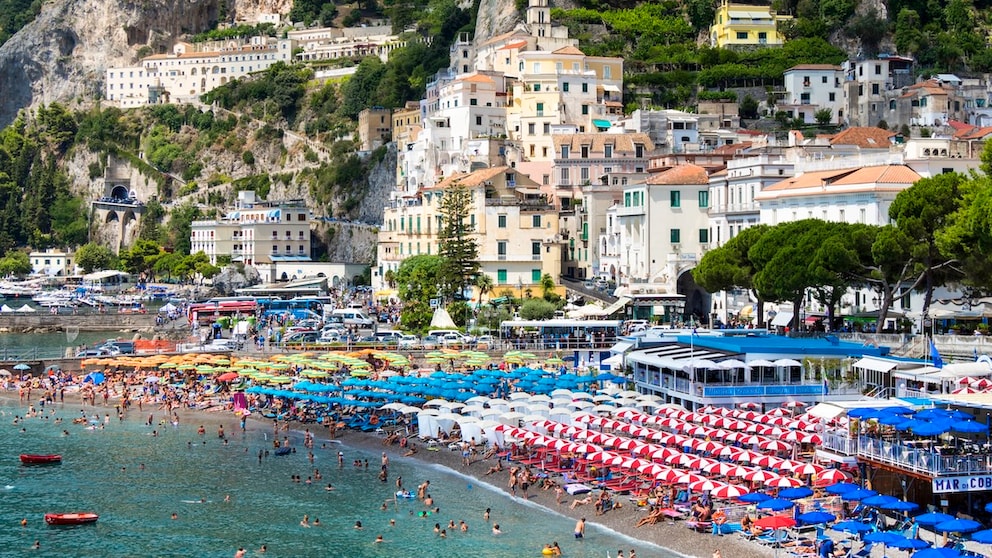
Colorful houses clinging to steep cliffs, lemon groves, and spectacular views of the Mediterranean: The Amalfi Coast is one of the most famous vacation regions in Italy. But its unique location is increasingly becoming a problem. The many visitors have to share a narrow coastal road that is already regularly reaching its limits.
The famous Amalfitana, also known as SS163, connects towns like Positano, Amalfi, and Maiori. During the peak season, cars, tour buses, and taxis crowd the road. Traffic jams are a daily occurrence, and in the event of accidents or breakdowns, traffic can come to a standstill for hours. Although there have been temporary driving restrictions for non-local cars since 2022, numerous exceptions limit their effectiveness. The extent of the rush is shown by an example from Positano: In 2023, according to Fodor’s, around 132,500 visitors came to the coastal town, which itself has only about 3,700 residents. The consequences go far beyond clogged roads. Buses are overcrowded, ferries are fully booked, and housing is becoming increasingly expensive for locals.
Our tip: Italy’s unknown Adriatic coast is rugged but authentic
Fodor’s quotes travel entrepreneur and resident Sarah Thompson, who mainly criticizes the rising rents. Landlords can earn significantly more with vacation rentals than with long-term leases. As a result, more and more locals are being displaced from the places where they grew up. Young people are particularly affected. There is also a less obvious problem: As more people work in tourism, traditional lemon and olive groves are partially abandoned. This not only changes the landscape but, according to Fodor’s, can also increase the risk of landslides and floods.
Our tip: Cilento – As beautiful astheAmalfi Coast, just without the tourist crowds!
Corsica, France
Corsica is also struggling with the consequences of its popularity. The French Mediterranean island attracts numerous vacationers with its beaches, mountains, and picturesque coastal towns. However, tourism is increasingly causing tensions that go far beyond overcrowded beaches. Particularly controversial is the growing number of second and vacation homes. According to the French statistics agency INSEE, around 36.7 percent of homes on Corsica were used as second homes or only occasionally in 2023. At the same time, the island’s population roughly doubles during the summer months. Roads, water supply, healthcare, and shops are under pressure as a result.
Fodor’s also reports on a political dimension to the conflict. Corsican separatists, who have been fighting for independence from France for decades, blame the increasing tourism and the purchase of vacation properties for the displacement of locals. In August 2026, armed members of the Corsican Liberation Front FLNC even explicitly warned visitors against traveling to the island. In 2023, several dozen properties, mostly vacation homes, were damaged in attacks.
Yet Corsica is economically heavily dependent on tourism. According to Fodor’s, it contributes around 39 percent to the island’s gross domestic product. At the same time, 72 percent of visitors are concentrated in the months of May to September. This means that many workers are particularly challenged in the summer, while unemployment threatens in the winter.
Edinburgh, Scotland
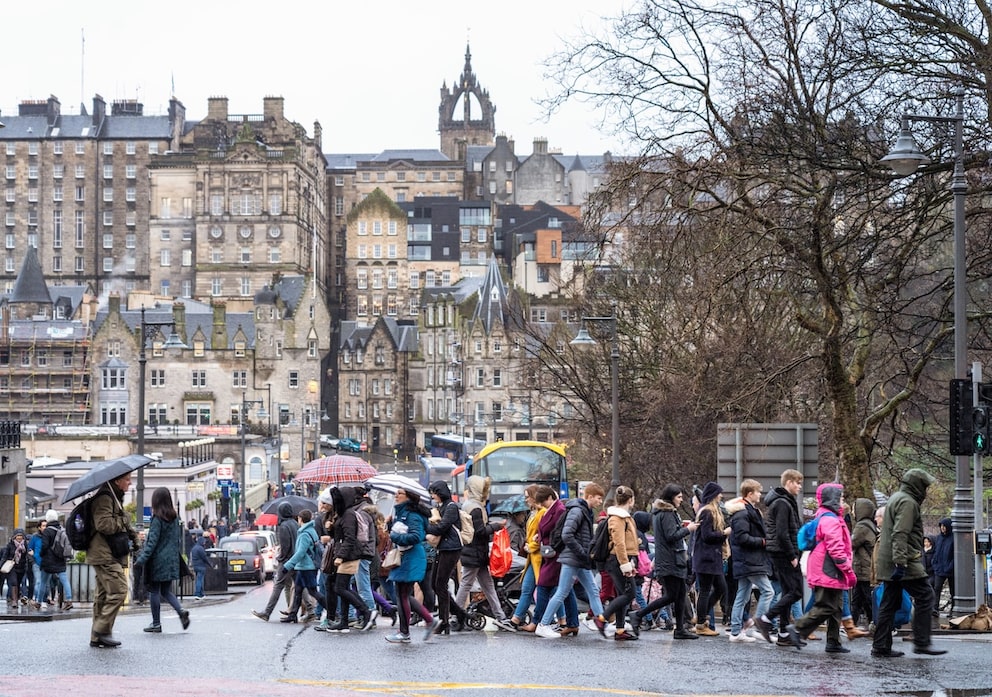
Edinburgh is famous for its medieval old town, the imposing castle, and its numerous festivals. But the historic city center is increasingly changing due to tourism. This is particularly evident on the Royal Mile, the famous street between Edinburgh Castle and the Palace of Holyroodhouse.
Where grocery stores, hairdressers, and other everyday facilities used to be found, souvenir shops and restaurants now dominate. The BBC published a report rightly asking if Edinburgh’s Royal Mile really needs 72 gift shops. A post office, pharmacy, or doctor’s office, on the other hand, is nowhere to be found in the immediate vicinity.
Especially during the festival season in August, the influx of visitors reaches its peak. The Edinburgh Festival Fringe alone recorded around three million visits in 2024. At the same time, the pressure on the housing market is growing. More and more accommodations are being rented out short-term to tourists, while affordable housing for locals is scarce. The city is now trying to counteract this. In 2026, a five percent overnight tax was introduced. Whether this is enough to reduce the increasing pressure on the Scottish capital remains to be seen.
Our tip: Is Edinburgh too crowded for you? Then Stirling is the better choice
Other Destinations Not to Visit
In addition to the four European destinations, Fodor’s has selected four other travel destinations that have long been struggling with the effects of mass tourism.
- Bali, Indonesia: The Indonesian vacation island suffers from growing piles of garbage, air pollution, and water scarcity. Because waste is often burned openly, air quality is deteriorating in many places. At the same time, more and more rice fields are disappearing in favor of new tourism projects.
- Kyoto, Japan: The historic city is one of Japan’s most popular travel destinations. The large influx of visitors particularly burdens traditional districts and the everyday life of residents.
- Ngorongoro, Tanzania: The famous conservation area faces the challenge of balancing tourism with the protection of its sensitive ecosystems and the interests of the local population.
- Sedona, USA: The city in Arizona, known for its red rock formations, is struggling with the consequences of its great popularity. The influx of visitors and tourist infrastructure put pressure on the landscape and the local community.
Fodor’s emphasizes that, of course, well-known places affected by mass tourism, such as Venice or Barcelona, which have been part of the “No List” in recent years, continue to face major problems. This year, however, the selection deliberately focused on other, less well-known hotspots that also “need a break,” according to the travel guide.