

July 10, 2024, 11:04 am | Read time: 6 minutes
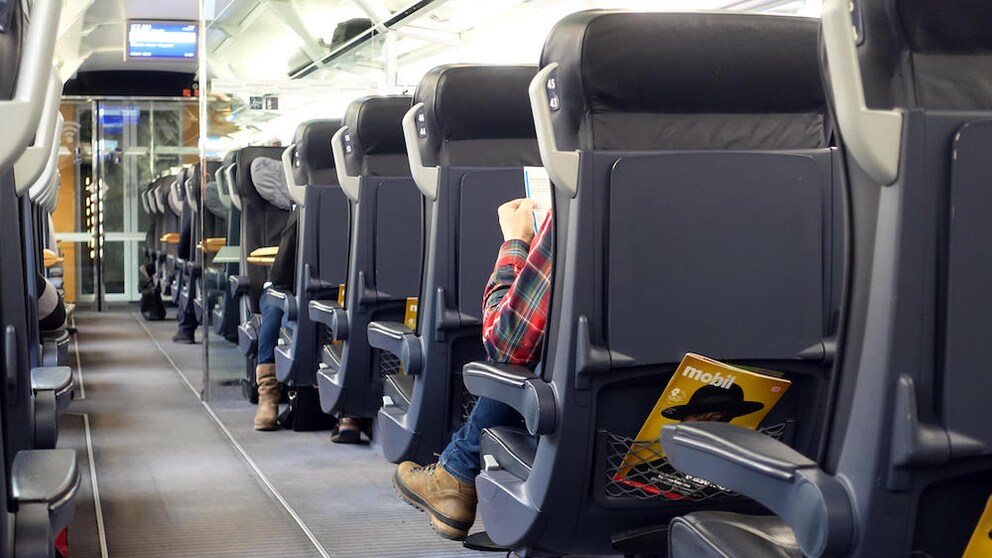
Train travel is convenient–provided you have a seat. However, not everyone can or wants to make a paid seat reservation for the ICE or IC. TRAVELBOOK shows how you can still find a seat on the train without a reservation.
On June 9, the prices for a seat reservation on the ICE or IC were increased again: A reserved seat in second class now costs a hefty 5.20 euros per route. For some, that’s simply too expensive; others save the money on principle, and still others may decide too late to reserve a seat. Depending on the time or day, it can be difficult to find a free seat on the ICE without a reservation. Our nine tips show how it can still be done.
Overview
- Tip 1: Arrive early at the station
- Tip 2: Choose the right car on ICE and IC
- Tip 3: Position yourself smartly on the platform
- Tip 4: Use Bahn-Comfort seats
- Tip 5: Choose the right time
- Tip 6: Take IC instead of ICE
- Tip 7: Sit in the children’s compartment
- Tip 8: Choose an earlier station
- Tip 9: Switch between seats
Tip 1: Arrive early at the station
This tip is recommended for trains that start their journey from a specific station. These trains are often ready for boarding well before departure. Arriving early allows you to be among the first to board and gives you enough time to find a free seat.
Tip 2: Choose the right car on ICE and IC
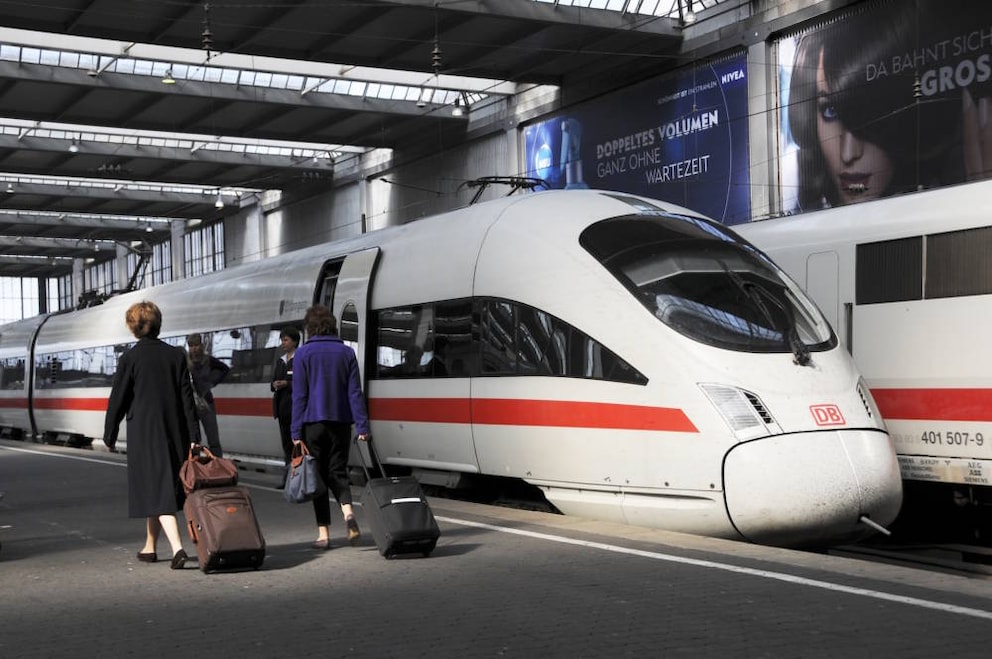
The railway does not distribute seat reservations randomly but according to a specific scheme. “Usually, a train is reserved starting from the dining car,” a spokesperson for Deutsche Bahn told TRAVELBOOK. “First, seats in the first and second class cars adjacent to the dining car are reserved.” This means that the further away a car is from the dining car, the higher the chance of finding unreserved seats. However, the DB spokesperson dispels a persistent rumor: “There is no car excluded from reservations.”
Also interesting: 11 things to avoid on the train
Tip 3: Position yourself smartly on the platform
Tip 2 leads directly to Tip 3: Position yourself on the platform so that you are at the front or back of the train when it arrives. The current car sequence for a long-distance train is shown on the car position indicator located on every platform. At terminal stations, it makes sense to walk to the far end of the platform, as hurried or comfortable passengers will first board the cars at the front. These are also more likely to be first-class cars.
Tip 4: Use Bahn-Comfort seats
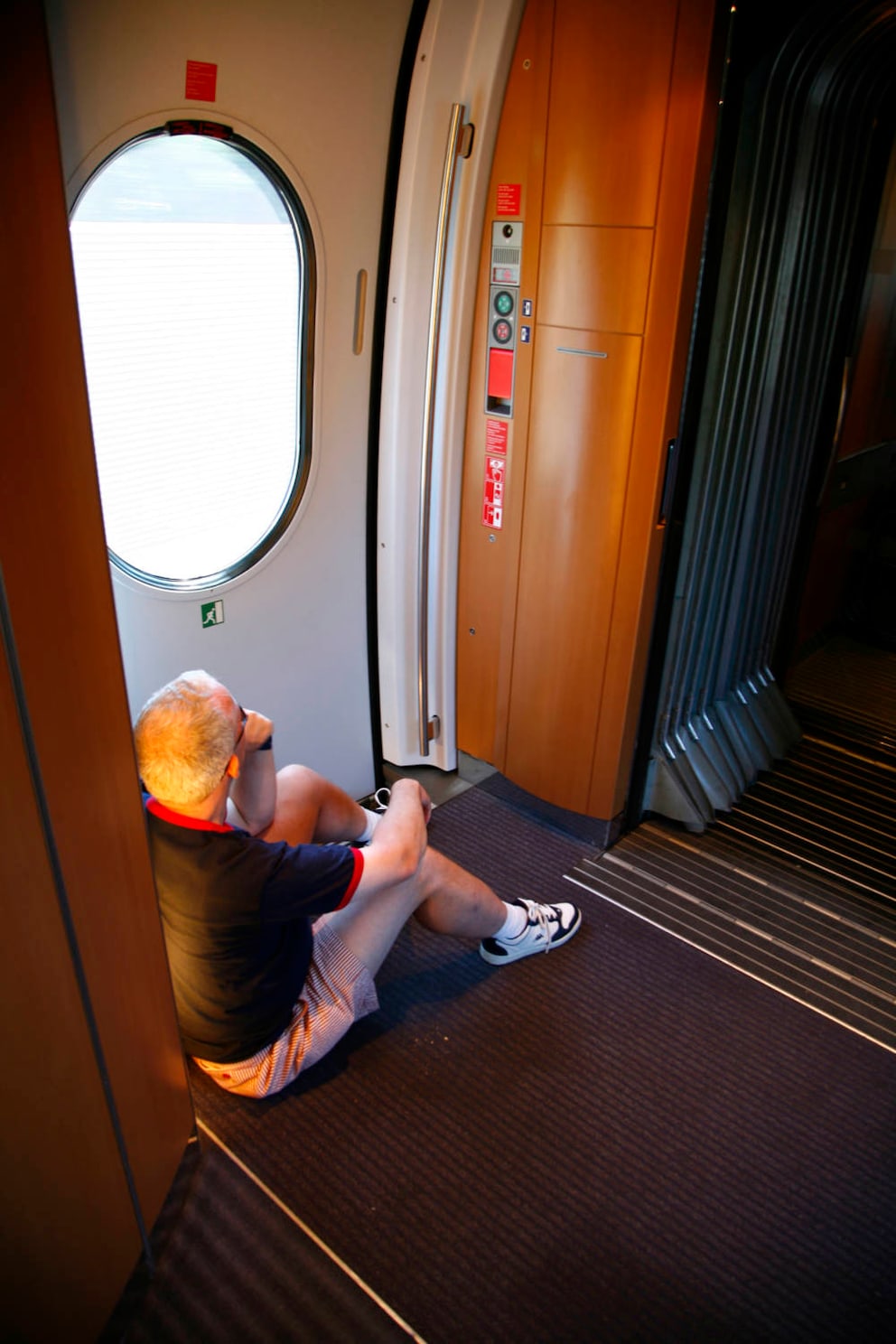
Many trains have a dedicated seating area for customers with a “bahn.comfort” card. These seats are specially marked on the reservation display and can be used by any traveler if no “bahn.comfort” customer claims them. The same applies to express seats, which can be reserved until shortly before departure and are marked with “Possibly release.”
Tip 5: Choose the right time
If you want to save money on a seat reservation, you should, if possible, avoid certain trains that are generally more crowded than others. “In long-distance travel, the highest demand is usually on Sunday afternoons, Monday mornings, and Friday afternoons,” a Deutsche Bahn spokesperson explained to TRAVELBOOK.
In the online travel information of the railway, trains that are in high demand are marked accordingly, allowing you to choose alternatives. It gets particularly crowded on Fridays from about 2 p.m. when weekend commuters head home or go on short trips. “If you can be flexible with your travel day, you have a higher chance of finding a seat on Saturday than on Friday afternoon,” says the DB spokesperson. It’s also easier to find a seat if you travel on Friday morning or very late in the evening.

Tip 6: Take IC instead of ICE
During particularly busy times, the railway deploys relief trains. These are mostly Intercity trains that run between the more popular ICE trains. While ICs take longer, they are usually less crowded and often cheaper.
Tip 7: Sit in the children’s compartment
Almost all ICE and most EC/IC trains have a small children’s compartment that families with babies and children up to three years can reserve. Sometimes there’s a free seat there, and if you ask nicely, you can usually sit there. However, you must be prepared to endure potential child noise or arm yourself with earplugs and headphones.

Also interesting: What happens if you’re caught smoking on the train
Deutsche Bahn Offers ICE Flat Rate–Is the Deal Worth It?

TRAVELBOOK Author: Why Deutsche Bahn’s Seating Policy Is Too Simplistic
Tip 8: Choose an earlier station
In many cities, it’s worth boarding at an earlier station. In Berlin, for example, many long-distance trains start at Ostbahnhof, where relatively few people board. This allows you to calmly find a free, unreserved seat before the train reaches Berlin Hauptbahnhof and the crowds board. In Hamburg, it’s worth boarding at Altona or Dammtor, both of which are before the main station. And in Frankfurt, travelers heading north should start their seat search at the airport station.
This is also possible if your ticket shows a later departure station. Within a city, the same fare applies to all stations.
Tip 9: Switch between seats
Look for seats on the display panel in the car that are reserved only from a later station. Once that station is reached, other passengers will likely disembark, allowing you to take their seat–provided it’s not also reserved. Alternatively, you can initially sit in the dining car/bistro and move later when the train empties. However, as a courtesy, you should order something–which raises the question of whether you might be better off investing that money in a seat reservation.
And if, despite everything, you still can’t find a free seat? DB spokesperson Daniela Bahls recommends contacting the train attendants. “They have the best overview and know where there’s still a free seat on the train.”