

February 24, 2026, 4:03 pm | Read time: 4 minutes
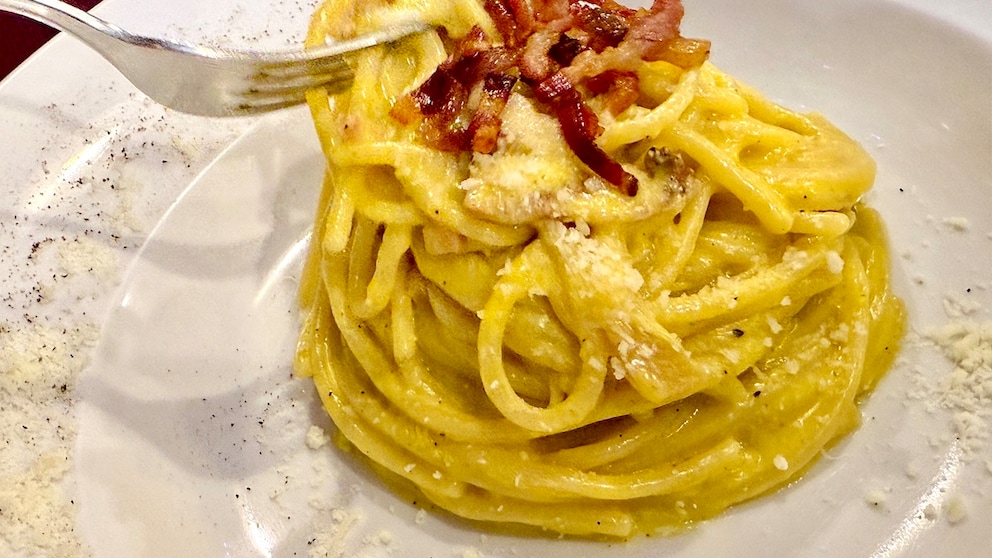
Are you a fan of Italian cuisine? You might be mistaken! After all, the U.S. has been claiming the origin of more and more supposed “Made in Italy” classics for some time now. This also applies to Carbonara. Recently, an alleged original recipe that deviates from the common preparation method and supposedly traces back to the U.S. soldiers’ theory has caused an uproar. But the dispute is far from settled. TRAVELBOOK examines the latest developments in the fierce battle over the true origin of Carbonara.
It is the first worldwide to be recognized as an intangible UNESCO World Heritage and is generally popular all over the world: Italian cuisine. Or should we say: what we consider it to be? Increasingly, there is the view that even supposed symbols of “vera cucina italiana” were not actually invented by Italians.
Italian Culinary Classics That Might Not Be
For instance, some historians claim that Pizza Margherita—or generally “pizze rosse,” pizzas with tomato sauce as a base—originated in the U.S. One of the most well-known proponents of these theories is Alberto Grandi—ironically, an Italian! His provocative interpretations regularly draw the ire of many compatriots. His stated goal: to soften what he sees as the exaggerated “gastro-nationalism” in Italy. By this, he means the sometimes extreme national identification with one’s own cuisine, often accompanied by a strict adherence to traditions and certain taboos—such as the “ban” on drinking cappuccino after 11 a.m. or combining Parmesan with fish dishes.
About two and a half years ago, Grandi caused a stir when he presented an alleged original recipe for Pasta Carbonara. This differed quite significantly from today’s usual preparation. For example, it called for Swiss cheese instead of Pecorino, and it included garlic. Particularly controversial: The recipe is said to have arrived in Italy in connection with the Allied invasion by U.S. soldiers. Strictly speaking, this would mean Americans invented it.
Since this revelation, some Italians who proudly look to their national cuisine may have reluctantly come to terms with this version of history. However, evidence from various directions is now mounting. The invention of Carbonara could be more complex than the U.S. soldiers’ theory suggested.

Italian Shows How to Cook Spaghetti alla Puttanesca

Would you try this “dirty” pasta dish?
Did Italians or Americans Invent Carbonara?
Grandi bases his thoughts on the origin of Carbonara on what is said to be the first recorded cooking instruction for the popular dish. He discovered this in an issue of the magazine “Cucina Italiana” from 1954. The unusual ingredient Gruyère suggests that Carbonara may have been at least partially influenced by foreign elements. In its original form, one might have used egg powder and bacon—durable foods that would have been practical for U.S. soldiers.
However, the first Carbonara is actually documented two years earlier, in a Chicago restaurant guide from 1952. It mentions a dish called Spaghetti Carbonara on the menu of the restaurant “Armando’s,” as reported by the news agency dpa.
First Mention in Italy as Early as 1939
But the Italian trace of Carbonara can apparently be followed even further back. According to a report by the national online daily “Il Post,” Dutch journalists Janneke Vreugdenhil and Edwin Winkels found an old article in the Dutch newspaper “De Koerier.” Intriguingly, it explicitly mentions “Spaghetti alla Carbonara.” The article, dated August 23, 1939, describes the rivalry between two trattorias in Trastevere. One served risotto with shrimp, the other Spaghetti Carbonara as the main dish. This means the name of the dish existed five years before the Americans arrived in Italy.
When asked, Alberto Grandi remains cautious for now. As he explained to dpa, the discovery only shows that the name was already used in 1939. This translates to “in the style of a coal worker”—it says nothing about the specific preparation. More importantly, Grandi notes, typical ingredients like guanciale, eggs, and Parmesan were only clearly documented later. This supports his narrative. The dish does not even appear in contemporary cookbooks.
The origin of Carbonara remains unclear. Until it is resolved, one can amusingly follow the intense search for clues. The open question certainly doesn’t detract from the taste.