

December 22, 2020, 4:43 am | Read time: 3 minutes
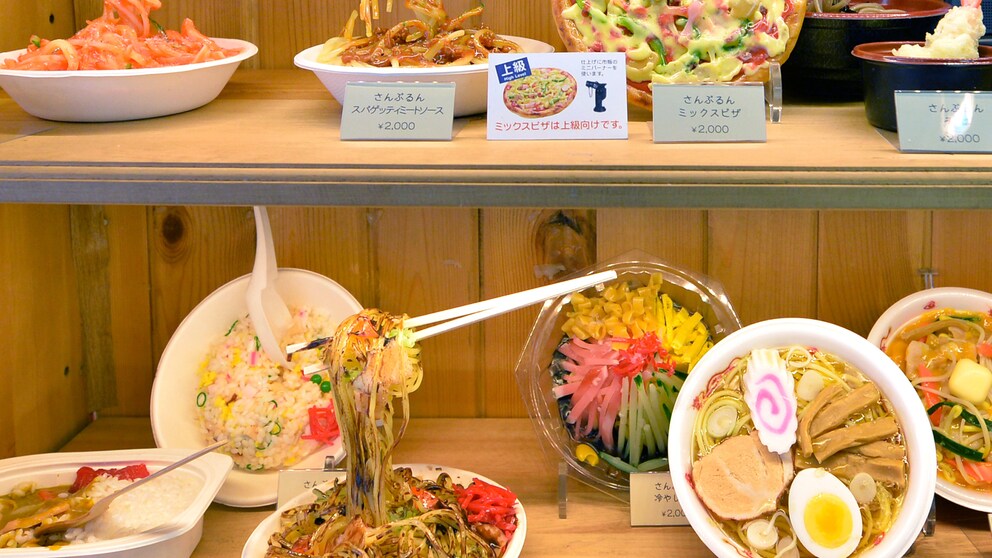
Anyone who has been to Japan has likely seen the colorful plastic dishes. In front of almost every restaurant, plates with fake food are displayed. TRAVELBOOK knows what it’s all about.
In the Land of the Rising Sun, “Sanpuru” are indispensable. The word means “sample” and describes dishes made from wax, plastic, or silicone. These are often indistinguishable from the originals.
The creation of fake food has become a true art form in Japan. Each dish is handcrafted. Especially in the Tokyo district of Kappabashi, there are countless companies that produce dishes from plastic and wax, writes the international news portal “Global Voices.”
The Million-Dollar Business of Fake Food Sanpuru
Sanpuru has now become a million-dollar business. The industry is said to be worth $90 million, and that’s just within Japan’s borders, writes the British “Guardian”. The fake dishes are not exactly cheap, and a Sanpuru can cost about ten times as much as the edible version of the dish. And not only Japanese dishes are created from plastic, as this photo from an Instagram user shows:


Masaya: How a Volcano Converted a Nation to Christianity

7 Unusual Snacks From Around the World
How Are Sanpuru Made?
To make Sanpuru, a type of plaster mold must first be created. Often, the real dish is frozen and used for the mold. The molds are then fired and subsequently colored and painted. Fake food artist Sayuri explains in this video from “Culture Trip” that painting is the most important part of the process. Finally, the dishes are glazed to look fresh and irresistible. Small dishes can be made in a day, but more elaborate dishes can take up to a week.
The story of Sanpuru began 90 years ago with the Japanese man Takizo Iwasaki. Legend has it that he imitated an omelet with candle wax so well that his wife couldn’t tell it apart from a real one. Iwasaki later established himself as Japan’s largest Sanpuru manufacturer. In 1930, when Iwasaki developed his idea, there was no color photography, so restaurants had to resort to this costly option to show their dishes to guests.
The Breakthrough for Sanpuru Came During World War II
It was World War II that really got the business going. During this time, many American soldiers were stationed in Japan. They couldn’t decipher the restaurant menus and were particularly grateful for the plastic dishes, whose ingredients were easy to recognize.
During a trip to Japan, tourists can also try their hand at the art and create their own Sanpuru. Those interested can also buy phone cases with fake fish or noodles on-site or take home entire ramen bowls.