

April 4, 2026, 5:46 am | Read time: 4 minutes
When people in Spain think of paella, they often picture seafood—but this notion raises eyebrows in Valencia. In the home of the famous rice dish, different rules apply, and those who ignore them quickly reveal themselves as tourists. A trip there shows why tradition is more important than stereotypes—and what truly makes an authentic paella.
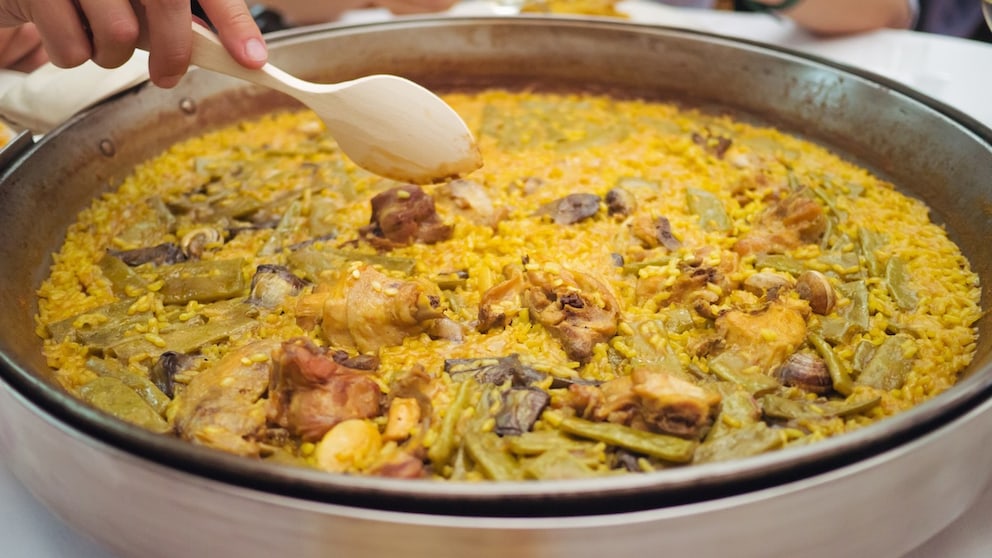
In Valencia, Spain’s third-largest city, ordering a seafood paella in a restaurant at night is considered a double faux pas by many locals. First, neither fish nor seafood belongs in the classic dish. Second, paella is traditionally served only at lunchtime—preferably on Sundays.
That’s when families and friends gather, eat directly from the large pan, and share the dish with wooden spoons. Here, paella is not just a meal but a social ritual, comparable to a barbecue evening elsewhere.
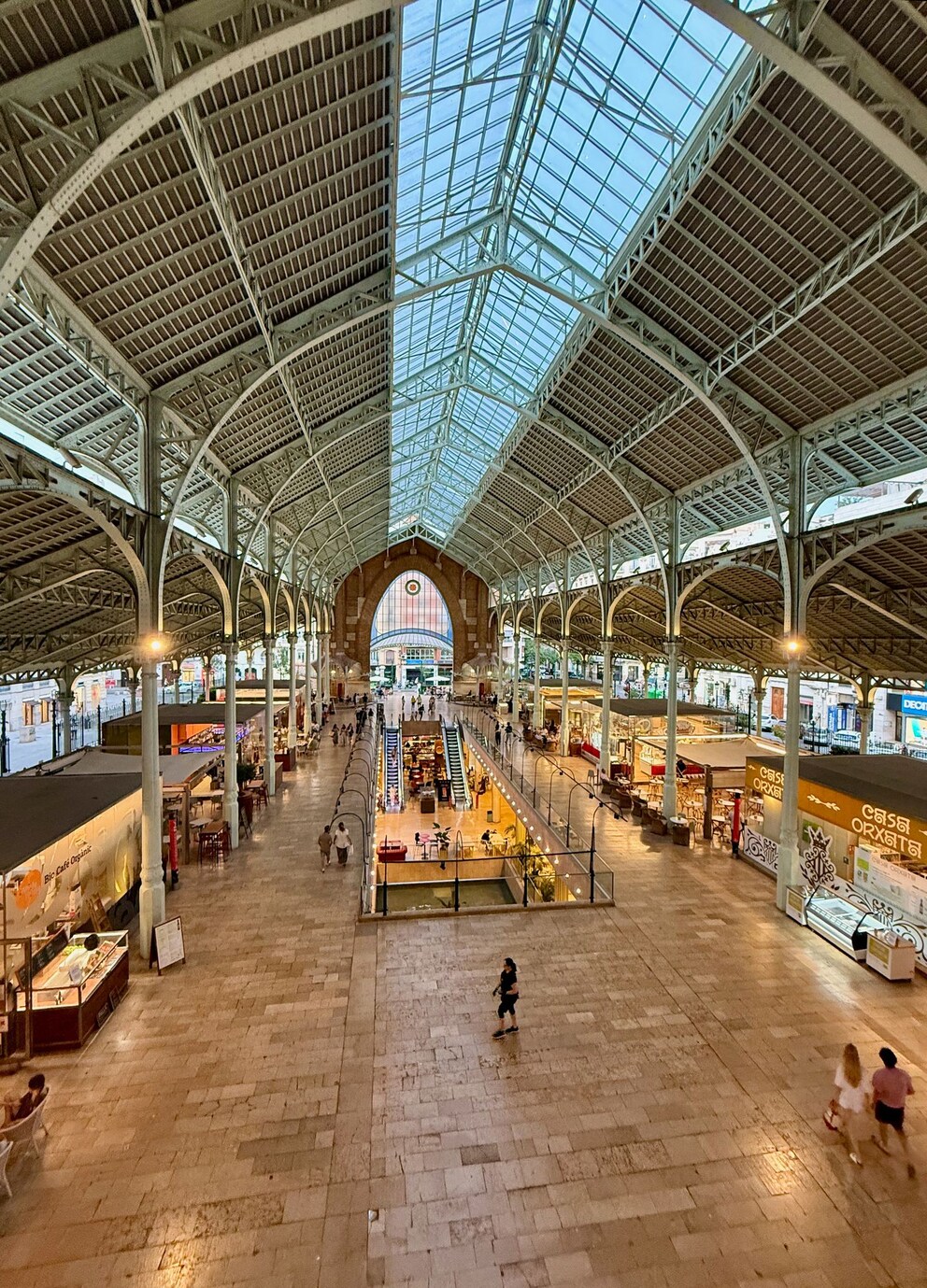
In the evening, however, paella is deemed inappropriate: It’s too heavy and might disturb sleep—especially since dinner in Spain often starts after 9 p.m. Instead, locals prefer tapas, such as those found at Mercado de Colón, one of the city’s most famous market halls.
The Roots in the Albufera
The deep connection of Valencians to paella has a clear origin: the region itself. South of the city lies the Albufera, a natural park with a freshwater lake that feeds the surrounding rice fields. This is where rice cultivation in Spain began, introduced by the Moors. The fields glow in vibrant green from late May to August, shaping the landscape.
For preparing an authentic paella, three round-grain rice varieties are crucial: Bomba, Senia, and Albufera. Bomba rice is considered the highest quality, grows up to 1.20 meters tall, and is harvested in September. Senia is more productive, while Albufera is a crossbreed of the two.
The key is the rice’s ability to absorb flavors without sticking—a significant difference from sushi rice.
From Peasant Food to Gourmet Cuisine
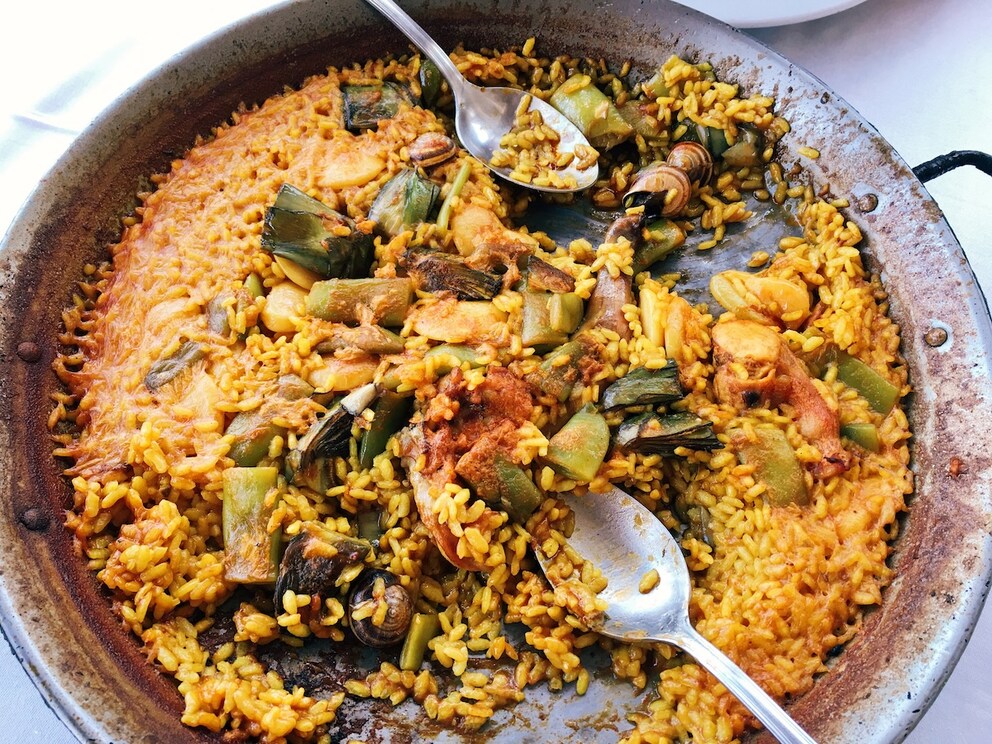
In the small town of El Palmar, nestled in the rice fields, the original form of paella is particularly evident. In restaurants like “Bon Aire,” it is traditionally served with rabbit, chicken, and optionally snails—ingredients that were once readily available. Paella was originally a simple dish for the rural population.
Today, it has long since made its way into haute cuisine. At “Llisa Negra” in Valencia, a restaurant by three-star chef Quique Dacosta, the dish is prepared over an open fire—with ingredients sourced within a 75-kilometer radius.
Characteristic is the thin layer of rice, about one centimeter thick. At the pan’s bottom, the so-called “Socarrat” forms—a crispy, slightly caramelized crust that many consider a hallmark of a successful paella.

This Country Has the Most Michelin-Starred Street Food Stalls
Facts About Italian Cuisine You Didn’t Know
A Dish as a Cultural Symbol
The significance of paella for Valencia is also evident in spectacular events: On March 8, 1992, a paella for 100,000 people was cooked here—a Guinness World Record. The pan had a diameter of twenty meters.
Even today, the dish is celebrated, such as during “World Paella Day.” The finale of this international competition takes place every year on September 20 in Valencia. Participants from around the world compete against each other—the only requirement: The rice must come from Valencia. The other ingredients can vary; even insects are allowed.
The first winner of the competition, Chabe Soler, now runs “Villa Indiano” on the edge of the Huerta, Valencia’s fertile hinterland. There, she focuses on traditional cuisine and regional products.
Making Paella Yourself
Those who want to delve deeper into the world of paella can get hands-on in Valencia. At “Villa Indiano,” cooking classes are offered where visitors learn how to prepare the original dish, including a chef’s hat.