

June 21, 2026, 10:11 am | Read time: 3 minutes
Have you ever tried to clean your mouth with those ultra-thin napkins in Italian ice cream parlors or bars—let alone wipe up a spilled drink? A doomed endeavor. But you probably didn’t know that these napkins aren’t meant for that purpose…
They are as much a part of Italian ice cream parlors as the good gelato itself. And they give customers a false sense of security. Because you can assume that the establishments are well-stocked with dispensers full of these napkins. But appearances are deceiving. If an accident does happen and one of the supposed napkins is used, they help—to put it mildly—hardly at all. They feel rough, as if they are partly made of plastic. And you know what? They are.
The “Useless” Italian Napkins Aren’t Napkins at All
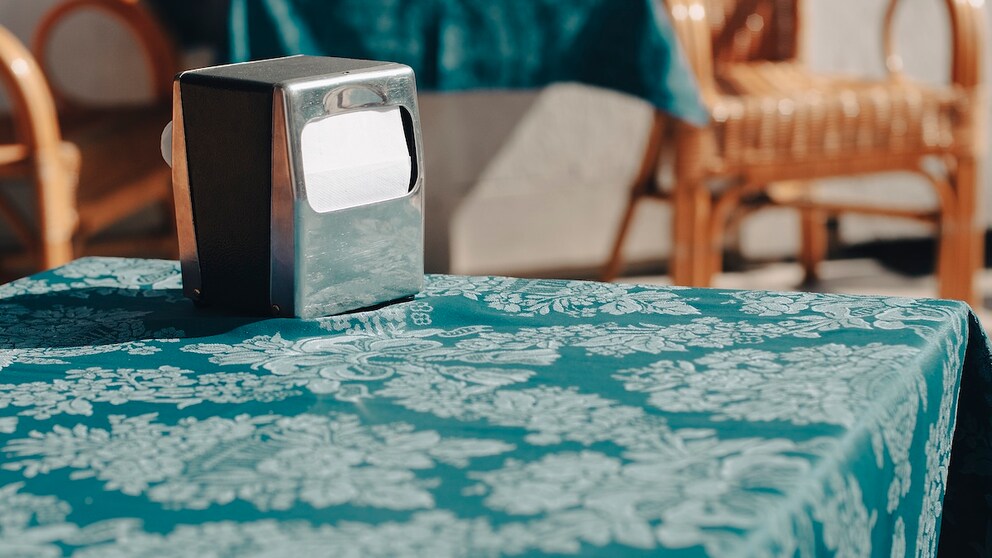
The super-thin napkins, as known from Italian eateries, are commonly offered in rectangular dispensers, sometimes printed with logos. Trying to use them as classic napkins results in spreading the mess even more. They have no absorbency.

The 10 best ice cream parlors in Germany

Why Ice Cream Hardly Melts in This Popular Vacation Destination
What Sets Them Apart From Classic Napkins
“Why are napkins in cafés in (…) Italy so useless?” asked a user on the question-and-answer platform “Quora.” They are hard and absorb nothing—quite unlike traditional napkins. The latter can be recognized, among other things, by the fact that they tear more easily.
The questioner has already provided part of the answer. The traditional napkins mentioned are generally made of cellulose; they are soft and particularly absorbent. In contrast, the so-called “tovagliolini” in Italy (translated as “little napkins”) also contain a plastic component. This may not feel very pleasant on the skin. But while they don’t serve the purpose described above, they do fulfill their etymological origin (“servir,” meaning “to serve”) all the more.
More Tradition Than Utility
Traditionally, hosts used the small and thin napkins to hand over ordered filled ice cream cones and cups, as well as pastries, across the counter. This avoids direct skin contact. They also protect against melted ice cream running down the cone or cup. Napkins made of cellulose, on the other hand, would swell when wet and thus tear more quickly. Customers in the ice cream parlor find replenishment in the dispensers—they can use the traditional “tovagliolini” to grab their sweet treat or as an alternative to a plate.

The napkins from Italian ice cream parlors are thus not useless. They simply serve a different purpose than many assume.