

July 2, 2026, 9:06 am | Read time: 4 minutes
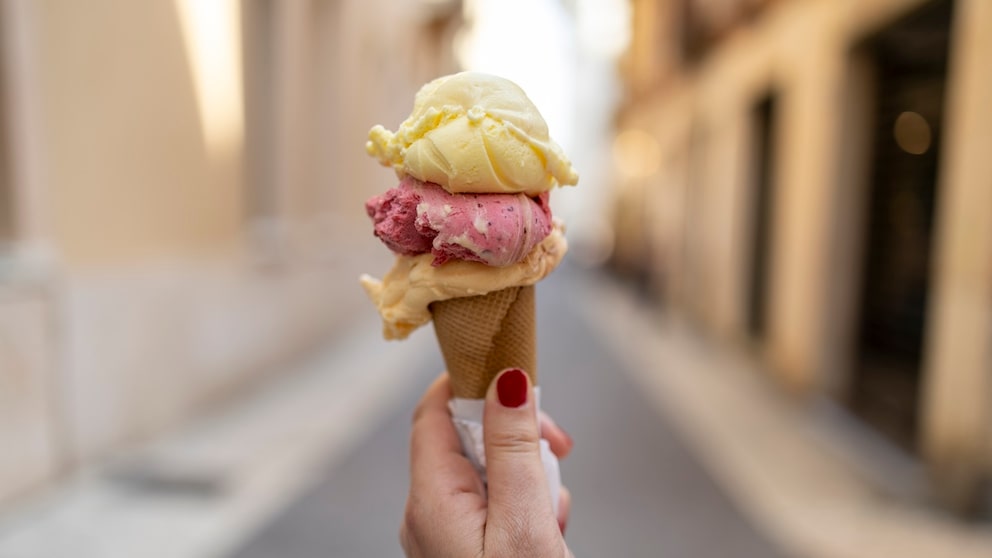
For many, ice cream is simply a part of summer. But on those particularly hot days—when the craving for a cold treat is at its peak—one factor dampens the enjoyment: You have to hurry while licking, or the melting ice cream will quickly drip down your arms or onto your clothes. In Turkey, however, you can take your time eating. The ice cream known as Dondurma retains its solid state much longer than the varieties we know from Germany or even from gelato-loving Italy. TRAVELBOOK explains why.
Dondurma translates from Turkish to simply mean “frozen” and refers to regular ice cream. However, the name has colloquially become associated with the special Maraş Dondurması. This differs quite significantly from what is typically served in cones or cups in Germany. According to Reddit users, it is not only “melt-resistant,” which already sounds incredible, but also so stretchy that “you can jump rope with it.” What’s behind this?
Why Turkish Dondurma Doesn’t Melt
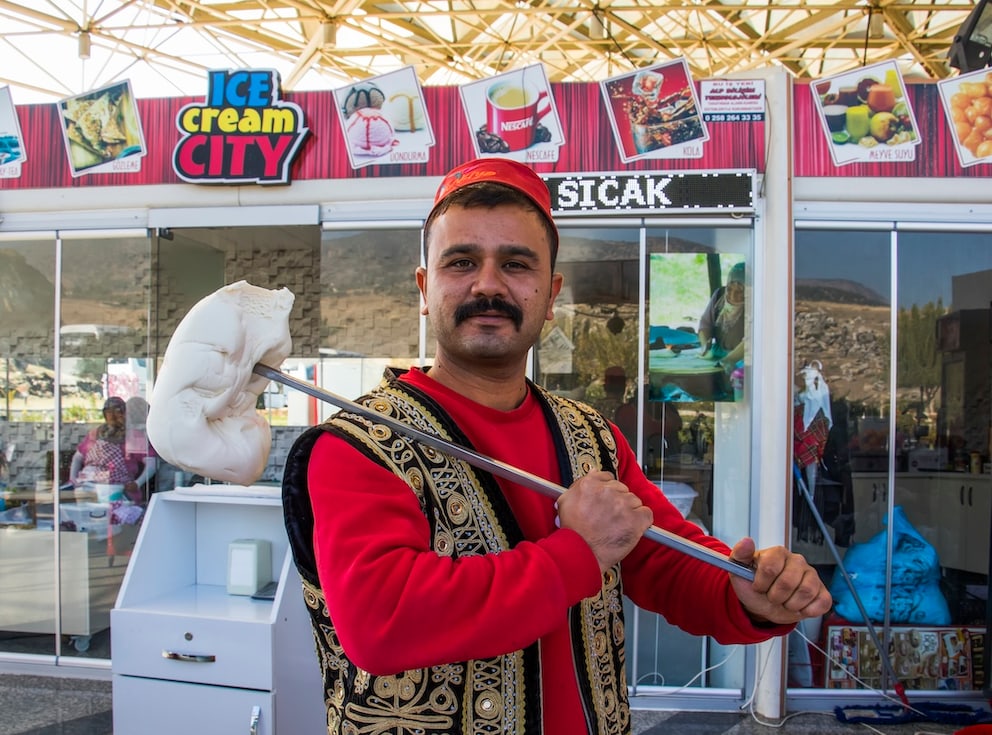
The term “melt-resistant” is technically not correct. What is true, however, is that Maraş Dondurması, or simply Dondurma, melts much more slowly than conventional ice cream—which you can also find in Turkey. But the Turkish region of Kahramanmaraş is particularly famous for Dondurma and the street vendors who knead the thick ice cream with long metal rods and entertain their customers with little tricks and games before finally handing over the cone.

Despite everything, Dondurma is regular ice cream; it is stored frozen and served chilled. However, it retains its solid state much longer than conventional ice cream and therefore melts significantly slower. These special properties are not by chance but are due to a unique method of production and composition.
Special Production and Ingredients of Dondurma
Conventional ice cream is typically just stirred to achieve the desired creaminess. In contrast, Dondurma is also intensively kneaded and stretched during production. This is explained in the culinary guide Taste Atlas.
However, the described technique alone would not make Dondurma so stretchy and slow-melting. The key lies in the ingredients used. In addition to milk and beet sugar, it also contains mastic—a natural resin from the mastic tree—and salep, which is essentially the magic component, according to Taste Atlas.

This Is Currently the World’s Most Popular Sandwich

The Difference Between Pinsa and Pizza
Salep Makes the Ice Cream Stable–What Is It?
Salep is a type of flour made from the tubers of a wild orchid species. It contains the fiber glucomannan, which can bind enormous amounts of water. This makes the ice cream more stretchable and heat-resistant. The mastic used also contributes to the characteristic elasticity.
Besides its special properties, Dondurma is also popular for its taste. According to Taste Atlas, this is partly due to the milk from Ahir mountain goats used in its production. These animals feed on the herbs of the Ahir Mountains, which is said to affect the milk’s flavor. The ingredients responsible for the characteristic consistency, salep and mastic, also bring their own flavor notes: Salep is considered mildly sweet with a slightly vanilla-like note, while mastic gives the ice cream a fine resinous quality. However, traditional production also has a downside.
How the Stretchy Ice Cream Endangers Rare Orchids
Many of the wild orchids from which salep is derived are found only in Turkey. For one kilogram of the flour, between 1,000 and 2,000 orchids are needed, as reported in an article by CNN Travel. The increasing demand for this special ice cream has significantly reduced the populations of many species.
To protect the increasingly threatened plants, the export of genuine salep from Turkey is prohibited. Therefore, you cannot get Dondurma made from the original recipe in places like Germany. Many orchid species are under international protection. This has led to the continued illegal collection of the tubers. Other manufacturers now use artificial substitutes.