

October 11, 2021, 4:03 am | Read time: 5 minutes
Once intended to be the hub of Europe, today only roller skaters and other athletes circle its runway. Although it may not seem so at first glance, Tempelhof Airport is still one of the most fascinating places in Berlin. You just have to look closely! TRAVELBOOK editor Sonja took a tour of the former airport and discovered several places that gave her chills.
The Tempelhofer Feld in Berlin is now a meeting point for groups of friends, families, and skaters. It’s hard to believe that planes were still rolling across the field until 2008. Equally hard to imagine for me is how many hidden places still exist in the old Tempelhof Airport. I joined a tour that took me exactly there, into a former air raid shelter and a mysterious Nazi film bunker.
Tempelhof – From Airport to Gallery
Tempelhof Airport might be the most famous airport in Europe. It gained fame through the Berlin Airlift and the “Candy Bombers” of the U.S. and Britain, which landed and took off here in 1948 and 1949. The planes were used to supply West Berliners with food, coal, and medicine. The U.S. military also established a base here, complete with a basketball court and swimming pool. Why? U.S. soldiers were meant to leave the premises as infrequently as possible and thus sweat it out right at the base.

Also interesting: Spreepark – Plans for Berlin’s abandoned amusement park
On the day I took the tour, there were no sweating soldiers to be seen, nor any other people. I was almost alone on the grounds with Andreas Fritzsche, who is responsible for the tours. Besides us, only two cleaning staff were in the massive building, which is 1.2 kilometers long and has over 200,000 square meters of usable space. For a long time, the airport was the largest contiguous building in the world.
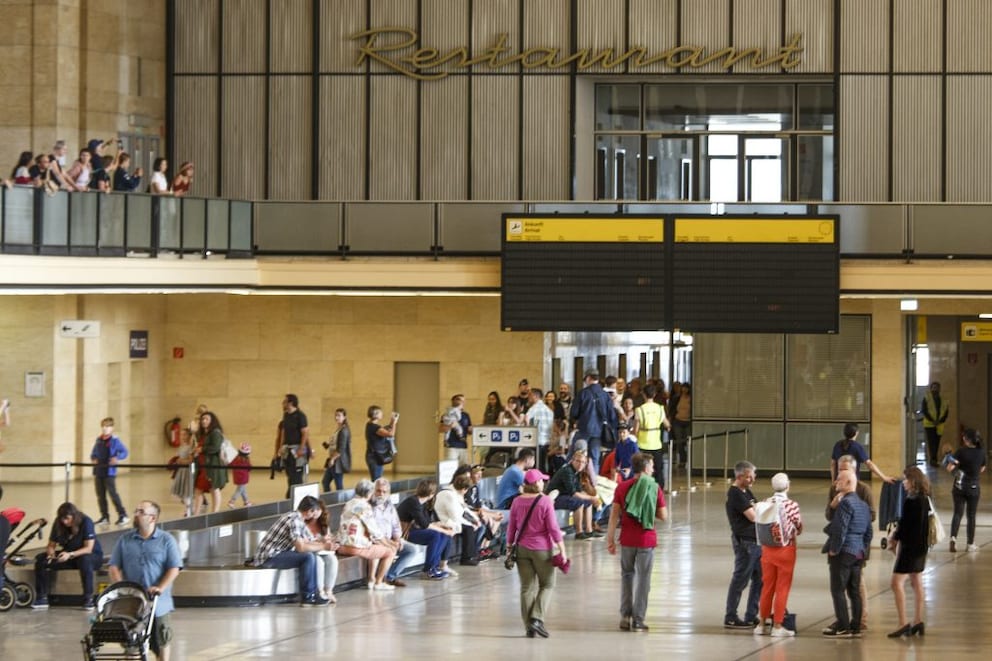
In the heart of the former airport, the terminal hall, I stood impressed. Normally, even today, the hall is bustling with visitors, often hosting exhibitions or events. But today, we were alone on the 100 meters between the entrance gate and the display board, which hasn’t shown a plane landing or taking off here for 13 years.
This Massive Underground Nazi City Is Now a Tourist Attraction

The Berlin Adlon: A Luxury Hotel with a Long History
A Glamorous Air Raid Shelter
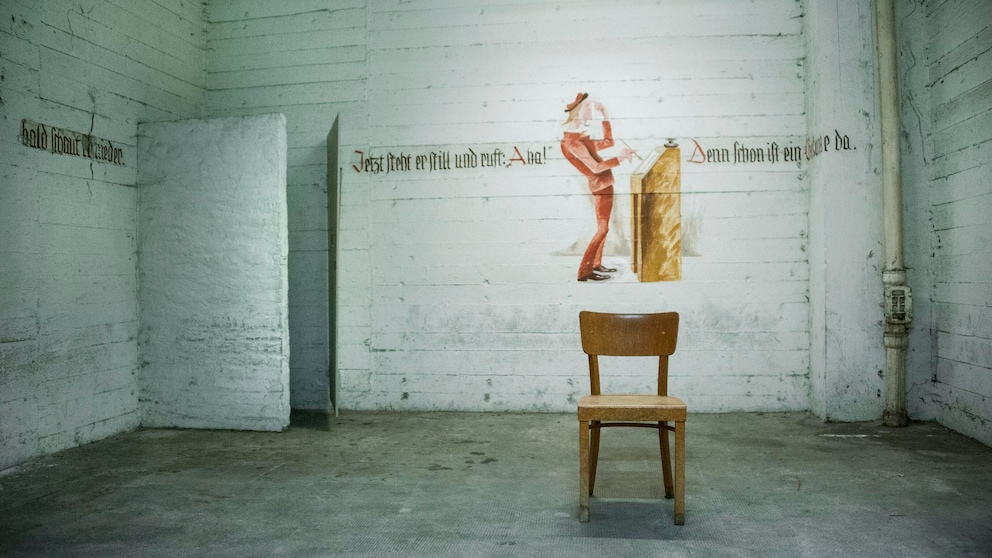
Three floors below the hall lies a place that most airport guests probably never see: the air raid shelter. In the center of the room hangs a bare light bulb, dimly illuminating the space. Apart from that, the rooms look different than expected. Wall paintings by Wilhelm Busch and quotes adorn the white walls. They were meant to make the stay in the rooms more pleasant for those seeking refuge. However, it’s doubtful whether the decorations were visible in an emergency. Up to 80 people stood tightly packed in each shelter.
Also interesting: Spandau – Berlin’s most underrated district
Air raid shelters like the one I’m in existed under almost all administrative buildings of the airport, Fritzsche explains. Their presence at the airport, built in 1935, is due to the Nazi “Air Raid Protection Law” enacted the same year. It was already established then that all buildings in Germany should have an air raid shelter.
Down into the Charred Nazi Bunker
The air raid shelter isn’t the only eerie place I see during the tour. Now we descend four floors to the deepest point of the airport–and even the path there is chilling. The stairs grow darker, while the air becomes thinner. Down here lies a place that remains mysterious today: the Nazi film archive, where the Nazis allegedly stored secret aerial footage. These films were never found. When the Russians arrived here at the end of World War II, they found the bunker ablaze. Allegedly, the archive had been burning for 14 days by then. Even today, everything is black and charred, the destruction omnipresent.
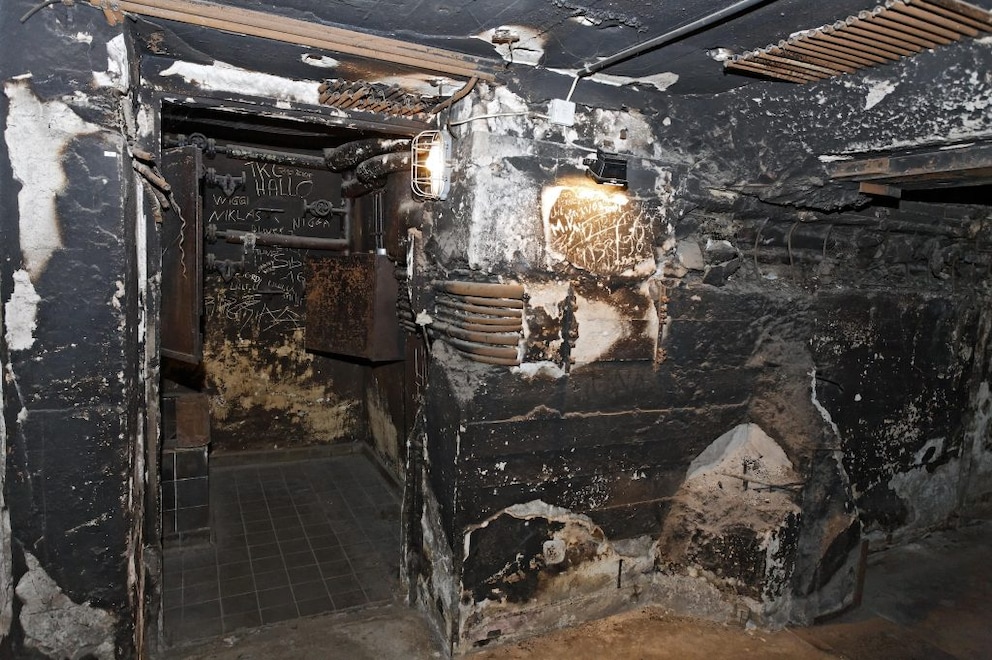
“The temperatures of the fire in the bunker were particularly high because there’s a kettle effect here,” explains Andreas Fritsche. “Everything is closed except for a few drafts that further fueled the fire.” He assumes the Germans set the fire themselves to cover their tracks. Some, however, believe the fire broke out accidentally or was even started by the Russians. “The most likely version is this: The last person in the bunker turned off the lights and set the fire. That was the order given to German soldiers at the time: leave nothing to the enemy,” says Fritzsche.
If you want, you can also take a tour of the airport yourself and choose between the “Mythos Tempelhof Tour” and the “Hidden Places” tour, which includes the air raid shelter and the film bunker. Here are the tickets.